How to Grow a Product Business on Instagram From Zero
Build a useful Instagram foundation before chasing reach: clarify the offer, collect real product proof, give each post a job, and repeat the sequence.
The same post everywhere is a post calibrated for no one.
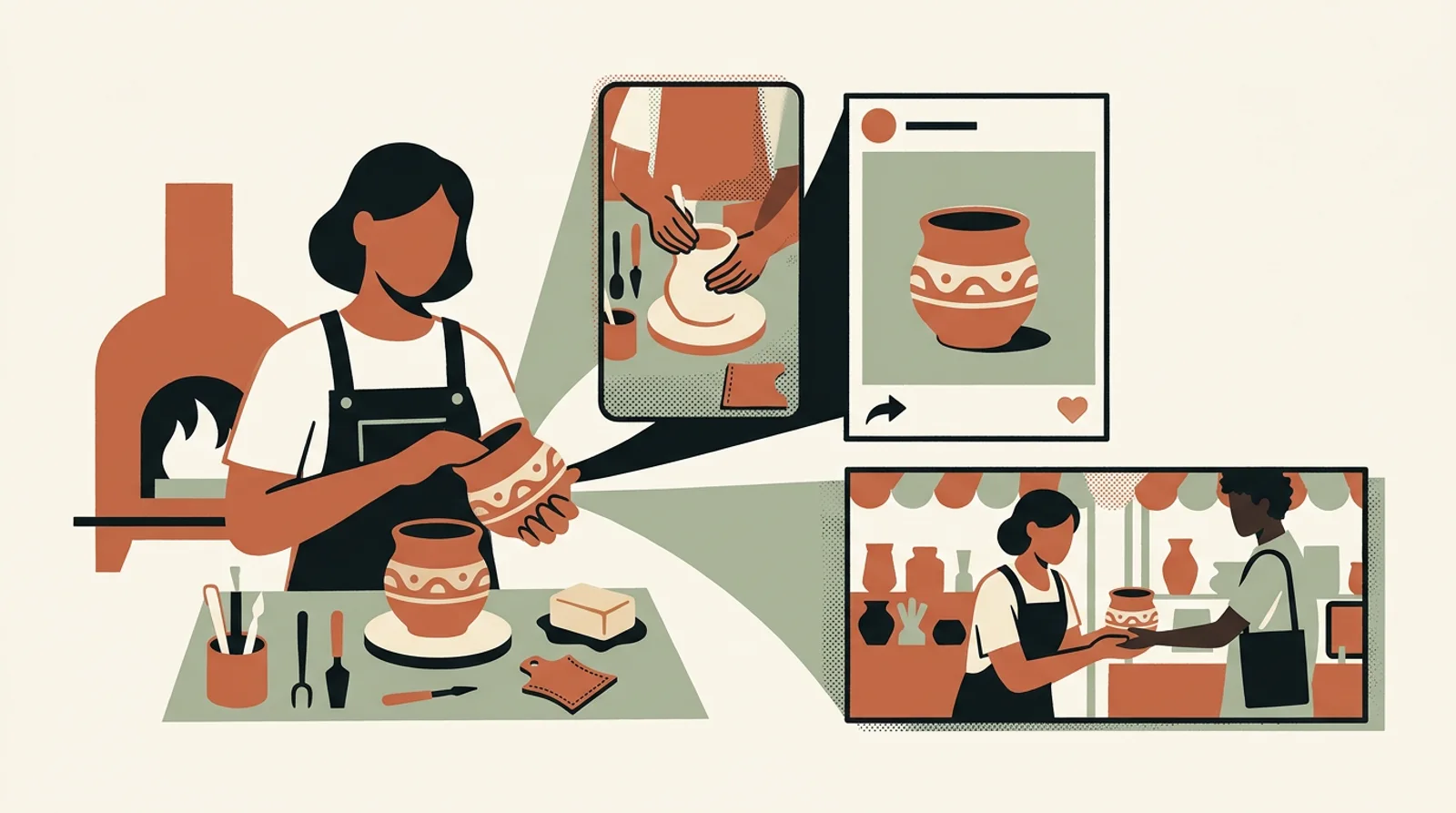
You're on Instagram, Pinterest, Facebook — and you make one of two mistakes: either you copy-paste the same post everywhere, or you rewrite everything three times and lose your evening to it. Both cost you. The copy-paste gives a post calibrated for no network; the manual rewrite wears you out. Yet each platform rewards different things, and a single creation can feed a good post on each — provided you know what each one expects.

What if every network got what it wants?
Your creation goes out once, ReadyToPost pulls the version each network responds to.
Stop guessingThe starting mistake is believing you need different content per network. Wrong: you need the same creation, adapted. One finished piece, one photo, one story — that's your single source. The work isn't to invent three times, it's to present once from three angles. Everything starts there: one creation, several versions.
If you find yourself hunting for a different subject for each network, you took a wrong turn.
Instagram is your storefront. People come for the beauty, they stay for the consistency. Put your best photo of the creation there, caption with the short story — the detail, the material, who it's for — and mind how it fits the rest of your feed. Here, a post lives a day or two: it's an appointment, not a lasting archive.
On Instagram, it's regularity and visual consistency that bring people back, not the perfect isolated post.
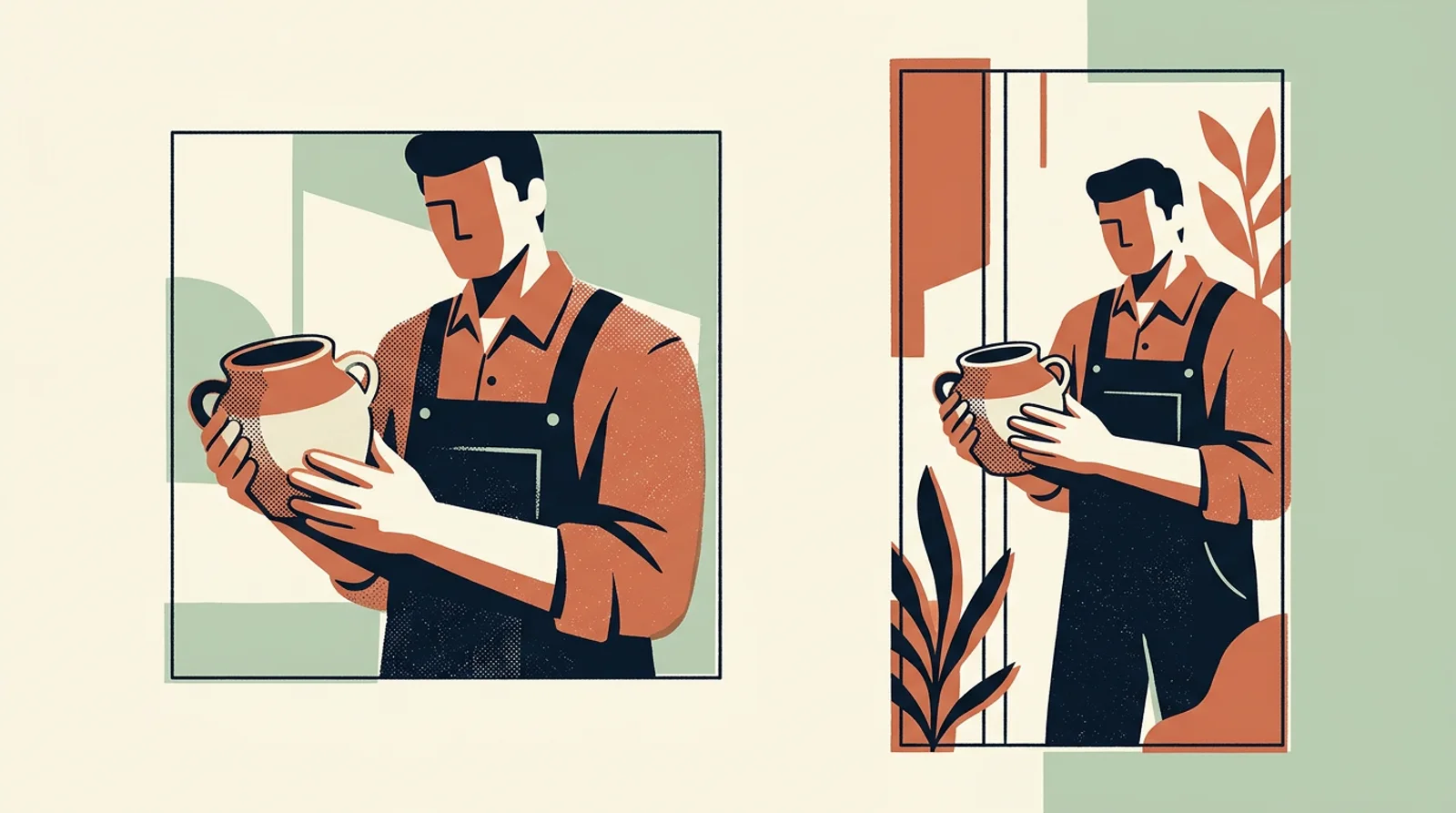
This is the network you underuse, and the most rewarding for a product. Pinterest isn't a feed, it's a search engine: people type "stoneware mug," "handmade jewelry," "ceramic decor" with the intent to buy. So treat your pin like a listing: vertical format, a clear visual of the product, a title and description with the words people would actually search. A pin keeps bringing people in months later — long after an Instagram post has vanished.
Write your pin title like a search: "handmade hammered silver ring," not "my new creation."
Facebook reads like a discussion, and it's your best local lever. Here, the behind-the-scenes, the announcement of a market near you, or a question to your community work better than a pretty silent packshot. The text can be longer, more personal. It's also where sharing kicks in: a customer who shares your post puts it in front of their whole circle, often in your area.
End a Facebook post with a real question: comments boost reach far more than a like.
The operational trap remains: adapting shouldn't mean reworking everything by hand. You give your creation once — the photo, the story, the price — and the adaptation happens for you: the right format, the right register, the right length per network. The copy-paste calibrates for no one; the manual rewrite exhausts you; the adaptation gives you the right post on each for the cost of one.
The right benchmark: one creative effort, as many versions as there are networks.
You know each network, ReadyToPost writes for all three.
One creation, three versions written and tailored for Instagram, Pinterest and Facebook — no manual rewriting.
Adapt without rewritingDo
Don't
Situation
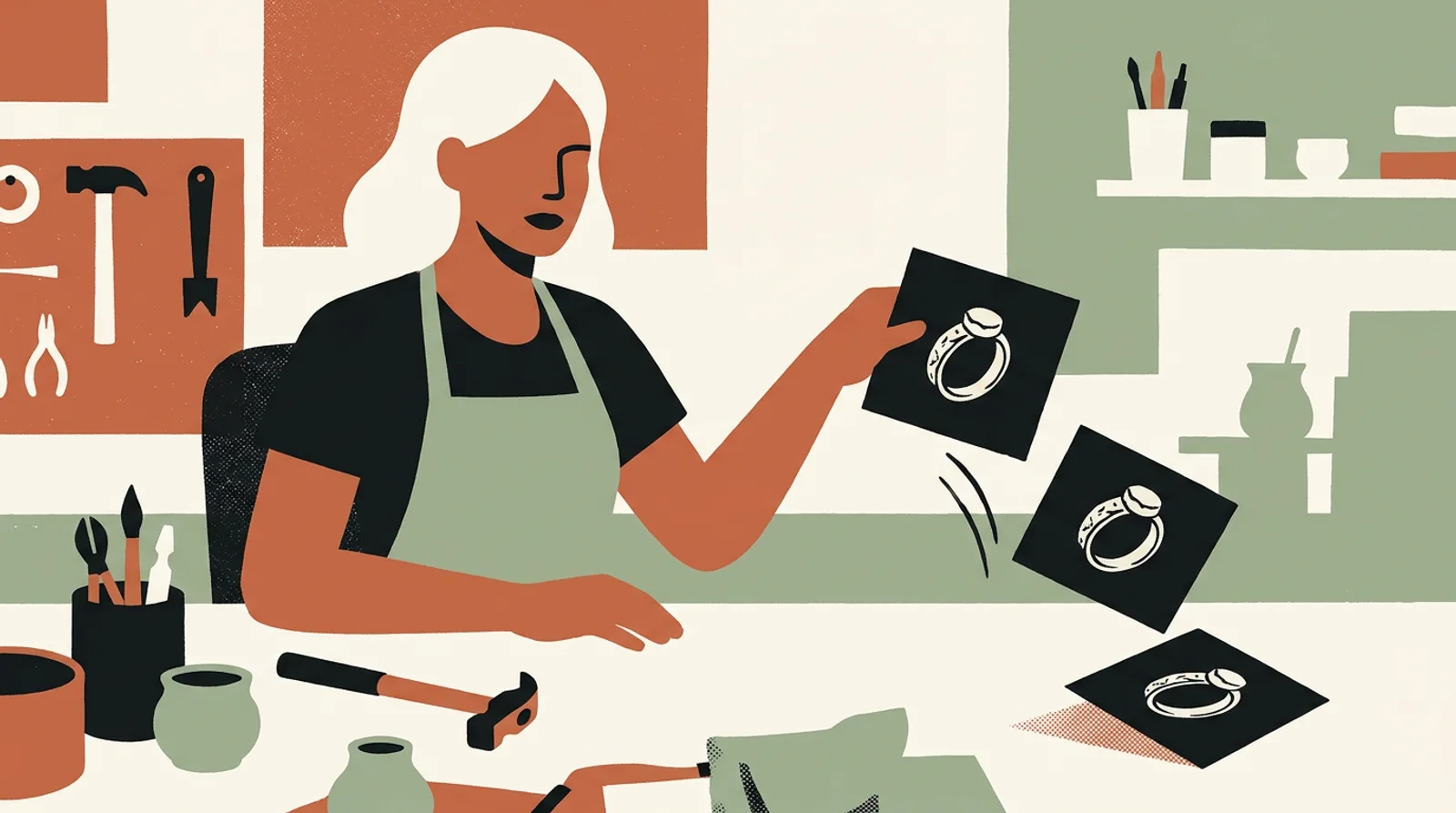
Lucy makes silver jewelry. She posts the same photo of her hammered ring, with the same caption, on Instagram, Pinterest and Facebook the same day. On Instagram it works; on Pinterest and Facebook, it brings in nothing.
Action
She adapts. On Instagram, the polished photo with the story of the hammering. On Pinterest, the same photo vertical, titled "handmade hammered silver ring" with a searchable description. On Facebook, a question to her community: "Raw silver or polished?" One ring, three versions, generated in one go with ReadyToPost.
Outcome
The Pinterest post keeps bringing her visits two months later, when she's forgotten she even published it. The Facebook post collects fifteen-odd comments and two local orders. Same ring, same photo — three ways in instead of one.
One piece, three doors into your shop.
The same product opens a conversation on Facebook, a search on Pinterest, a like on Instagram.
The same content doesn't "work" everywhere the same way, because networks don't serve the same purpose. Instagram shows, Pinterest makes people search, Facebook makes people talk. Ignoring that is playing tennis with a ping-pong paddle: it looks similar, but it doesn't land.
Pinterest isn't a social network like the others, and that's exactly its strength for a product: people arrive by searching, with the intent to buy, and a pin works for months. Leaving it aside means ignoring the one channel where people literally type the name of what you make.
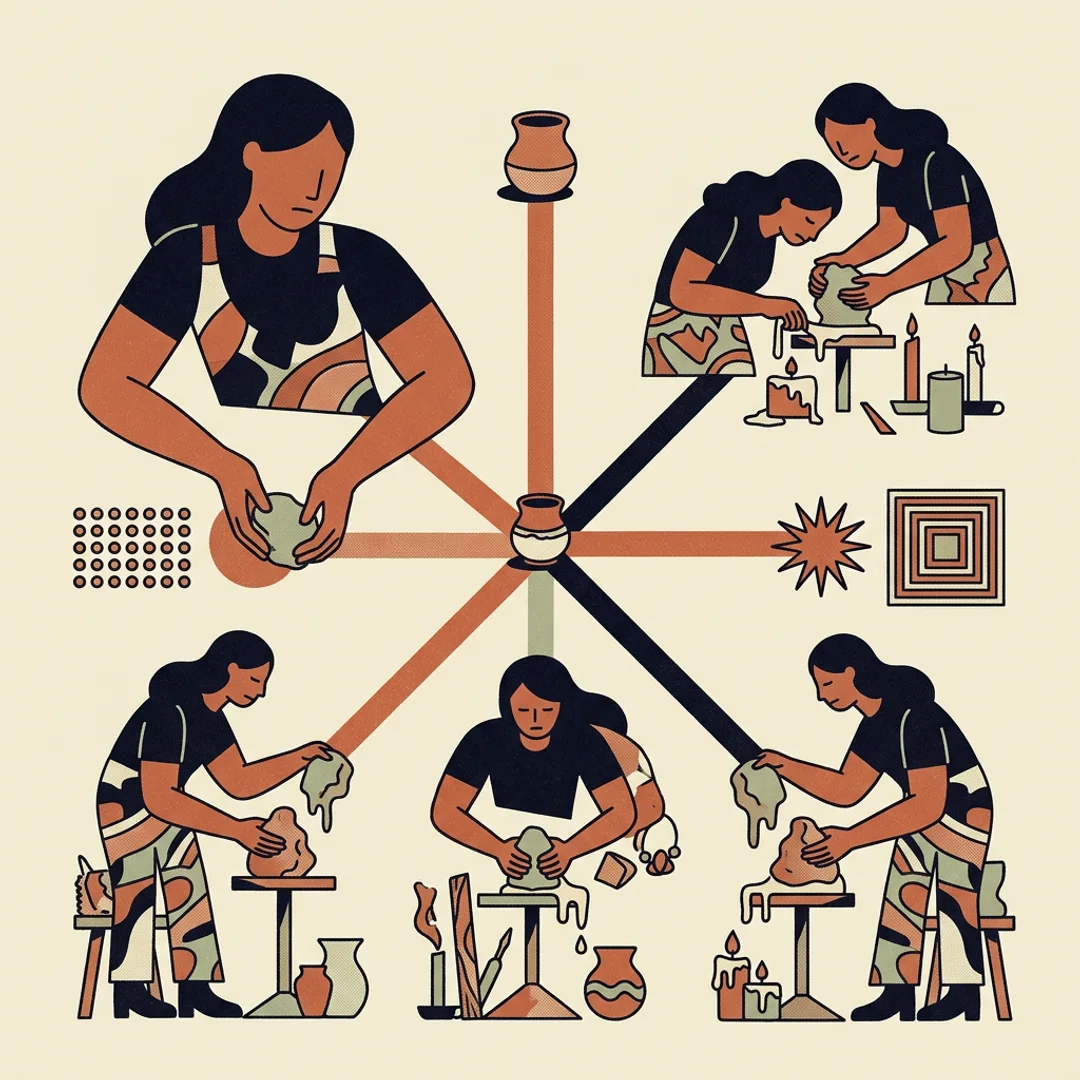
Adapting isn't creating new content per network — it's presenting the same creation from the angle each one expects. If adapting takes you as long as making, you're doing it wrong, or you're rewriting by hand what should adapt on its own.
A method is set — still, you need time to put it to work. Readytopost frees that time by taking one front off your plate: your presence on the five social networks. Everything written, illustrated, scheduled — calibrated on your work, week after week. So your energy stays on the trade.
Start with ReadyToPostSee how these principles play out day to day. Practice for makers gives you concrete, illustrated, adaptable levers — directly applicable the following week. No quarterly plans, no annual roadmaps: weekly gestures that touch something right away.
See it in practice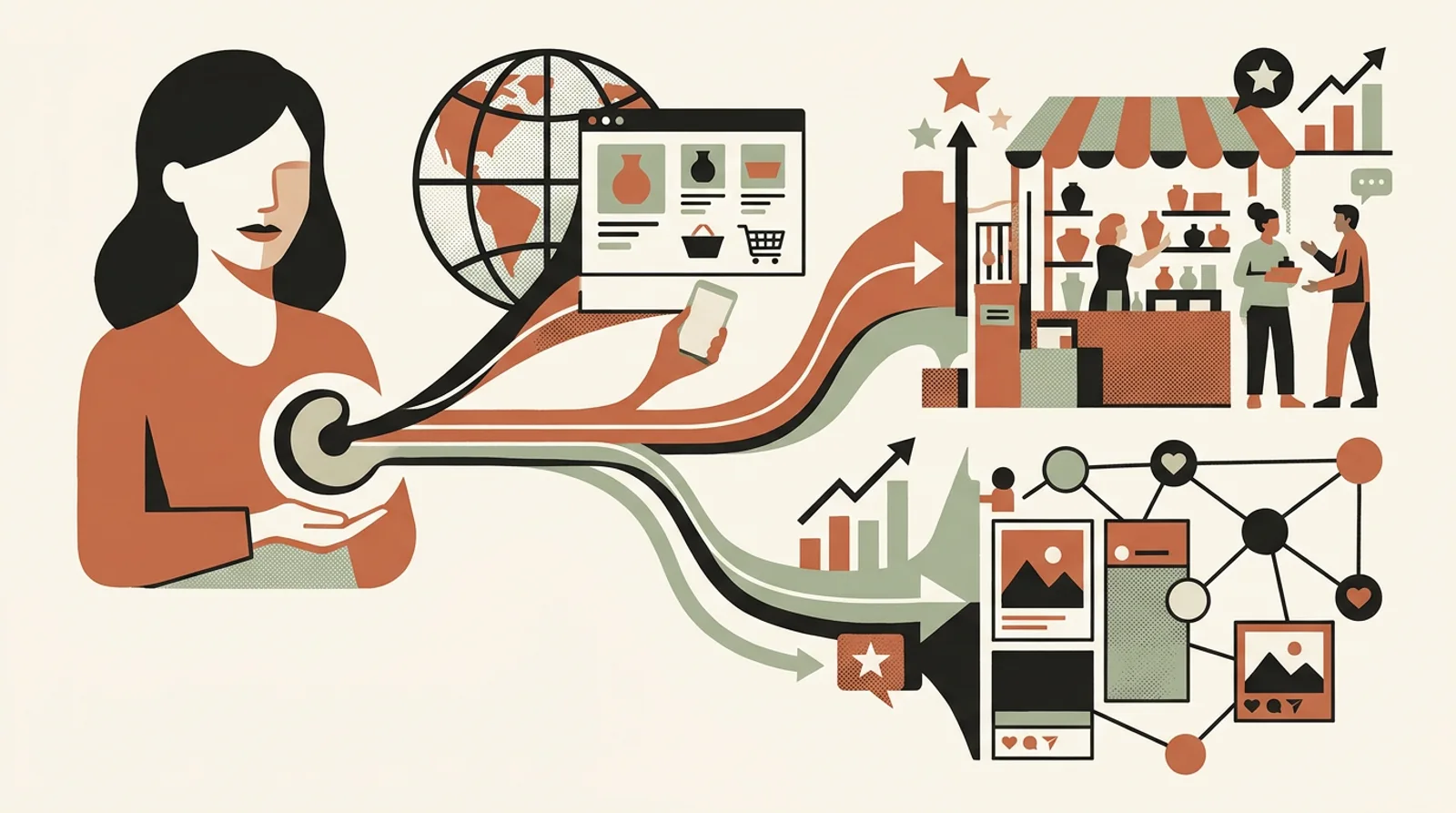
No, be where your customers are. But for a product, these three cover three complementary needs: showing (Instagram), being found (Pinterest), and conversing and reaching local (Facebook). Start with the one where you already sell, then add Pinterest — it's often the most rewarding and the most neglected.
Because it's the only one of your networks where actively searching for a product like yours, with the intent to buy. A well-titled pin keeps being found months after publishing, where an Instagram post vanishes in two days. For a product, it's a lasting discovery channel.
It's not "bad," it's suboptimal: the post calibrated for everyone is calibrated for no one. Adapting costs almost nothing extra and clearly changes the results.
That's the whole point of starting from a single source. You give your creation, your photo, your price once; the adaptation — format, register, length, pin keywords — is generated for each network at once. You approve, you adjust if needed. The manual rewriting work disappears.
They exist and can matter depending on your craft — custom work, B2B, a maker who tells their studio story. But for a small product brand selling to the general public, the Instagram / Pinterest / Facebook trio does most of the work. Add the others only if your customers are really there.
Build a useful Instagram foundation before chasing reach: clarify the offer, collect real product proof, give each post a job, and repeat the sequence.

Choose one Etsy listing, give each week a clear buyer job, and turn accurate product facts and photos into a connected Instagram campaign.

Sell a digital download on Etsy by solving one buyer task, packaging the files clearly, publishing a complete digital listing, and promoting the offer with a repeatable proof sequence.
Most lists of artist content ideas ignore what you actually sell. Originals, prints, commissions and classes each need different posts. The four compared, with ideas for each.
One Etsy listing can support several useful Pins. Give each Pin a distinct buying question, a clear destination and a reason to open the product page.
Turn each product into a useful Instagram sequence: show the material, explain a making decision, prove the result, then make the offer clear.
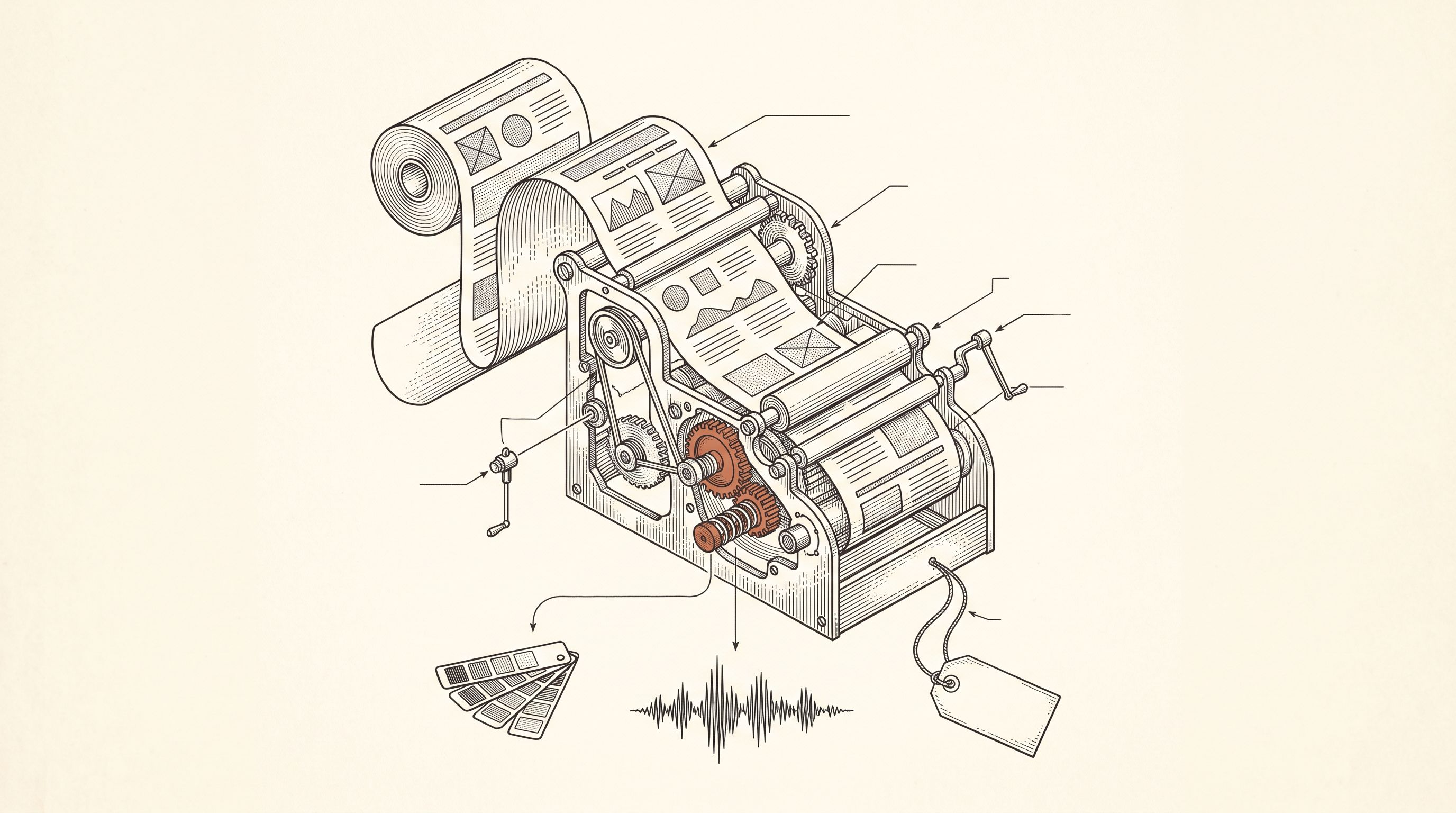
From a single website URL, ReadyToPost builds your brand profile and starts generating on-brand posts — no manual brief to fill.
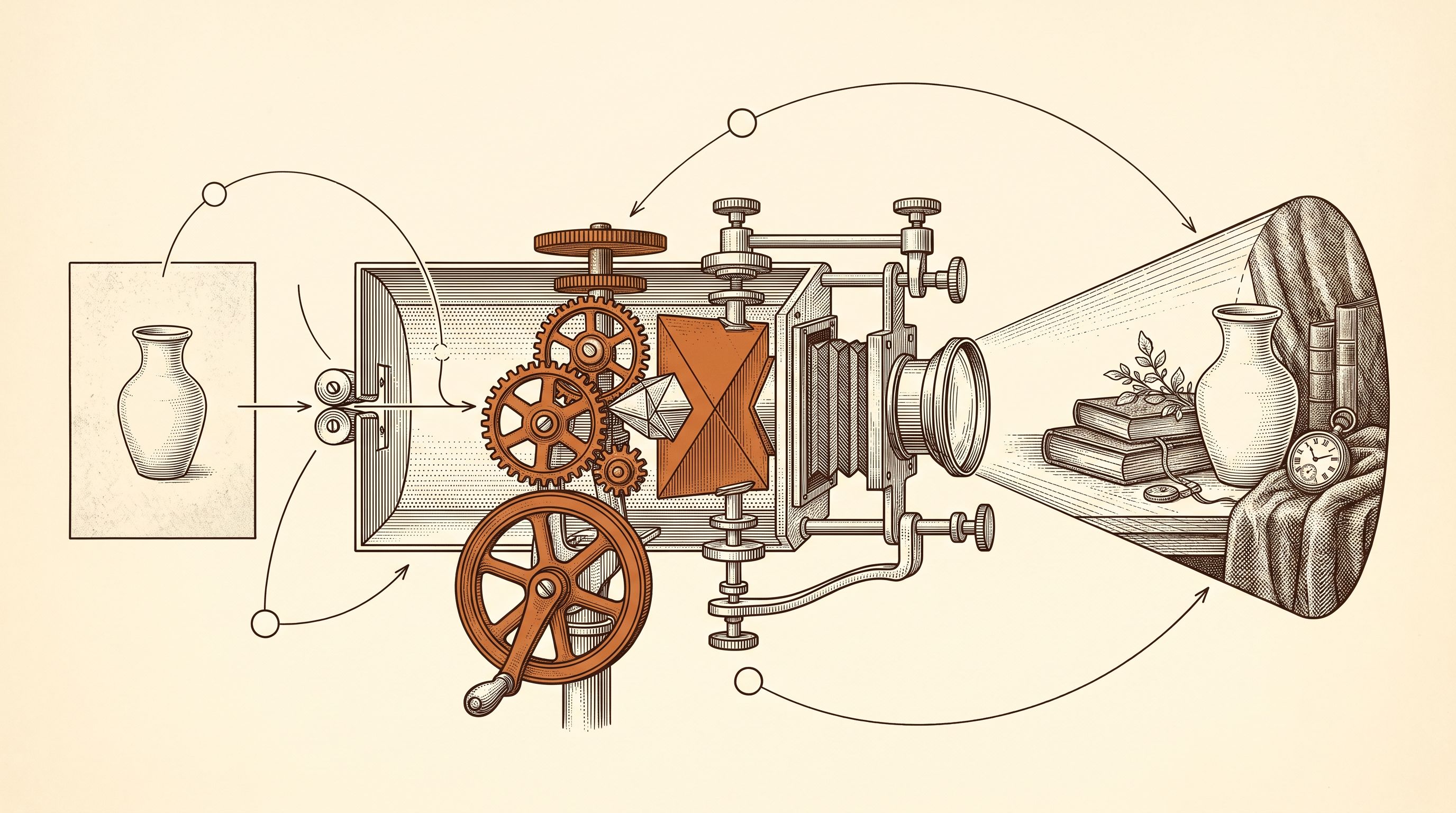
Generate social visuals from your real photos — in your style and fonts, in the right format per network. Fix any detail in one sentence.
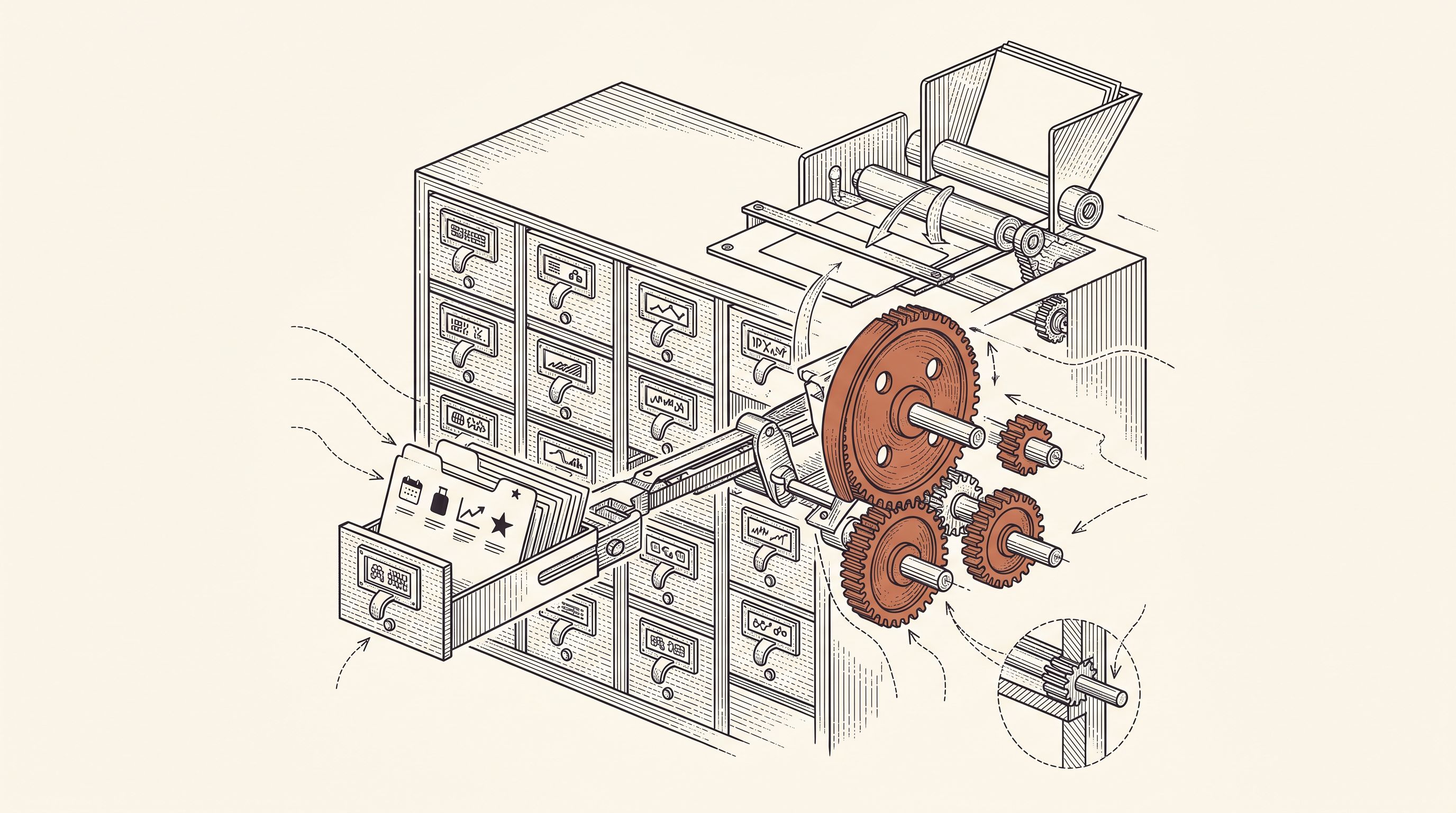
A semantic memory of your brand's real facts, so every post cites what you actually do and have.
Generate on-brand Instagram posts where the 4:5 feed visual and the caption are built together — a scroll-stopping hook, breathable paragraphs, and full-word hashtags grouped at the end, scheduled and ready to publish.
Generate professional LinkedIn posts, mention real people and companies right in the text, then publish to your profile or your company page.
Generate conversational Facebook posts, set your emoji and hashtag level, and schedule them straight to your Facebook Page. Text and visual built for the feed.
You hold the principles. Readytopost takes the communication off your plate, every week — so your method stays your method.
Monthly plansReady in minutesCancel in one click