
How to Grow a Product Business on Instagram From Zero
Build a useful Instagram foundation before chasing reach: clarify the offer, collect real product proof, give each post a job, and repeat the sequence.
What a customer says about you is worth every argument you could make combined.

A customer gets your order, takes a photo, writes two lines to thank you. For most makers, that's where it ends: a small pleasure, soon forgotten. Yet it's your most powerful material. For a handmade product, nothing convinces a stranger like another customer showing, for real, that they loved it. Your buyers produce a proof you can't manufacture yourself — the only work is to collect it and turn it into posts.

What if a stranger trusted a buyer’s word over yours?
What you say about your work convinces less than a customer showing it herself.
Let my customers speakProof doesn't show up on its own: you have to prompt it, without being heavy-handed. The right moment is just after delivery — the excitement is at its peak. A note slipped into the parcel or a short message does it: "If you love your candle, a photo at home would mean a lot to me." You're not begging for a favor; you're giving a happy customer an easy way to tell you.
Make the action easy: say exactly what to do (a photo, a word) and where (in a reply, a story, a review).
A review buried on your product page works for no one. Pulled out and turned into an image, it becomes a post. Take the most concrete sentence — not "great product!" but "the first candle that actually lasts three evenings" — and make a clean visual of it, in your brand colors. A customer's word, shown, weighs more than yours.
Pick the most specific review, not the most glowing: the detail builds credibility, the superlative doesn't.

A customer's photo is rarely perfect — living-room light, a crooked frame. That's not a problem: the app can enhance it without stripping its authenticity.
Always ask permission before reposting a customer's photo, and credit them if they'd like.
The moment the parcel opens is content in itself: the careful packaging, the handwritten note, the piece appearing. If a customer photographs their unboxing, it's gold — it gives a future buyer the experience they'll have. Failing that, stage a typical unboxing yourself; but the real one, from a customer, always convinces more.
Care for your packaging: it's the first thing a customer is tempted to photograph.
A review shown once is a good post. Social proof shown regularly becomes a reputation. Set aside a recurring slot — one review or customer photo a week — so newcomers always land on someone else who trusted you. You have nothing to invent: you draw from what your customers already send you.
Keep a "proof" folder where you drop every review and photo you get, ready to bring back out.
Your customers supply the proof, ReadyToPost posts it.
A review, a photo sent by message — ReadyToPost turns it into a visual ready for every network.
Post their proofDo
Don't

Situation
Hannah makes scented candles. Her customers regularly send her photos of their candles lit in the evening and leave lovely reviews — but all of it sleeps in her messages and on her product page.
Action
She starts asking, in every parcel, for a photo "at home" if they love the candle. Each week, she takes a specific review or a customer photo and runs it through ReadyToPost: the review becomes a brand visual, the living-room photo is enhanced, all of it tailored to her networks. Always with the customer's permission.
Outcome
In two months, her feed no longer shows just "her" candles, but dozens of people loving them in their homes. New customers often cite a review they saw in a post at the moment of buying. The proof does part of the selling before she does.
Your feed no longer shows just you, but who loves you.
Every review, every photo you receive becomes one more proof, posted without effort.
Happy customers stay happy in silence: they rarely think to leave a review or send you a photo on their own. If you don't ask, simply and at the right moment, you miss your best material. Proof is prompted, without being heavy-handed.
"Gorgeous, I love it!" convinces no one — it's what everyone says. A review that describes a specific use, a doubt put to rest, a concrete detail, does ten times more. Look for the proof that tells a story, not the one that flatters.

Taking a customer's photo without asking risks putting them on the defensive and damaging the very trust you want to show. A single message is enough to ask — and most are flattered you'd want to feature them.
A method is set — still, you need time to put it to work. Readytopost frees that time by taking one front off your plate: your presence on the five social networks. Everything written, illustrated, scheduled — calibrated on your work, week after week. So your energy stays on the trade.
Start with ReadyToPostSee how these principles play out day to day. Practice for makers gives you concrete, illustrated, adaptable levers — directly applicable the following week. No quarterly plans, no annual roadmaps: weekly gestures that touch something right away.
See it in practice
At the right moment — just after delivery — and simply: "If you love it, a photo or a word would make my day." You're imposing nothing, you're giving a happy customer an easy way to tell you. Most are glad to be asked.
Yes, always. One message is enough, and the vast majority say yes happily — many are even flattered. Reposting without asking can put someone on the defensive and damage the very trust you're trying to show.
Start by asking your next customers, systematically. In parallel, you can stage a typical unboxing yourself or quote a message you received (with permission). The stock of proof builds fast once you think to collect it.
Yes: you give the customer's review or photo, and the app turns it into a brand visual and writes the post, tailored to each network. You're not starting from a blank page — you're starting from real proof, which the app shapes.
Build a useful Instagram foundation before chasing reach: clarify the offer, collect real product proof, give each post a job, and repeat the sequence.

Choose one Etsy listing, give each week a clear buyer job, and turn accurate product facts and photos into a connected Instagram campaign.

Sell a digital download on Etsy by solving one buyer task, packaging the files clearly, publishing a complete digital listing, and promoting the offer with a repeatable proof sequence.
The Instagram content mix that keeps handmade brands posting for months: more process shots than finished pieces, not prettier ones.
Etsy sellers copy a block of thirty hashtags from a bigger shop and wait for reach. A niche tag with a few thousand posts does more than #handmade — and even that isn't what grows the shop.
Promote your Etsy shop by showing the product, process and person behind it consistently, using material that already exists in your business.

From a single website URL, ReadyToPost builds your brand profile and starts generating on-brand posts — no manual brief to fill.

Generate social visuals from your real photos — in your style and fonts, in the right format per network. Fix any detail in one sentence.
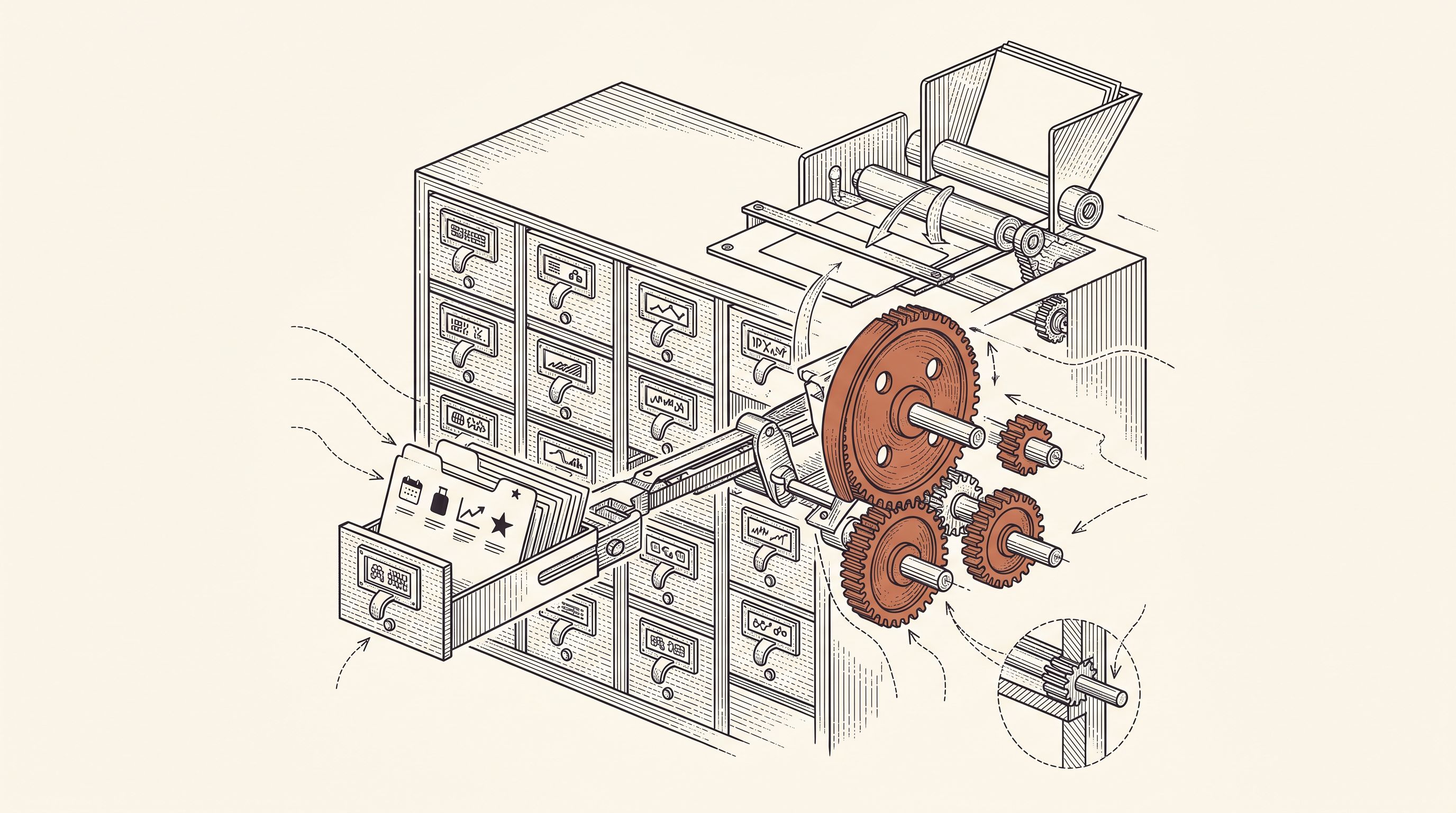
A semantic memory of your brand's real facts, so every post cites what you actually do and have.
Generate on-brand Instagram posts where the 4:5 feed visual and the caption are built together — a scroll-stopping hook, breathable paragraphs, and full-word hashtags grouped at the end, scheduled and ready to publish.
Generate professional LinkedIn posts, mention real people and companies right in the text, then publish to your profile or your company page.
Generate conversational Facebook posts, set your emoji and hashtag level, and schedule them straight to your Facebook Page. Text and visual built for the feed.
You hold the principles. Readytopost takes the communication off your plate, every week — so your method stays your method.
Monthly plansReady in minutesCancel in one click