Should you outsource your social media?
Should you outsource your social media? Yes, but only half of it. The part a freelancer can't reach is the cheapest to keep. Here's where the line sits.
Yes, outsource your social media. But only half of it. The half a freelancer can't reach is the half that costs you nothing to keep. And it's almost always the half people give away first.
If a quote just landed in your inbox, somewhere around €1,500 a month, and it felt disproportionate to your margin, you read it right. Not because the work isn't worth paying for. Because of what you'd actually be buying.

What you're really paying for
A social media retainer bundles two very different jobs into one line item.
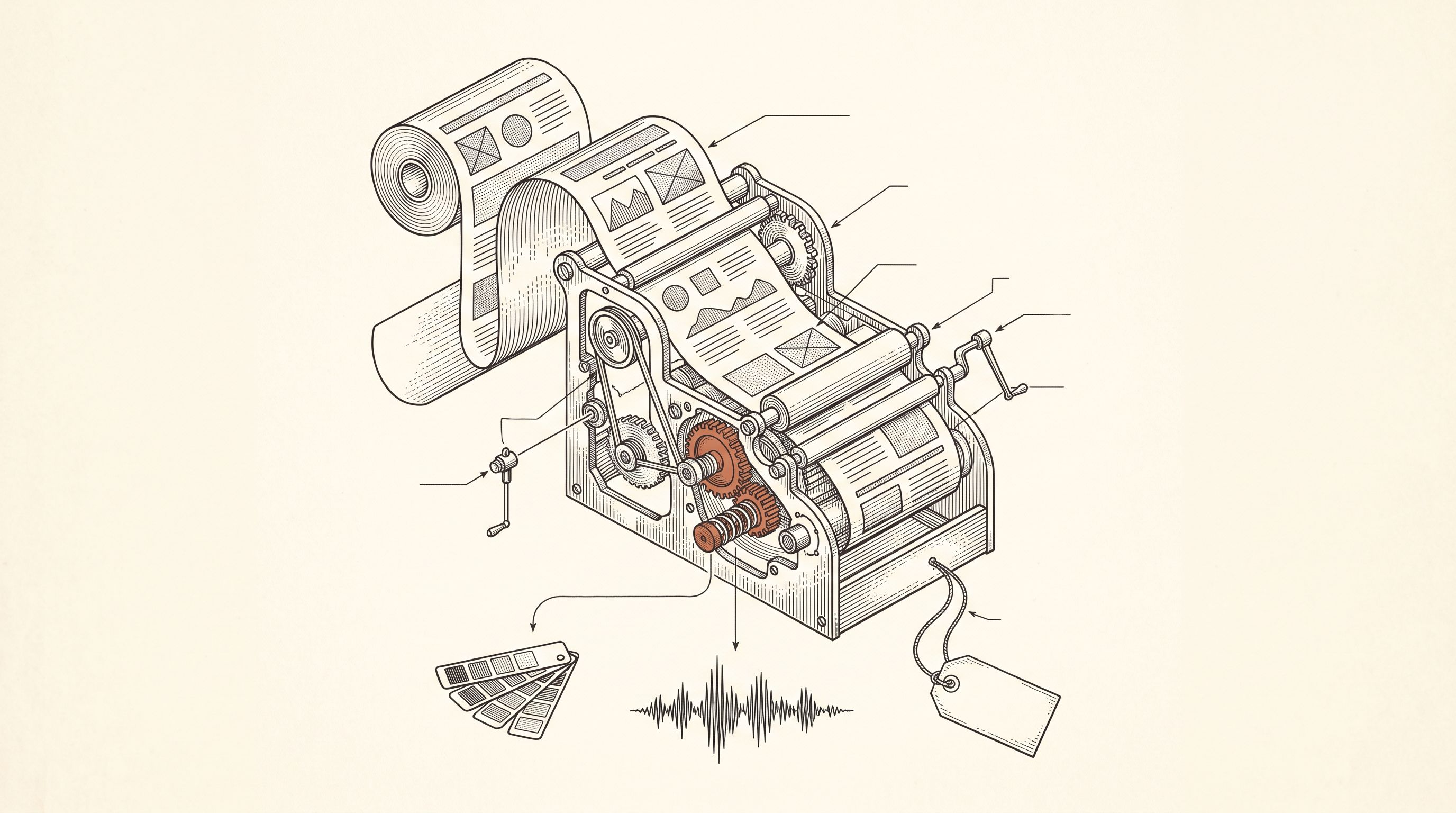
The first is production. Turning an idea into finished posts. Writing the caption, sizing the image, adapting the wording for each network, loading it into a calendar. It's mechanical, repetitive, and it eats the evenings you wanted back.
The second is voice. Knowing that you say "clients," not "customers." That your work is "precise," not "innovative." That you never open with a question. Knowing which detail of your craft is worth a post, and which one your regulars are tired of.
These two jobs have nothing in common. One is execution. The other is knowledge, yours. And the retainer prices them as if they were the same thing.
A brief is one page. Your craft made you fluent in two hundred small decisions.
The part a freelancer can't reach
Here's what I'd want you to see before you sign.
When an independent hands the whole thing to a freelancer or an agency, the content that comes back is usually fine. Clean grammar, on time, the right hashtags. And completely unrecognizable.
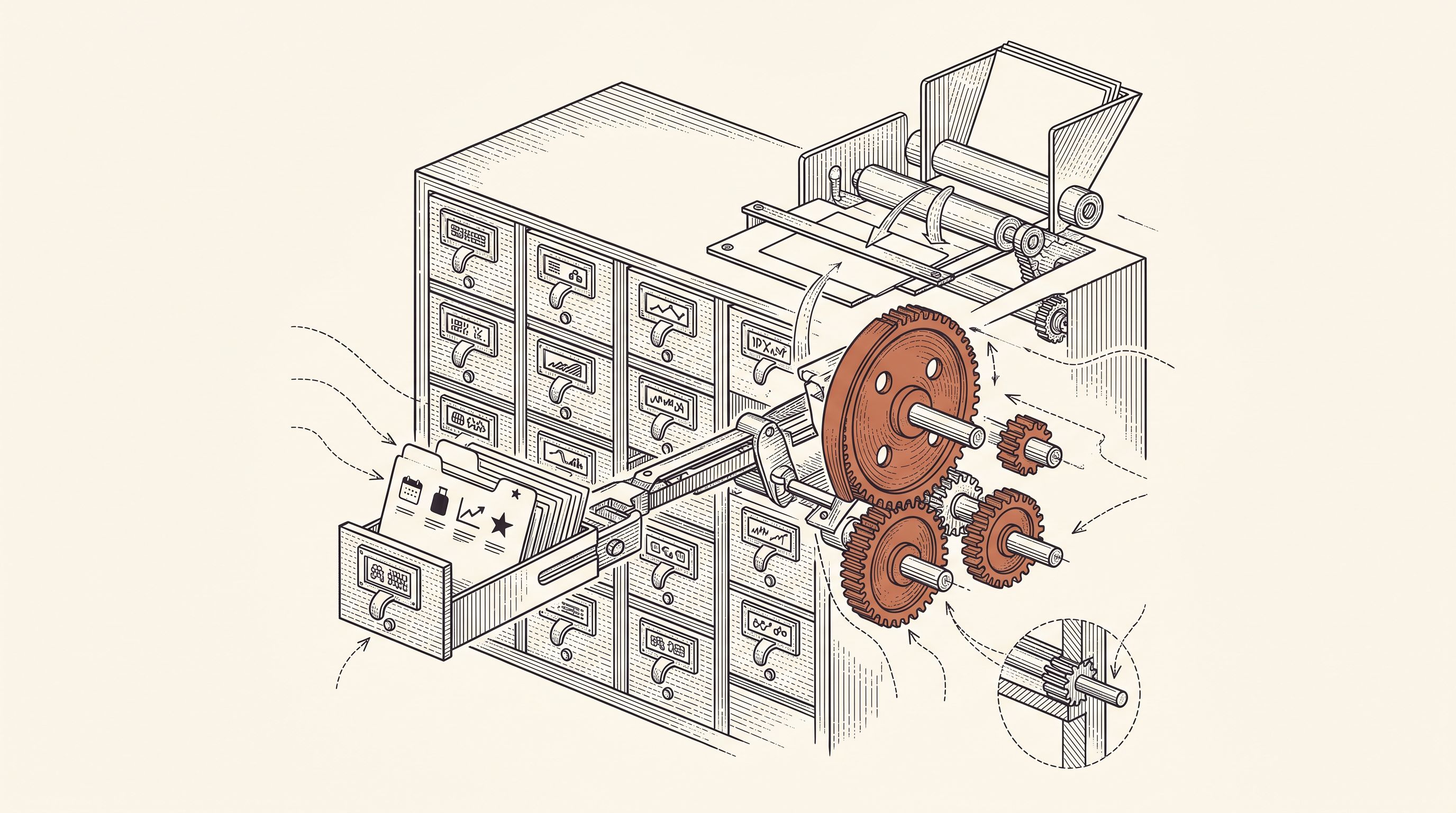
The mechanism is simple. A freelancer writes from a brief. A brief is one page. Your craft made you fluent in two hundred small decisions: the word you'd never use, the angle that bores you, the thing only you notice about a finished piece. None of that fits on a page. So the writer fills the gap with the category average. The output falls back to "generic florist," "generic consultant," "generic hotel."
And your clients notice before you do. They chose you for the thing the average doesn't have. A feed that sounds like everyone else's tells them, without saying it, that you've stopped paying attention.
That's the part no one can outsource for you. Not because freelancers are bad. Because the information doesn't exist, outside your head, in a form they could use.
Where to draw the line
So draw it between execution and knowledge.
Pay to remove the production. The sizing, the per-network rewrite, the loading into a calendar: that's pure grind, and it's the only part genuinely worth money to delete. This is where the difference between scheduling posts and generating them matters: a tool that only schedules still leaves you writing everything.
Keep the voice in-house. Not as a full-time job, but as a short, recurring decision. You approve, you fix one word, you kill the post that isn't you. That weekly pass is the review that turns drafts into shipped posts, and it takes minutes, not evenings.
The surprising part: the expensive thing to outsource, your voice, is the thing that costs you nothing to keep. The draining, cheap thing, production, is the only thing worth paying to remove. Most people do it backwards. They try to buy the voice and keep grinding out the production by hand.
When you split it this way, you can generate and adapt a full week of posts across your networks without writing each one, and still be the only person who decides how they sound.

What to stop doing first
Stop trying to buy your way out of the voice. No brief is long enough. The fix isn't a better brief or a more expensive writer. It's keeping the part that was never the bottleneck.
Stop treating the choice as all-or-nothing. It isn't "do it myself" versus "hand it all over." Those are the two worst options. One drains your time, the other drains what makes you recognizable. The whole point is that the work splits in two.
And stop comparing the retainer to a one-off. "Ten posts for €200" looks cheap until the eleventh week, when you're back where you started, paying again or posting nothing.
You don't need an agency to be present every week. You need to stop doing one half by hand, and stop giving the other half away. What would your feed say this week that no competitor's could, and who, exactly, should be the one to write it down?
FAQ
Is it worth paying someone to run my social media?
Worth paying to remove production, yes. Worth paying someone to become your voice, no. That's the part that comes back generic.
Should a small business hire a social media agency?
Only if you're buying execution, not identity. If the agency needs a long brief to sound like you, the output will drift toward the category average.
What should I keep in-house?
The decisions: which idea is worth a post, the words you'd never use, the final yes or no. That's minutes a week, and no one else can do it.
How much does outsourcing social media cost?
Agency retainers commonly run around €1,500 a month. A freelance one-off might be €200 for a batch. Both price the voice you already have for free.
Can I outsource just part of it?
That's the recommended split. Offload the production and scheduling; keep the weekly approval and the voice. The grind leaves, the recognizability stays.