
How to Grow a Product Business on Instagram From Zero
Build a useful Instagram foundation before chasing reach: clarify the offer, collect real product proof, give each post a job, and repeat the sequence.
A like costs nothing. A sale needs a reason to buy and a frictionless path, both at the very same moment.

You make in small batches: soaps, candles, ceramics, jewelry, stationery. You post your work, the likes and saves roll in, sometimes by the dozen. But the shop stays silent. Before you conclude that your product or your price is off, or that the algorithm has turned on you, you need to read correctly what those numbers are actually saying.

What if the like finally became an order?
You're pulling in the eyes, ReadyToPost writes the copy that pushes toward the buy.
Convert my likesA like, a save and a sale don't measure the same thing. The like is the cheapest gesture there is: it costs nothing, it commits to nothing. The save runs warmer, it's an intent to remember, but it stays ambiguous: it can mean "I might buy it," "I want to make it myself," or "pretty inspiration." Only one of those three people is a customer. The sale demands someone already in buying mode, given at the same moment a reason to buy and a frictionless path. Rank these three acts from coolest to most committed. You'll see that strong engagement with zero orders isn't a failure: it's a readable state.
For your last post, note: how many likes, how many saves, how many orders. The gap tells you something.
Open the list of accounts that liked and saved your last hit. How many are other potters, soap makers, jewelry designers? How many are inspiration hoarders who will never order? How many are friends cheering you on? And how many, truly, are potential customers, the profile of the person who'd pull out a card? An audience that admires and an audience in buying mode can move in opposite directions: the more "inspiring" your photo is to the field, the more it draws peers and the less it reaches buyers. The engagement is real, but the buying intent behind it sometimes hovers near zero. There's nothing wrong with pleasing your peers, as long as you can tell them apart from your real target.
Pick 5 admirer accounts and 5 customer accounts in your likes. The ratio says a lot.

Reread the caption on the post that went quiet. Does it say, plainly, that the piece is for sale? Does it give the price? Does it give a reason to buy now: limited edition, last of the batch, seasonal scent, one-off on the wheel? A beautiful photo with a poetic caption that never names the product, never states the price and never signals it's for sale leaves even a motivated buyer without a trigger. It assumes the person will figure out the rest. But nobody figures it out: we scroll. The call to buy isn't pushy, it's a favor to the person who actually wanted to buy and whom you let walk away without knowing how.
A caption that sells names the product, gives the price and says why now. Three things, not one fewer.
Put yourself in the shoes of someone who just found your account and wants to buy. Start from the photo and count the steps to payment. Is the link in the post, or do you have to go to the bio, then dig through a link tree, then land on a page with no price? "DM me to order" is a wall: the buyer has to wait for your reply, and the urge fades in the meantime. Every extra step, every dead end, every missing price is a place where motivated intent leaks out. The ideal path is one obvious gesture: I see it, I click, I pay. Count your real steps. Most makers have never counted them.
From "I want it" to "I paid": if it's more than one obvious click, you're losing customers on the way.
A post that sells isn't the one that collects the most applause, it's the one carrying two things together: a desirable, on-brand product visual, AND a reason to buy paired with an explicit path. That's exactly the difference between a photo and a post that sells. You already have the raw material: your real product photo. Staged in a setting, composed lifestyle-style, dropped into a graphic template, with the price or a hook line laid on top, it pulls attention toward the product, not a pretty distraction. Paired with a caption that names, justifies and points to the shop, the same attention you already earn turns into an order instead of evaporating into saves.
A desirable visual plus a reason plus a path: that's the format of a post built to sell.
You spot the leak, ReadyToPost writes the post that sells.
The signal is unmasked, ReadyToPost writes the caption and the path to your shop, for every network.
Write to sellDo
Don't

Situation
Maya makes scented candles in small batches in her studio outside Portland. Her post "fall batch, soy wax, wooden wick" pulls 140 likes and 90 saves in two days, her record. She's thrilled, then disappointed: zero orders all week. She starts to think her candles are too expensive.
Action
Instead of blaming her price, she runs the diagnosis. She opens her likes: half are makers and DIY accounts saving to "make their own." Her caption says neither the price, nor that the candles are for sale, nor that the fall batch is limited. And her only path to buy is "link in bio" leading to a tree of five links. She fixes all three: a photo of the candle staged on a seasonal table with the price laid on top, a caption that names the scent, gives the price, notes "fall edition, 30 pieces," and a direct link to the product page.
Outcome
The next post gets fewer saves, but seven orders that week, three of them from accounts that had never reached out before. Maya realizes her earlier posts didn't sell because they never asked for the sale, not because her candles were too expensive.
One post reworked, one clear path to the sale.
Your next caption can follow the same path, from the like to the order.
Strong engagement and zero sales aren't contradictory: they're two different signals. Chasing more saves when the problem is a missing call to buy is optimizing the wrong thing. You can beat your likes record every week and never sell any more.
A stunning image with no caption asking for the sale stays a pleasant distraction. People like it, save it, scroll on. A post built to sell carries the visual AND the reason plus the path: that's precisely what separates a photo from a post that converts.

The algorithm is a scapegoat you can't examine. Three leak points, though, are inspectable: who your audience is made of, the missing call to buy, and a fuzzy shop path. Diagnose those before blaming your reach. Most of the time, the leak comes from there.
You've just identified where it's breaking. Addressing it will take your time, your focus, your energy. Meanwhile, your communication can't go dark — or turn into filler. Readytopost keeps it at a demanding level on the five social networks: posts written, images generated, calendar filled — calibrated on your work.
Start with ReadyToPostKeep going on your own. The method for makers lays out the principles that turn a diagnosis into durable action — across every lever, not just communication. Concrete markers to help you decide on the fly, without imposed recipes or rigid calendars. At your pace, at your scale.
Continue to the method
Not necessarily, and it's rarely the first cause. A like is the most cost-free gesture there is, it says nothing about the urge to buy. Before blaming your product or your price, check three things: who actually likes you, whether your caption asks for the sale, and whether your buy path is clear. Most of the time, the attention leaks out at one of those three points, not on the quality of your work.
Not always. A save runs warmer than a like, but it stays ambiguous. It can mean "I might buy it," but also "I want to make it myself" or "nice inspiration to keep." Only one of those people is a customer. If your saves come mostly from other makers or inspiration hunters, the buying intent behind them is close to zero. Look at who saves, not just how many.
Yes, and it's one of the most profitable fixes. A motivated buyer who can't see the price has to guess, wait, ask, and her urge drops at every step. Stating the price and that the piece is for sale isn't being pushy, it's doing a favor to the person who wanted to buy. Add a reason to buy now, like a limited edition or a current batch, and you give the trigger that was missing.
You already have the product, so you have a real photo, often snapped fast on your workbench. ReadyToPost takes that exact photo and stages it into a desirable branded visual: lifestyle setting, composition, graphic template, text added. Then the AI writes captions tailored to Instagram, Pinterest and Facebook, where your shop fills up, with the product named, the reason to buy, and the explicit path. The call to buy is built in, not forgotten. The product stays yours, the app puts it forward.
A few minutes. That's the whole point for a maker who spends her days crafting, not marketing. Because ReadyToPost stages your real photo and writes the matching texts in one go, you can keep a steady, sale-ready presence on your channels without leaving the bench. It's not posting at random, it's posting toward the sale: the same attention you already earn, pointed at an order instead of dissolving into applause.
Build a useful Instagram foundation before chasing reach: clarify the offer, collect real product proof, give each post a job, and repeat the sequence.

Choose one Etsy listing, give each week a clear buyer job, and turn accurate product facts and photos into a connected Instagram campaign.

Sell a digital download on Etsy by solving one buyer task, packaging the files clearly, publishing a complete digital listing, and promoting the offer with a repeatable proof sequence.
Etsy sellers copy a block of thirty hashtags from a bigger shop and wait for reach. A niche tag with a few thousand posts does more than #handmade — and even that isn't what grows the shop.
Promote your Etsy shop by showing the product, process and person behind it consistently, using material that already exists in your business.
One Etsy listing can support several useful Pins. Give each Pin a distinct buying question, a clear destination and a reason to open the product page.
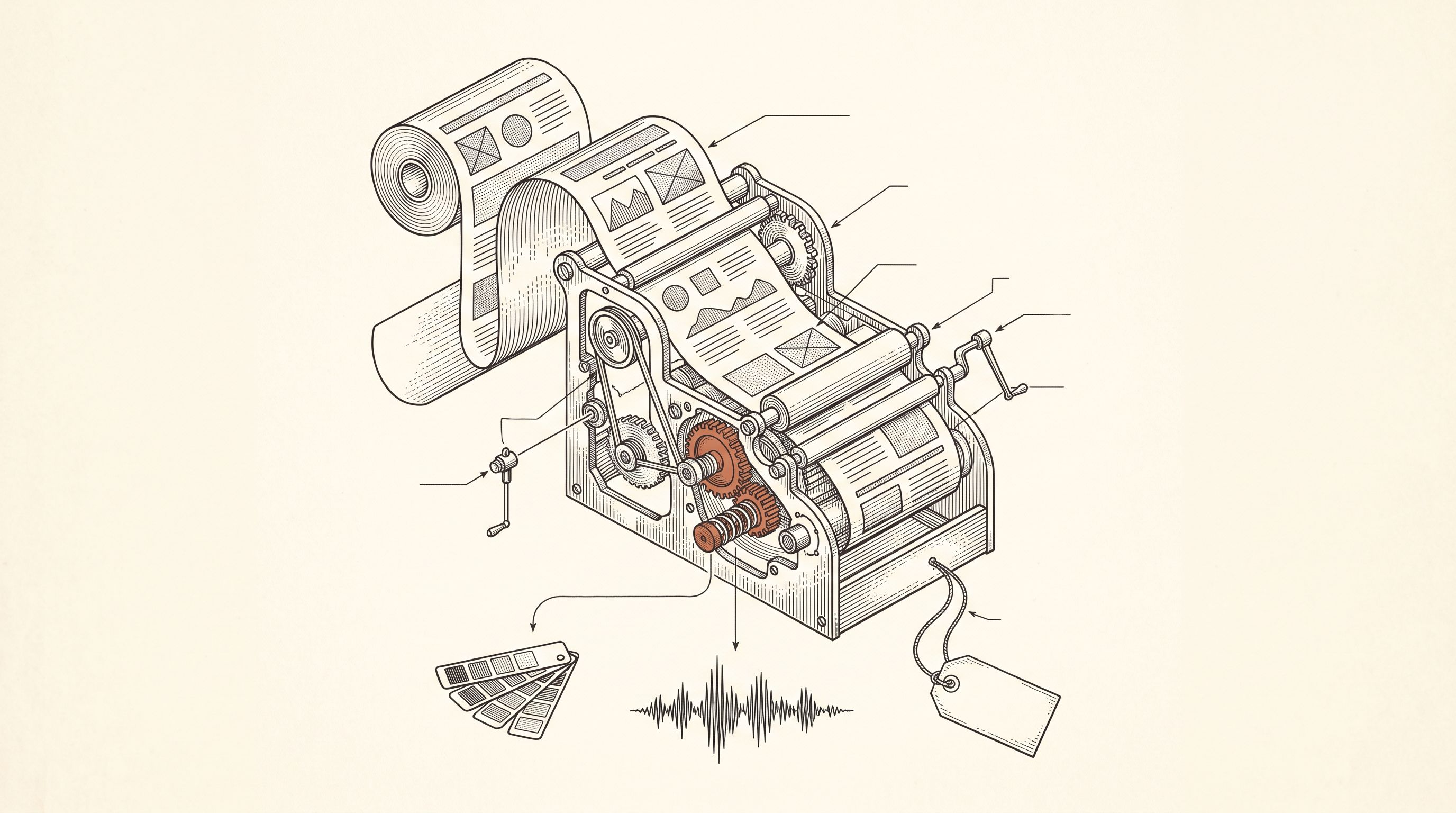
From a single website URL, ReadyToPost builds your brand profile and starts generating on-brand posts — no manual brief to fill.
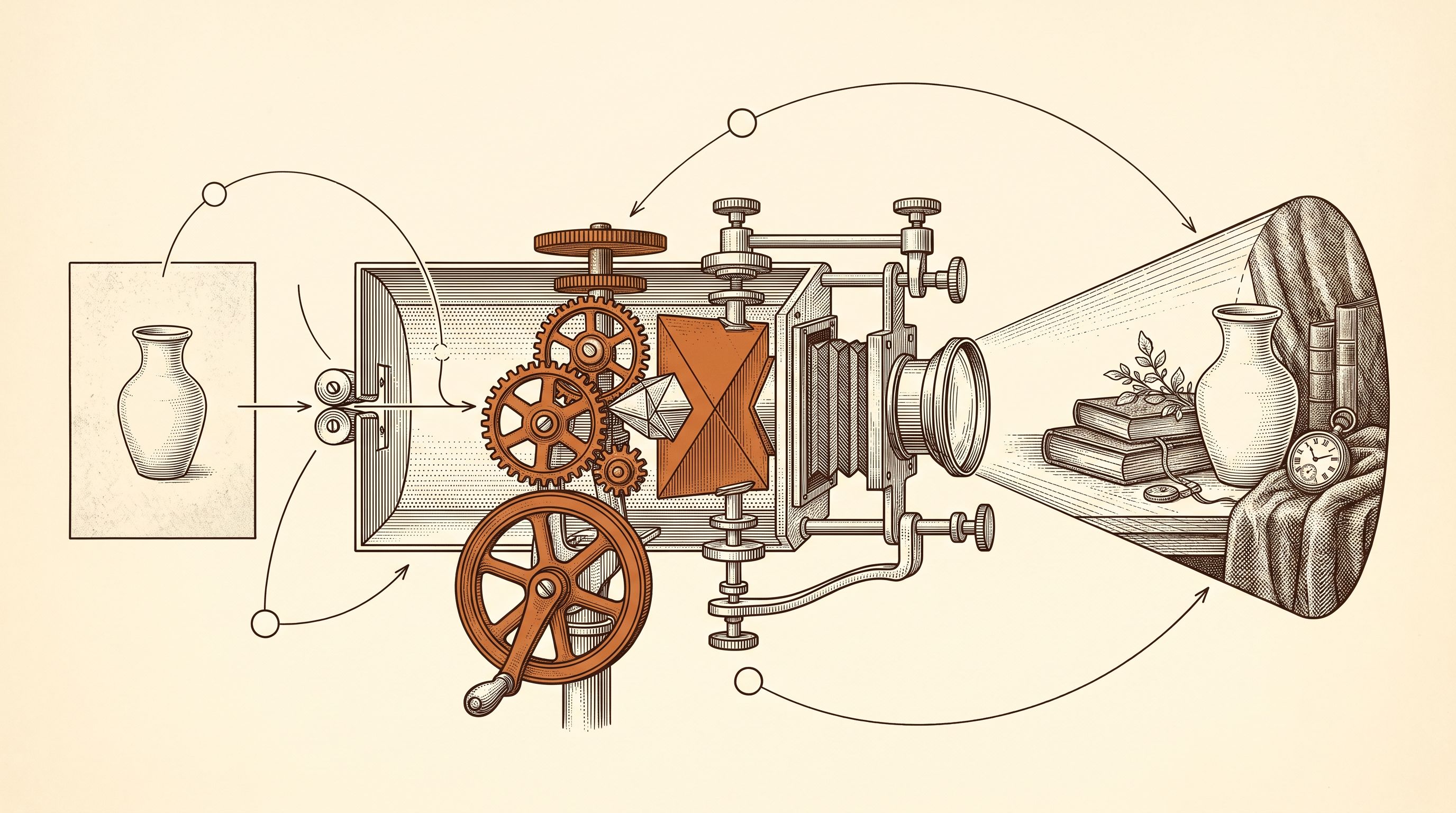
Generate social visuals from your real photos — in your style and fonts, in the right format per network. Fix any detail in one sentence.
A semantic memory of your brand's real facts, so every post cites what you actually do and have.
Generate on-brand Instagram posts where the 4:5 feed visual and the caption are built together — a scroll-stopping hook, breathable paragraphs, and full-word hashtags grouped at the end, scheduled and ready to publish.
Generate professional LinkedIn posts, mention real people and companies right in the text, then publish to your profile or your company page.
Generate conversational Facebook posts, set your emoji and hashtag level, and schedule them straight to your Facebook Page. Text and visual built for the feed.
You know where to look. While you address it, Readytopost keeps your communication alive — written, illustrated and scheduled every week.
Monthly plansReady in minutesCancel in one click