How to Grow a Product Business on Instagram From Zero
Build a useful Instagram foundation before chasing reach: clarify the offer, collect real product proof, give each post a job, and repeat the sequence.
The silence never falls when you're bored. It falls right when you're making the most, so right when you need to sell.
You make by hand and sell in small batches: soaps, candles, ceramics, jewelry, stationery. Your days go to the studio, not to social media. So you post when you think of it or when you have five minutes — and those five minutes never come when the studio is running flat out. The result: gaps, then bursts. This guide explains why this pattern happens mechanically, what it really costs you, and how to break it without spending your evenings on it.

What if your feed stayed alive right through the rush?
Silence no longer has to line up with your busiest weeks.
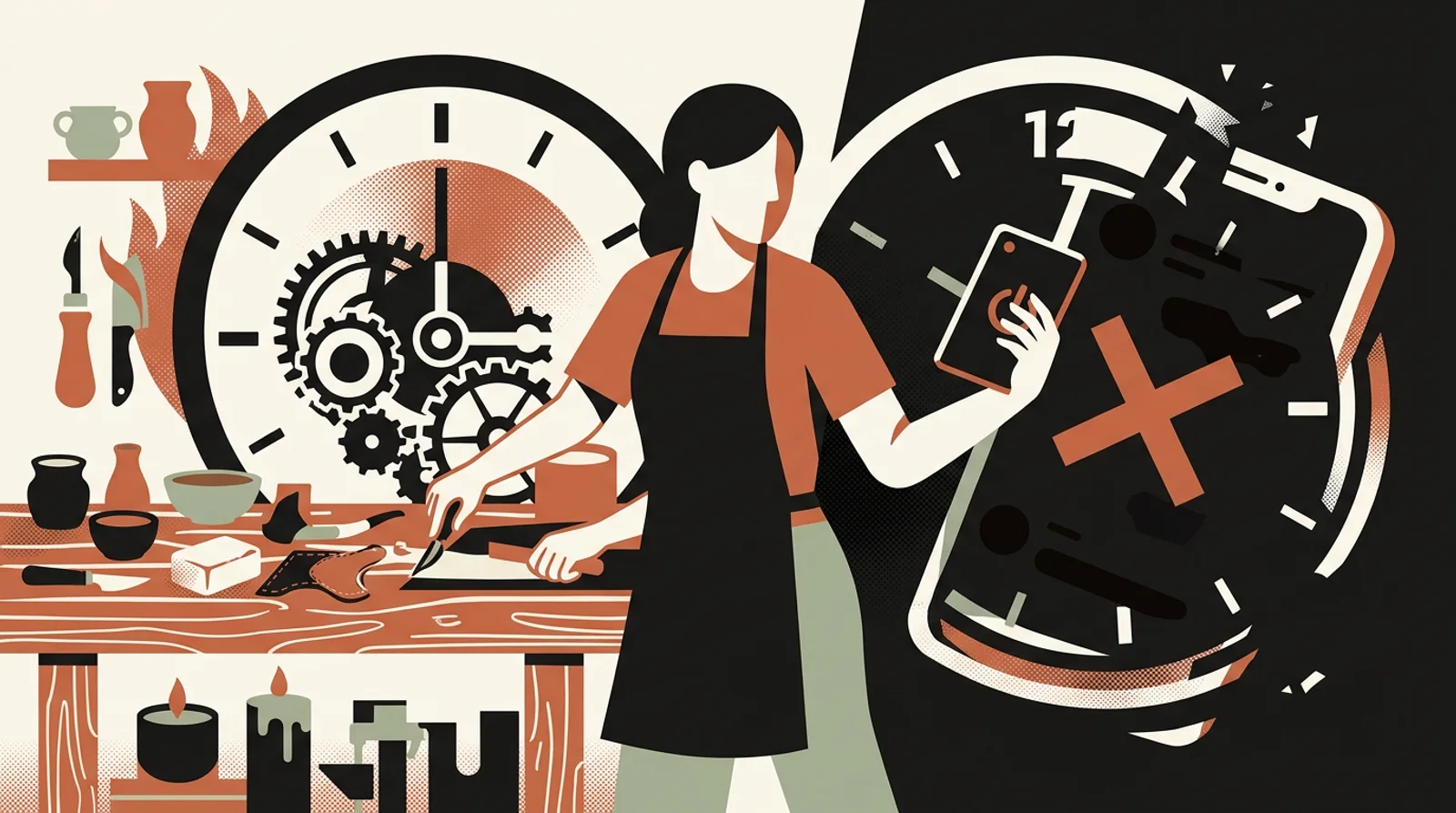
Stay visible in the rushYour studio runs on a production clock: by batches, by seasons, by crunch. It's irregular by nature — an order of fifty candles for a wedding, a restock before Mother's Day, three markets in one month. The feed, meanwhile, runs on a presence clock: it rewards regular, frequent showing up. When you post "when you have a moment," you wire your presence to the production clock. And that clock guarantees silence at the worst possible time: during the weeks when you make the most, so when you most need to sell. The rush doesn't just compete with the post — it crushes it.
Spot your last silent gap: it almost always lines up with a heavy stretch at the studio.
Silence costs you twice. On reach: an account that goes quiet cools off, distribution starts from zero after every gap, and your catch-up burst lands all at once on a shrunken, un-warmed audience. Half of it goes in the bin. On trust: a buyer who discovers your shop scans your grid to answer a silent question — "is this shop alive, can I trust it with my money?" A long gap looks like a hobby that might never ship its order. And three posts at once then nothing doesn't say "present," it says "erratic." The burst never buys back what the silence cost.
Regularity reads before your products even do: it's the first reliability signal people pick up.
This is the most perverse part. The better your studio does — more orders, more restocks, more markets — the more you're swept up, the deeper your feed goes dark. Your effort at the bench doesn't produce more presence: it produces less. You work harder and you show up less. It's the exact opposite of what you deserve. And that's why willpower will never save the situation: you don't win a battle against a clock by gritting your teeth. As long as your presence depends on "remembering to post," it'll lose at every crunch.
If posting rests on your memory and the energy of the moment, the studio's success will always work against you.
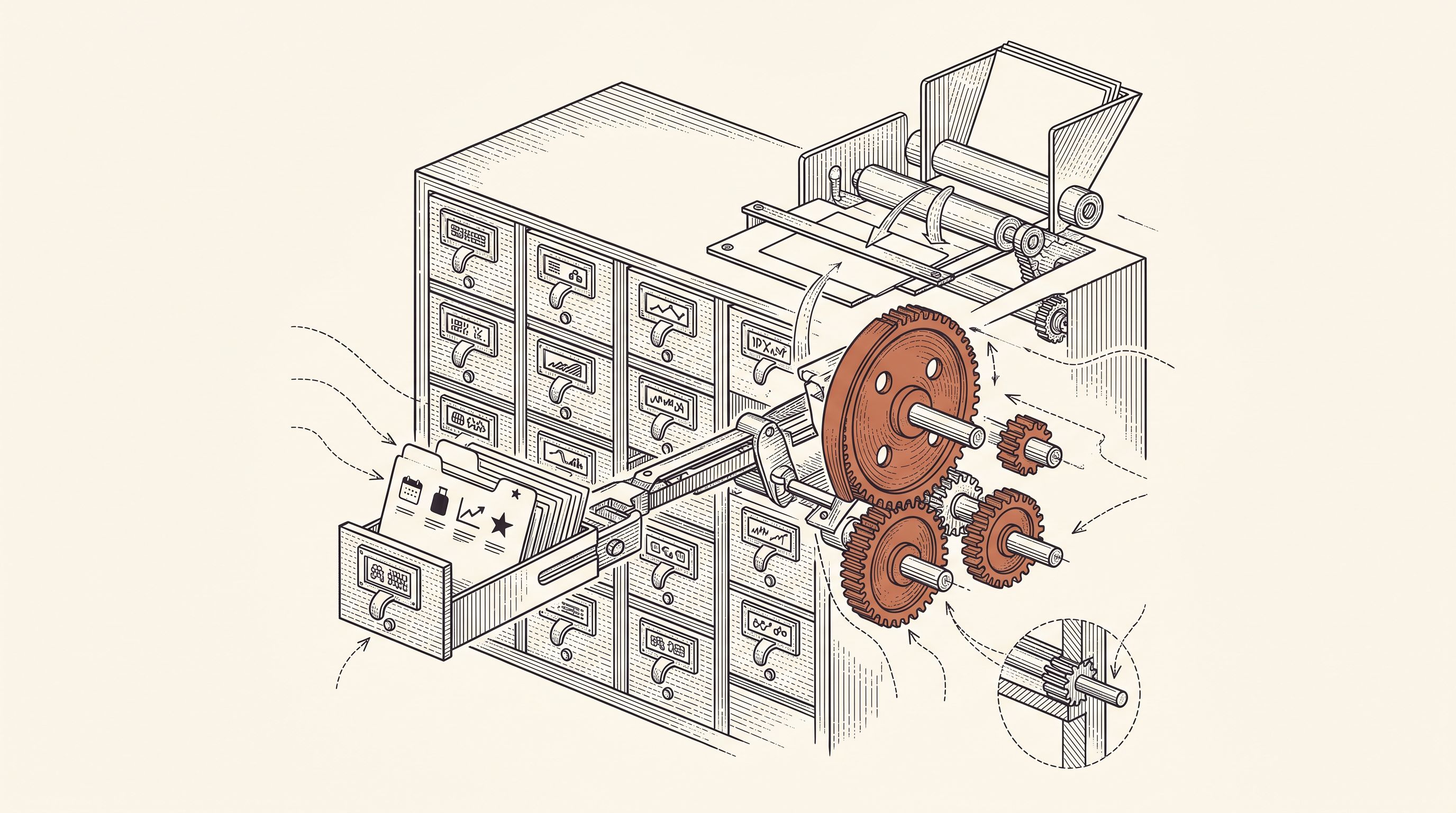
The solution isn't to post more by hand. It's to separate two gestures we always conflate: deciding and creating the content, and making it appear. Right now the two are glued together — you create at the moment you publish, so a busy week equals a silent feed. Decouple them: turn presence into a system that runs on the presence clock, instead of an act of memory on the production clock. You build once, ahead of time, in a calm moment. Then it appears on its own, at a regular interval, even the week you never open the app because you're packing a hundred orders.
The right reflex: "I prepped it," not "I need to remember to post."
Good news: you already have everything. The real photos of your products — even the ones snapped fast on the corner of the table, bad light, kitchen background. ReadyToPost starts from that real photo and stages it: your soap set in a careful scene, your candle in a lifestyle composition, your ceramic piece in a graphic template with text. The product stays yours, the app elevates it, it doesn't invent it. Then it writes the texts tailored to Instagram, Pinterest and Facebook — the writing, exactly the thing you drop first when you're slammed. You get a week of posts ready, scheduled to appear on their own. Regularity stops stealing a single minute from your bench.
Block one calm slot a week to build your "reserve": the rest goes out without you.
Your making keeps its rhythm, ReadyToPost keeps its own.
One clock for making, another for showing up — ReadyToPost runs the second one for you.
Keep my own rhythmDo
Don't
Situation
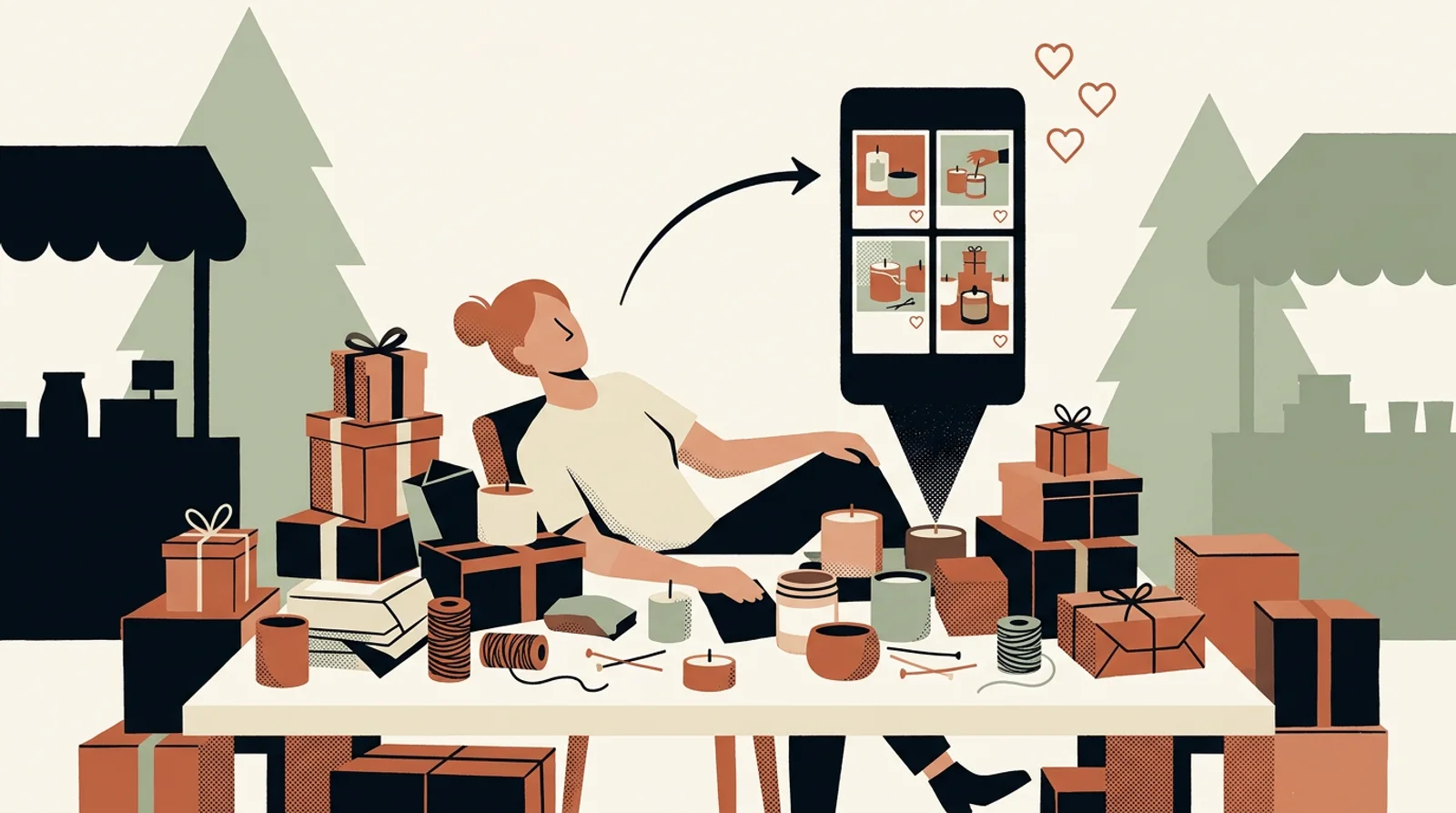
Claire makes scented candles in small batches in her Brooklyn studio. December arrives: gift-set orders, two holiday markets, a restock to keep up. For three weeks, her Instagram account shows nothing. Then, on the 26th in the evening, exhausted, she publishes four posts at once to "catch up before New Year's." Nobody really reacts.
Action
In November, during a calm afternoon, she takes the photos she already has — her candles lined up on her workbench, mediocre light — and runs them through ReadyToPost. The app stages them in warm settings, adds a gift-set visual, and generates the texts for Instagram, Pinterest and Facebook. She schedules three weeks of posts ahead, then closes the app and goes back to pouring wax.
Outcome
All through December, her feed stays alive: a polished visual every two days, even though she hasn't touched her phone all week. Her Pinterest pins drive traffic to her shop right during the gift-buying window. To a buyer discovering the brand on the 15th, the shop looks active, reliable, alive. Claire crafted all month without ever sacrificing her presence.
One calm afternoon, three weeks of presence.
Camille did it in November — your one calm slot can cover your next rush too.
As long as you see your gaps as a discipline flaw, you look for the fix in the wrong place. You already run a whole studio, deadlines, customers: you aren't undisciplined. The problem is structural — your presence is wired to the fits-and-starts rhythm of production. You don't fix a clock mismatch with guilt, you fix it by decoupling the two gestures.
Publishing three posts in a row after two weeks of silence feels logical, but it stacks everything onto a cooled audience that will barely see them. Worse, it sends the opposite signal to the one intended: an account that swings from total dark to overflow looks erratic. Presence is built over time and consistency, never in a guilt sprint.
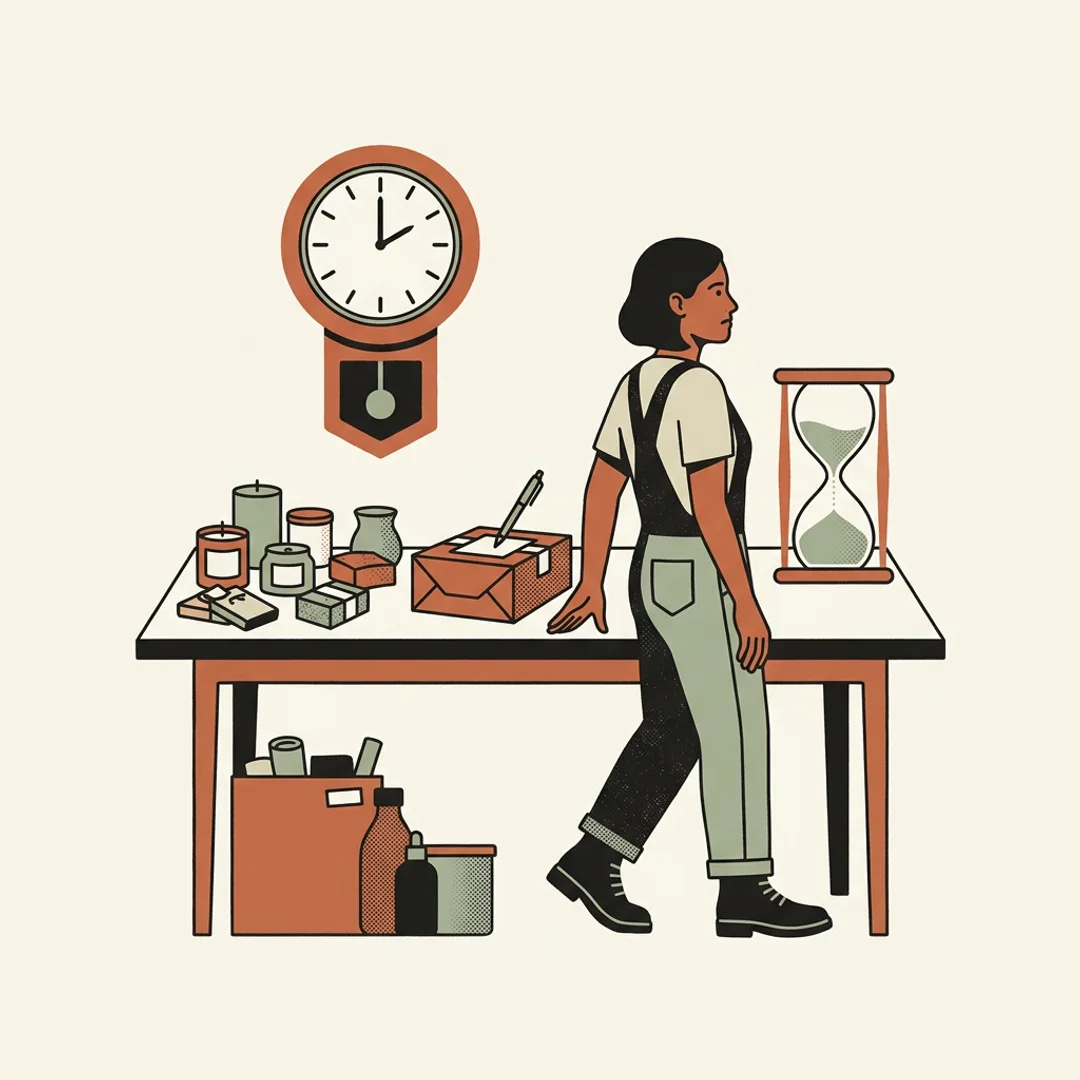
You put it off, telling yourself you'll post when you have time for a real photo shoot, nice copy, a careful mood. That time never comes in high season. But that's precisely when your presence matters most. Better to start from the imperfect photo you already have and let it be transformed, than to wait for perfect conditions that won't come.
You've just identified where it's breaking. Addressing it will take your time, your focus, your energy. Meanwhile, your communication can't go dark — or turn into filler. Readytopost keeps it at a demanding level on the five social networks: posts written, images generated, calendar filled — calibrated on your work.
Start with ReadyToPostKeep going on your own. The method for makers lays out the principles that turn a diagnosis into durable action — across every lever, not just communication. Concrete markers to help you decide on the fly, without imposed recipes or rigid calendars. At your pace, at your scale.
Continue to the method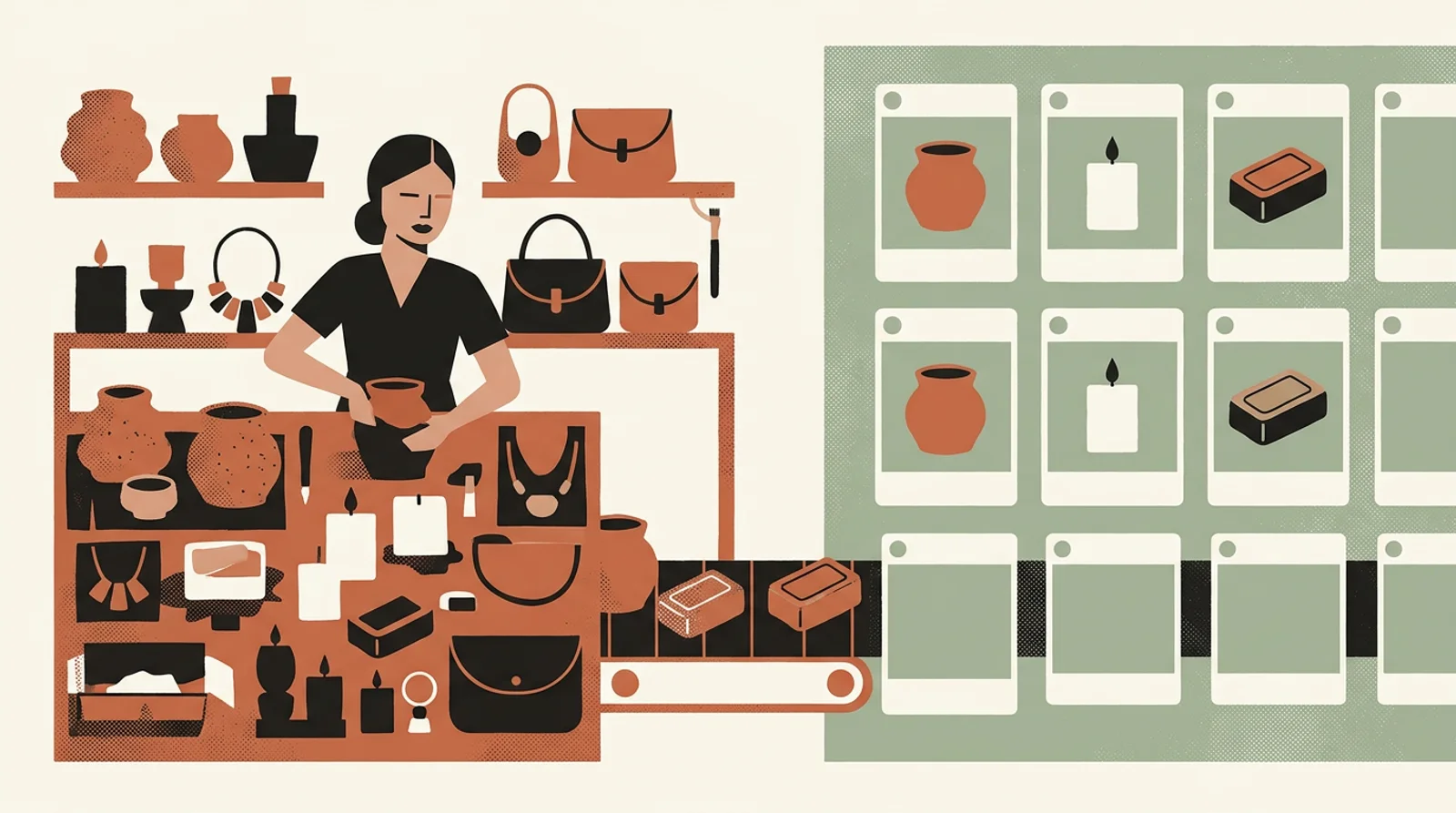
No, and that's the central point. You already run a studio, deadlines and customers: the discipline, you have it. Your irregularity comes from a clash of rhythms: your production runs in fits and starts, the feed rewards consistency. As long as you post "when you have a moment," you chain your presence to the studio's rhythm, which silences you right when you're swamped. The solution isn't to grit your teeth, it's to build your presence ahead so it runs on its own.
Unfortunately no. After a gap, your distribution has restarted cold and your audience has shrunk: your three posts at once reach very few people. Most of the effort is wasted. And on image, going from total silence to a burst makes the shop look erratic, not more present. What repairs a feed is regularity over time — not a guilt sprint. Better one visual every two days than an avalanche then the dark.
Yes, that's exactly the starting point. ReadyToPost starts from the real photo of your product, even a mediocre one, and turns it into a branded visual: it stages the product in a scene, builds a lifestyle composition, drops it into a graphic template, adds text if needed. Your product stays yours, the app elevates it — it doesn't fabricate a fake product. So you don't need a pro photo shoot to have a polished, regular feed.
A few minutes, on a single calm slot. The idea is to decouple creation from showing up: you build a week (or more) of posts at once, from products and photos you already have, then you schedule the lot. After that it appears on its own, at a regular interval, even the week you never open the app because you're packing orders. One quiet afternoon of prep can cover a whole rush stretch.
The ones where your shop fills up from the scroll. ReadyToPost generates the tailored text for each network: for you, Instagram, Pinterest and Facebook are the most useful, where buyers discover you and come back. Pinterest drives traffic to your shop over time, Instagram and Facebook keep the connection and the proof that the shop is alive. The same real product becomes a post ready for each, without you rewriting everything by hand — and writing is exactly what you drop first when you're slammed.
Build a useful Instagram foundation before chasing reach: clarify the offer, collect real product proof, give each post a job, and repeat the sequence.
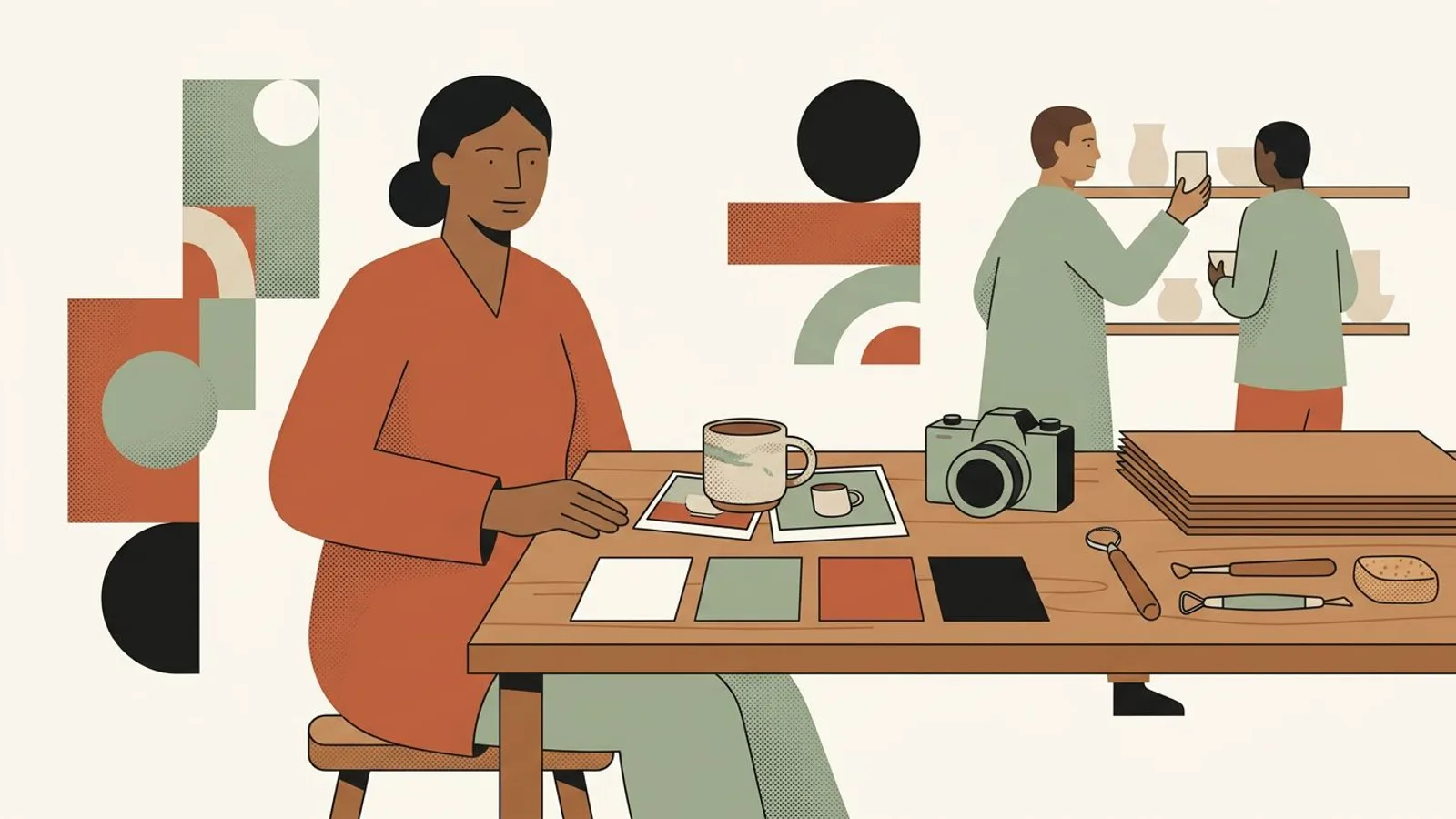
Choose one Etsy listing, give each week a clear buyer job, and turn accurate product facts and photos into a connected Instagram campaign.

Sell a digital download on Etsy by solving one buyer task, packaging the files clearly, publishing a complete digital listing, and promoting the offer with a repeatable proof sequence.
Turn each product into a useful Instagram sequence: show the material, explain a making decision, prove the result, then make the offer clear.
Linking your Etsy shop to Instagram is a five-minute bio setting. The reason clicks don't turn into orders is different: your feed and your shop look like two different sellers. Here's the fix.
The Instagram content mix that keeps handmade brands posting for months: more process shots than finished pieces, not prettier ones.
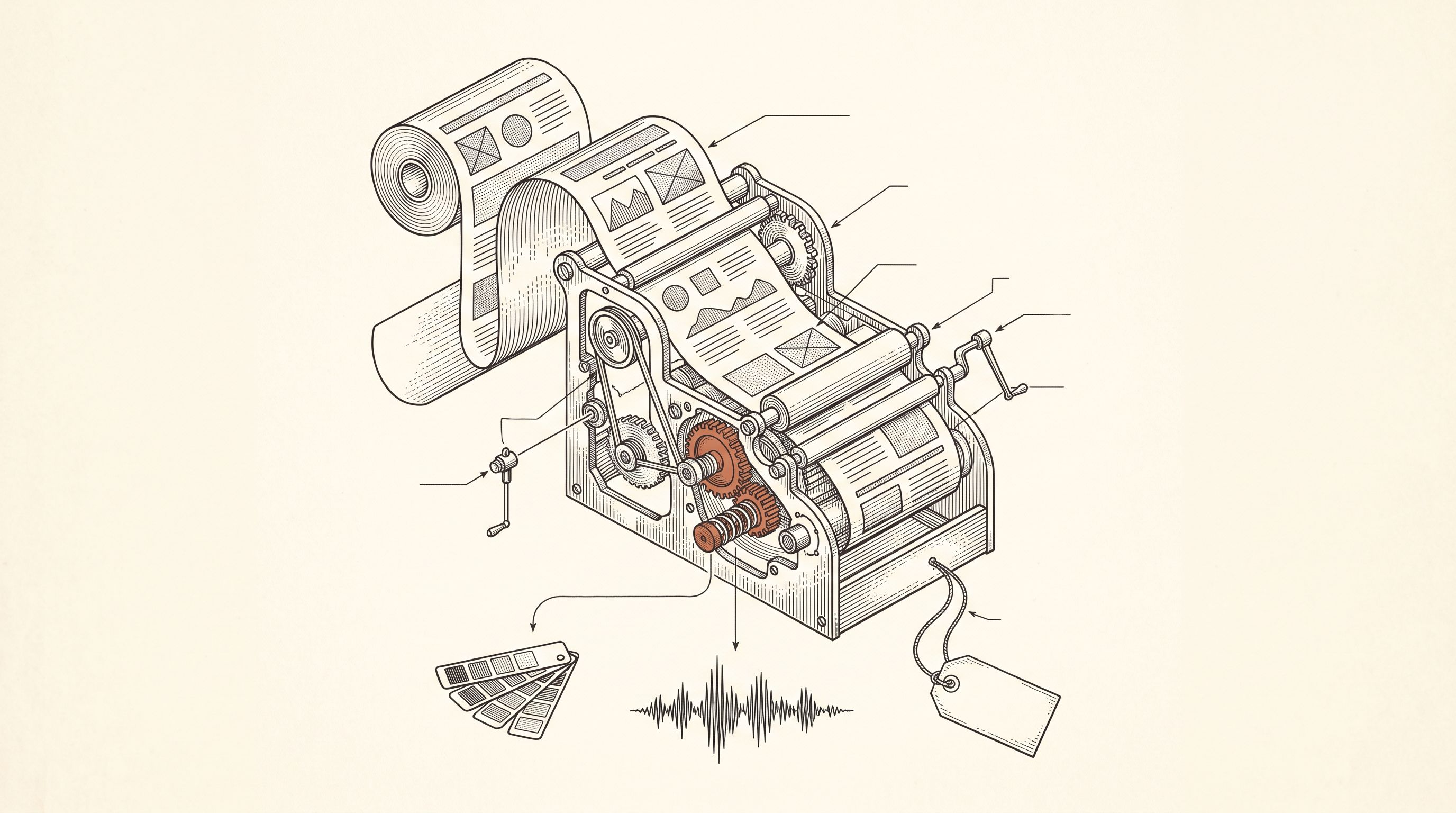
From a single website URL, ReadyToPost builds your brand profile and starts generating on-brand posts — no manual brief to fill.
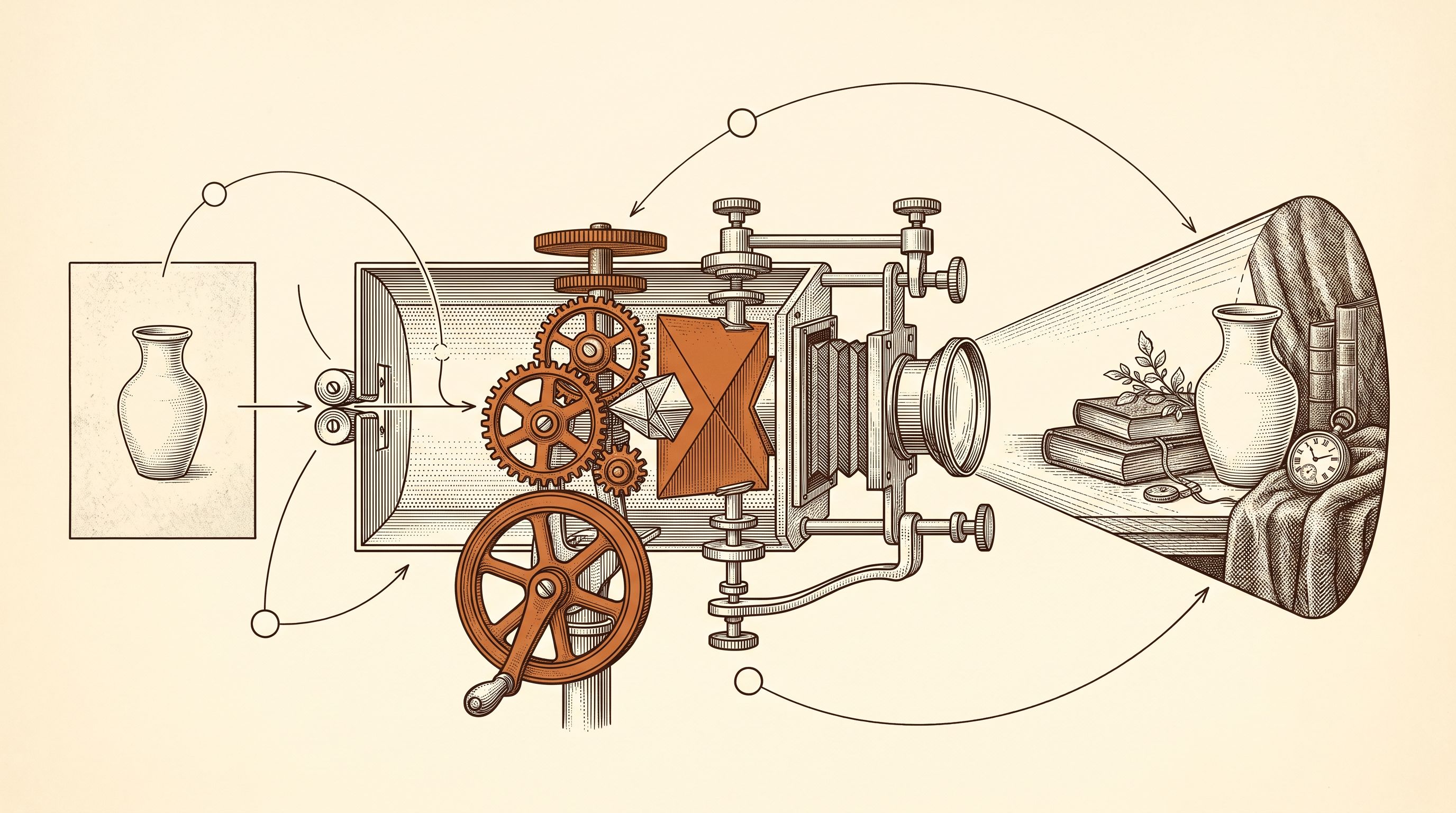
Generate social visuals from your real photos — in your style and fonts, in the right format per network. Fix any detail in one sentence.
A semantic memory of your brand's real facts, so every post cites what you actually do and have.
Generate on-brand Instagram posts where the 4:5 feed visual and the caption are built together — a scroll-stopping hook, breathable paragraphs, and full-word hashtags grouped at the end, scheduled and ready to publish.
Generate professional LinkedIn posts, mention real people and companies right in the text, then publish to your profile or your company page.
Generate conversational Facebook posts, set your emoji and hashtag level, and schedule them straight to your Facebook Page. Text and visual built for the feed.
You know where to look. While you address it, Readytopost keeps your communication alive — written, illustrated and scheduled every week.
Monthly plansReady in minutesCancel in one click