Your product photo decides before anyone sees your product
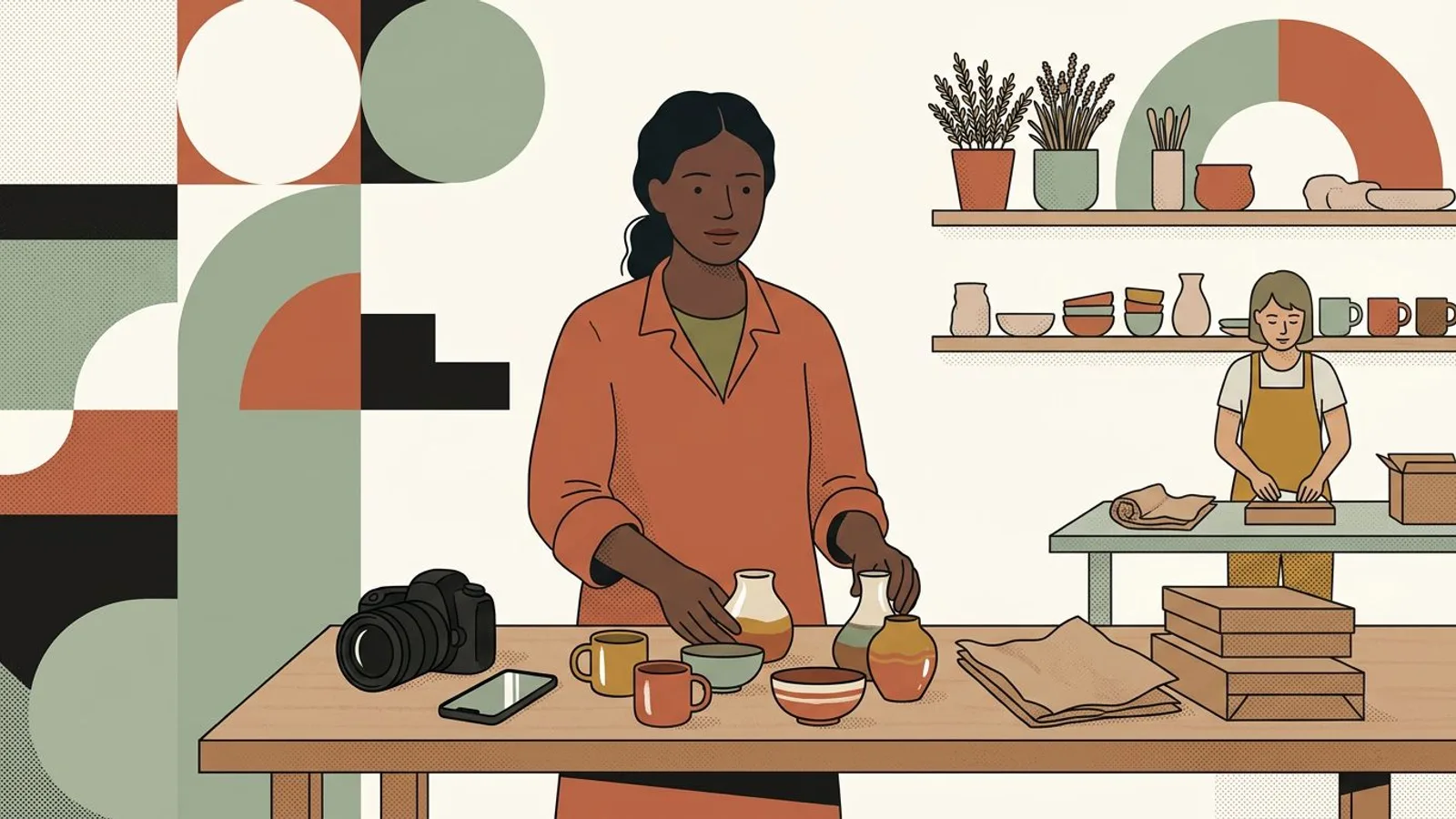
On a feed, nobody ever judges your product. They judge the image of your product. And between the two, there's sometimes just an ill-lit corner of a kitchen counter.
In an online shop, no one ever buys the object: they buy an image on a screen, and they decide in a split second whether it's worth slowing down for. The trouble is that this little rectangle judges your work on signals that have nothing to do with the quality of what you made. The light, the background, the absence of clutter, the fact that the object lives in a setting rather than sitting on a worktop: that's what carries weight. These diagnostics teach you to read what each post truly costs — the scrolls that never stop, the likes that never turn into orders, the feed people forget from one week to the next. Read first, fix second — and discover that the flaw is almost always in the presentation, never in the product.
On a feed, nobody ever judges your product. They judge the image of your product. And between the two, there's sometimes just an ill-lit corner of a kitchen counter.
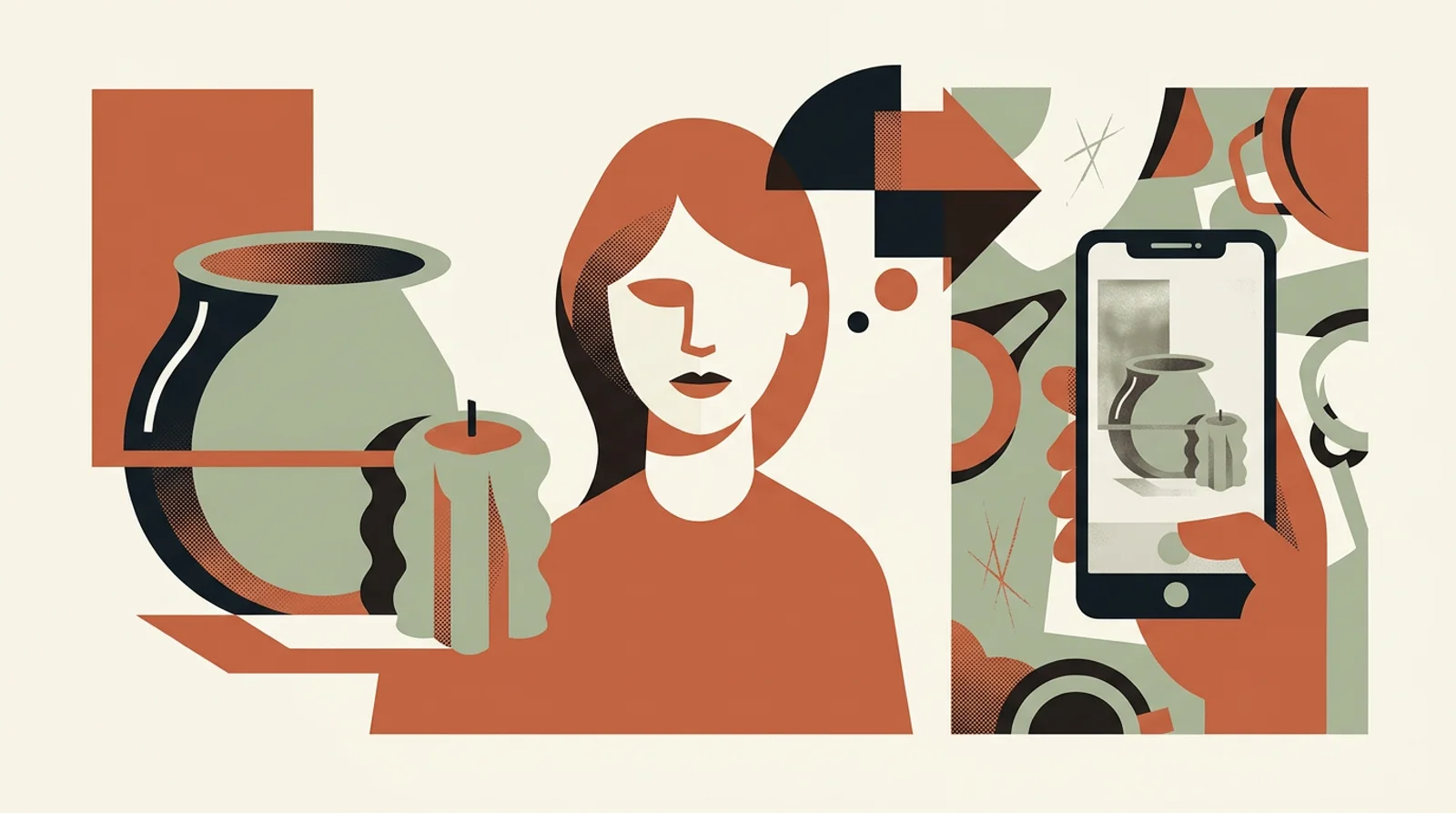
Your photos prove the product exists, but every post looks like a different brand. The result: people like you, then forget you. The problem isn't taste, it's memory.
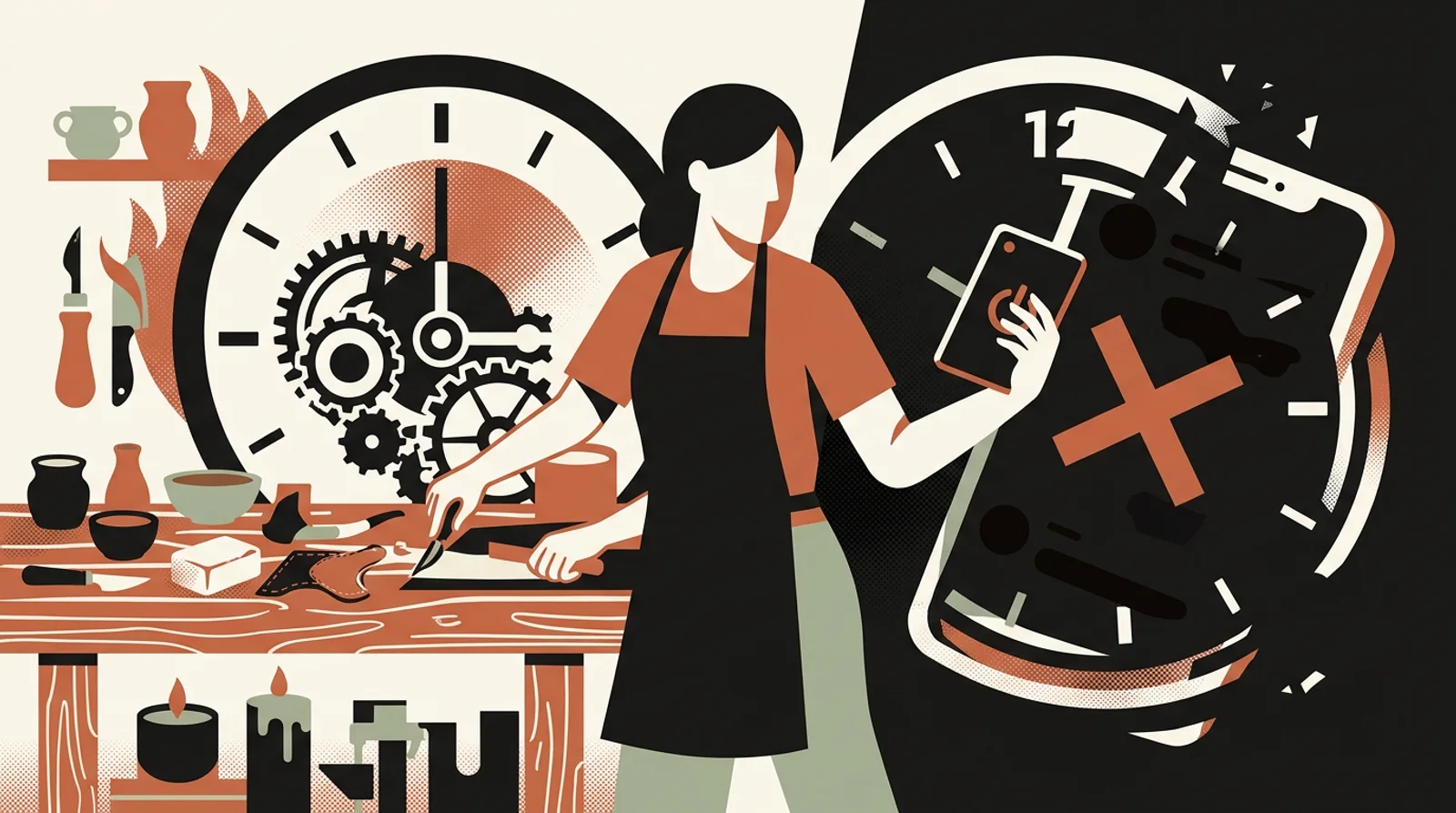
Weeks of silence, then three posts at once on a guilty Sunday. The problem isn't your willpower, it's that your feed is wired to your studio's clock instead of its own.
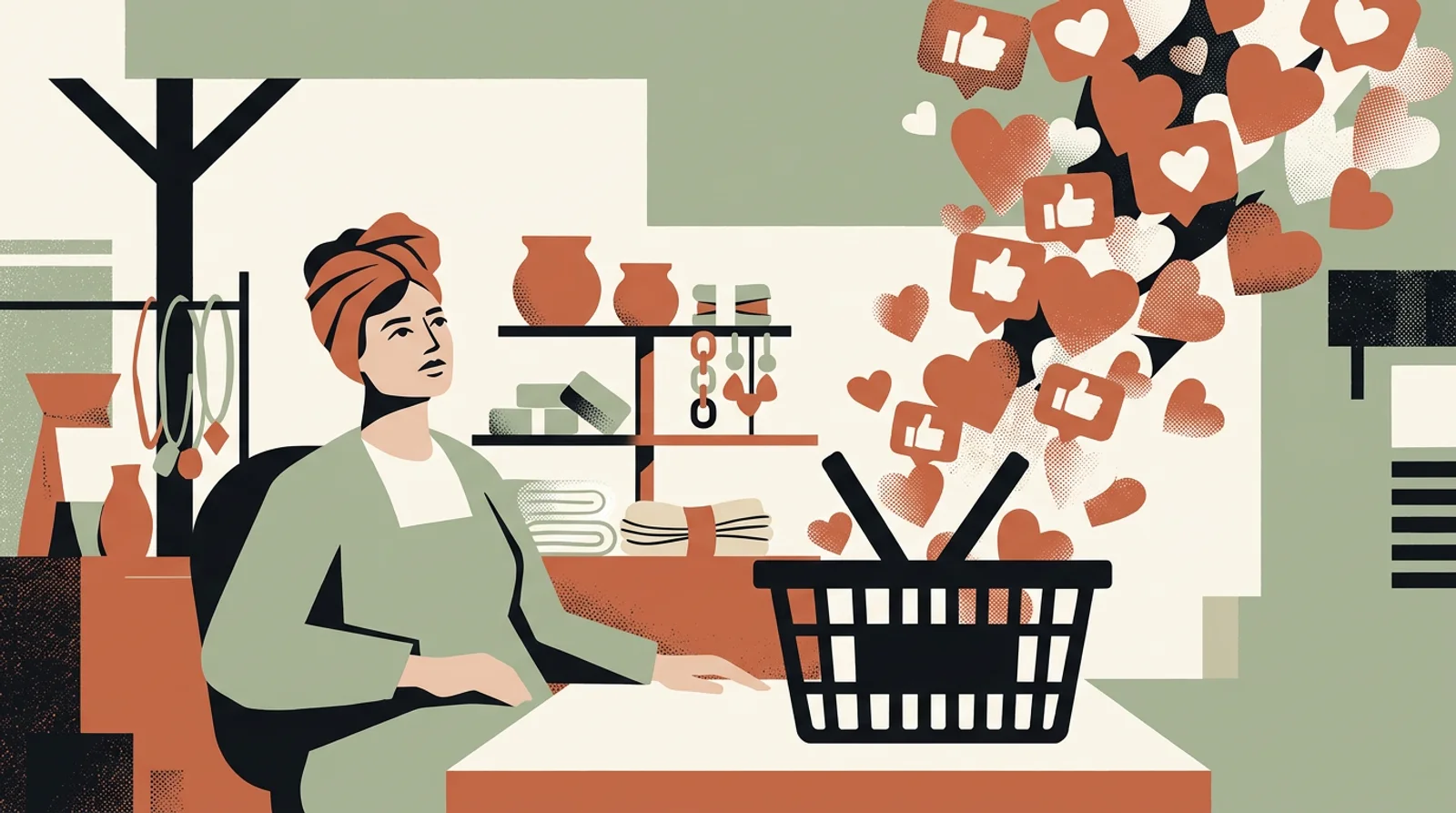
A post can pull a hundred saves and zero orders with nothing wrong with your product or your price. Here's how to read the gap between attention and the urge to buy, before you blame your reach.