
How to Grow a Product Business on Instagram From Zero
Build a useful Instagram foundation before chasing reach: clarify the offer, collect real product proof, give each post a job, and repeat the sequence.
The finished object doesn't carry the value. The hands, material and hours you can't see do.

You spend your days at the bench, hands full, not doing marketing. The result: your feed shows nothing but the finished product — and a stranger scrolling past reads one more pretty object, at a price that makes them hesitate. Everything that would justify that price (the craft, the material, the hours, the why) stayed in the studio. This guide gives you a repeatable way to surface that invisible work in your posts, as proof, without oversharing your private life or sounding like a salesperson.

What if your price justified itself, without another word?
The craft and the hours already exist, ReadyToPost turns them into visual proof.
Justify my priceFirst, pin down the one question your price raises in the buyer's head: "why is it worth more than the one next to it?" Everything you show of your making has a single job: to answer that question with a concrete, showable fact. It's not "talk about yourself," it's "show the work the screen hides." The hand-poured wax, the soap curing for four weeks, the wheel-throwing: each detail is an answer, not a diary entry. You're not telling your story, you're proving.
Write the price question at the top of a sheet. Every post has to answer it.
Take one finished creation and break it into showable fragments. The raw material before transformation (the wax slab, the lump of clay, the silver wire). The gesture that defines your craft. The risk moment where it could all go wrong. The waiting time (drying, firing, resting). And the small flaw that proves it's handmade, the one a machine would never make. Each fragment is a distinct angle, not some vague catch-all "behind the scenes." A soap maker already has five subjects in a single bar.
Aim for at least five fragments per piece: material, gesture, risk, wait, flaw.
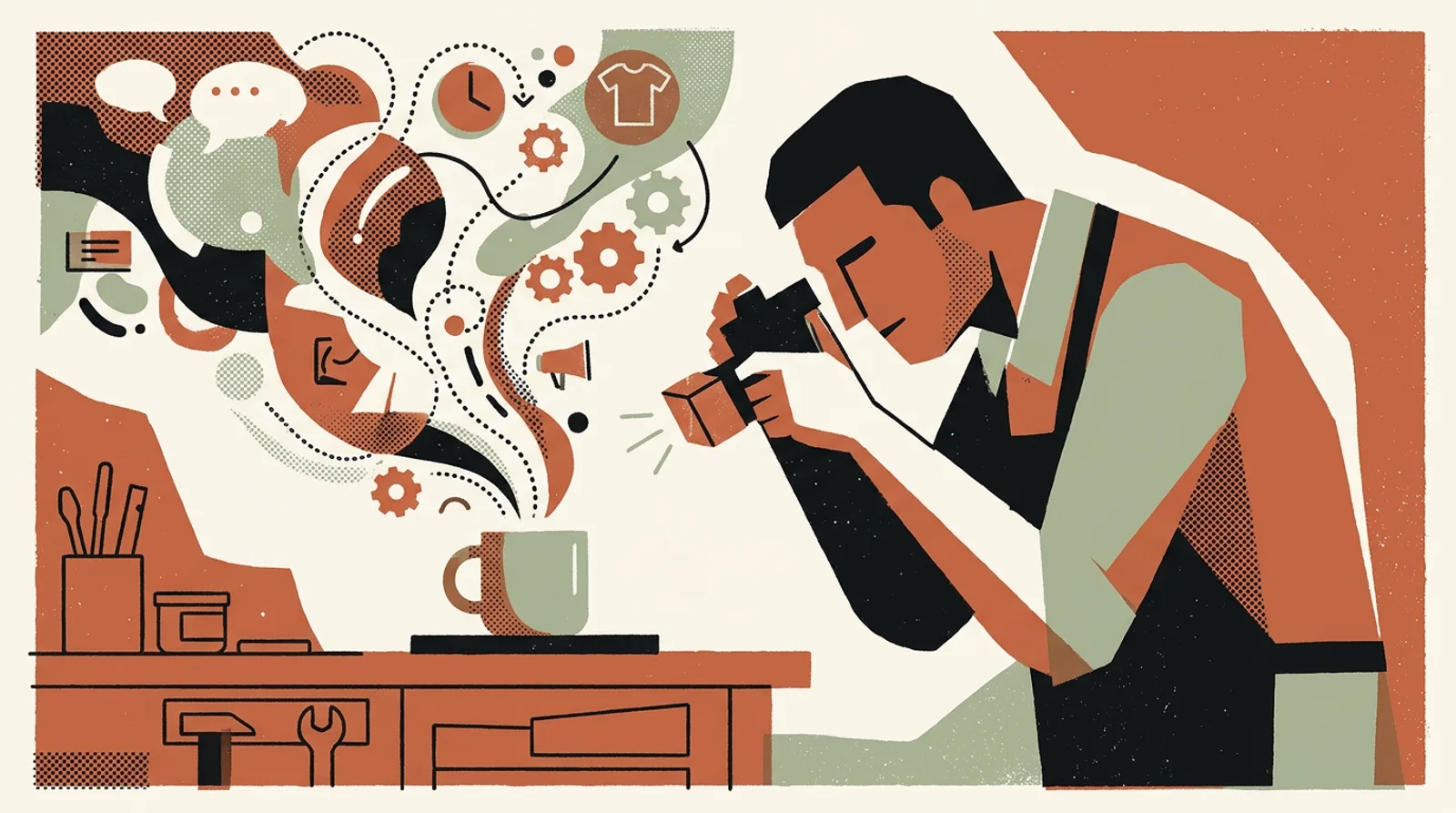
The trap is believing you need a photo shoot. Wrong. The work is already happening: pull out your phone and shoot the in-progress state, the messy bench, the unglamorous middle. That imperfect photo isn't the final render, it's your raw material: it captures the real of the gesture, but on its own it isn't enough for a desirable post. The clean, polished side, the tool adds afterward. Two minutes between two gestures is enough.
One raw photo per fragment, caught on the fly. The "pretty" comes later, not now.
You hand your real photo — often badly lit, snapped on the corner of the bench — to ReadyToPost. The AI stages it in a setting, composes it as a lifestyle scene, or places it in a graphic template with the text. Your real piece stays intact: it's enhanced, never invented or replaced by a fake product. Each making fragment becomes a desirable post, consistent with your brand, with the copy generated for each network. The soap badly shot in your kitchen comes out as a visual that makes people want it, without you touching any editing software.
Give the real photo as-is. The tool dresses it up; it never fabricates a product that doesn't exist.
Told once, your story convinces a few people. Told week after week, from different angles, where your buyers actually scroll — Instagram, Pinterest, Facebook — it slowly moves a whole audience from "pretty object" to "worth it." Perceived value builds by accumulation. The same bar of soap gives you the material post on Monday, the gesture post on Wednesday, the curing post on Friday. Not a flash that vanishes, but a recognizable studio narrative that takes hold.
Schedule the week in one go. One fragment a day, the same thread running through.
You capture the gesture, ReadyToPost turns it into proof.
One photo taken without putting down your piece is enough, ReadyToPost writes the copy that tells the price.
Prove my craftDo
Don't
Situation
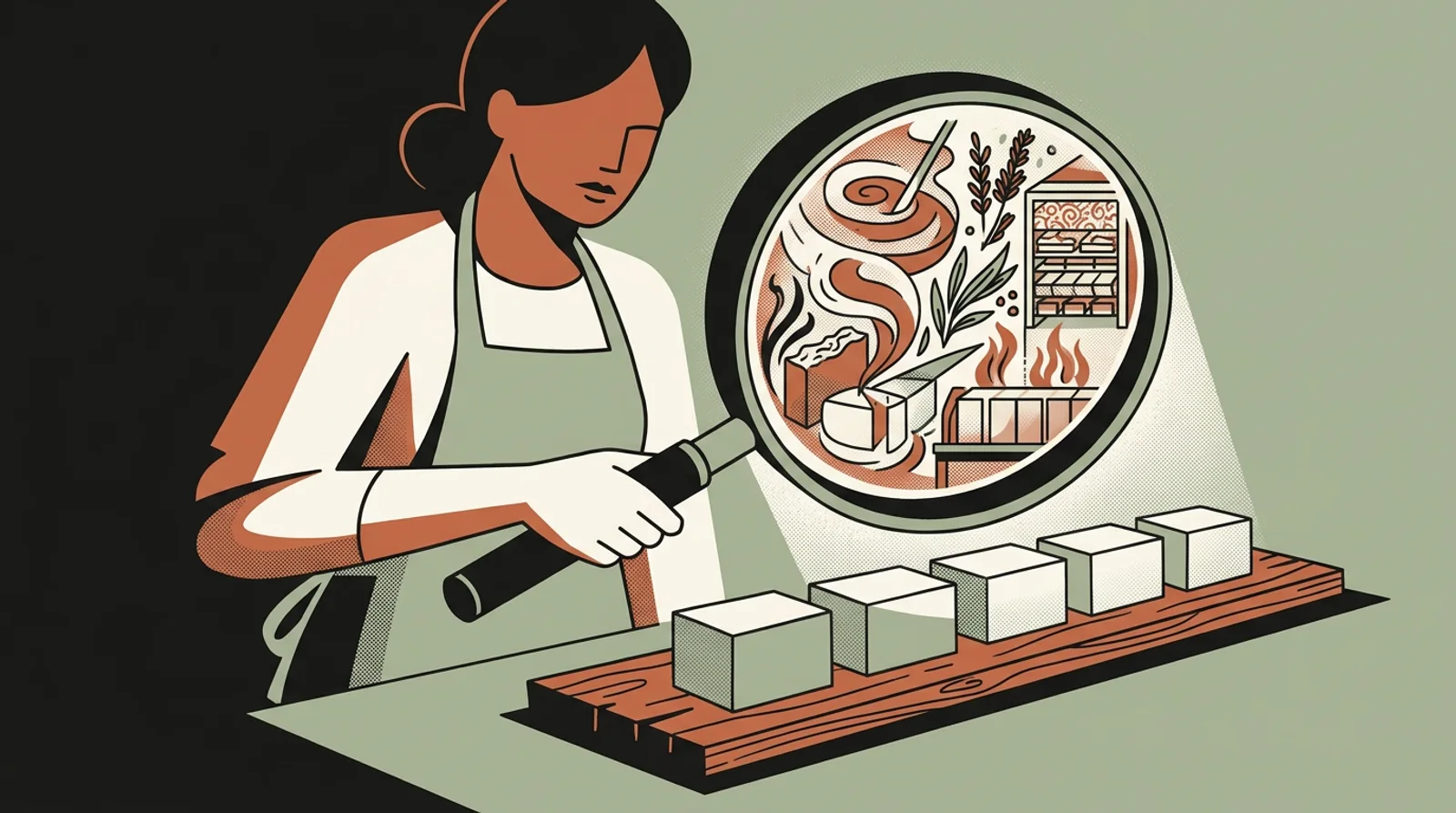
Eleanor runs a small cold-process soap workshop in Vermont. She sells on Instagram and at maker markets. Her soaps go for $9 a bar, and every week someone says "$9 for a soap, really...". Her feed is nothing but a string of soap bars on a board, badly lit, and she gave up on "telling her story" after two posts that read like a diary.
Action
She takes a single rosemary soap and breaks it into fragments. Monday: the photo of the lye and oils before trace, shot on the phone. Wednesday: her hands pouring the batter into the wooden mold. Friday: the bars lined up on the shelf with the label "ready in 4 weeks." The weekend: the cut soap, its surface never quite the same twice. Each raw photo goes through the app, which stages it in a warm setting and generates the copy per network. None of them says "buy," each one answers "why $9?".
Outcome
In a month, the same argument — the four-week cure, the lye spooned and weighed by hand, the flaw that proves the hand-cut — has run across Instagram, Pinterest and Facebook from six angles. At the next market, two customers cite "the four weeks of curing" before she even brings it up. The "it's expensive" gets rarer: the price finally has a visible story behind it. And all of it took her about ten minutes a week, between two batches.
One gesture filmed, a price that stops hesitation.
Your next piece can tell the same proof, without ever oversharing your private life.
Trying to "be authentic," people slip fast into personal confession — the tiredness, the doubts, the family life — which has nothing to do with what justifies the price. The buyer doesn't need your life, she needs to see the work in the object. Stay on the material, the gesture, the time. The emotion comes from the craft shown, not from the confession.
Many makers keep putting it off because "the studio isn't presentable" or "the photo is ugly." It's exactly the opposite: the raw is the raw material of proof, and the polish gets added afterward — silence costs more than any imperfect photo.

Telling your story once, in one big founding post, then going back to the catalog: that's the classic mistake. A single telling convinces a handful of people and fades into the feed. It's repetition, from varied angles and over time, that turns "pretty" into "worth it." One fragment isn't enough; it's the stream that moves the audience.
A method is set — still, you need time to put it to work. Readytopost frees that time by taking one front off your plate: your presence on the five social networks. Everything written, illustrated, scheduled — calibrated on your work, week after week. So your energy stays on the trade.
Start with ReadyToPostSee how these principles play out day to day. Practice for makers gives you concrete, illustrated, adaptable levers — directly applicable the following week. No quarterly plans, no annual roadmaps: weekly gestures that touch something right away.
See it in practice
The opposite happens. For a handmade object, mystery doesn't create value — it creates doubt ("why so expensive?"). Showing the gesture and the hours doesn't demystify your piece, it grounds it: people finally understand what they're paying for. The magic of an industrial product breaks when you see the factory; the magic of a handmade one is revealed when you see the bench. You're not giving away a secret, you're bringing proof.
Good news: it's not about you, it's about your work. You need neither your face nor long texts. A photo of your hands at work, of the material, of a detail is enough. The object and the gesture do the talking. And for the text, the tool generates it from your photo and your brand, tailored to each network — you approve, you don't write from scratch. You stay behind the bench, the story gets through anyway.
No, and that's exactly the point. The raw photo, snapped on the phone on the corner of the bench, is the raw material — not the finished product. You give it to ReadyToPost, which stages your real piece in a setting, composes it as a lifestyle scene, or places it in a template with the text. Your real product stays intact, just enhanced. No studio, no white background, no editing software to learn.
It's built for makers. You capture a few fragments as the work that's already happening unfolds — two minutes here and there, not a dedicated session. Then a single piece gives you a week of posts: you run the generation, you approve, it's scheduled on your networks. Count about ten minutes a week total, the rest runs on its own. You keep a regular presence without sacrificing your evenings.
Your buyers mostly scroll Instagram, Pinterest and Facebook — that's where visual discovery happens for small handmade brands. Instagram for the story and the community, Pinterest to be found long after when someone searches for a soap or a candle, Facebook for groups and local markets. The tool adapts the same story to the format and text each network expects, without you rewriting by hand. You reach more touchpoints for the same making work.
Build a useful Instagram foundation before chasing reach: clarify the offer, collect real product proof, give each post a job, and repeat the sequence.

Choose one Etsy listing, give each week a clear buyer job, and turn accurate product facts and photos into a connected Instagram campaign.

Sell a digital download on Etsy by solving one buyer task, packaging the files clearly, publishing a complete digital listing, and promoting the offer with a repeatable proof sequence.
Turn each product into a useful Instagram sequence: show the material, explain a making decision, prove the result, then make the offer clear.
Linking your Etsy shop to Instagram is a five-minute bio setting. The reason clicks don't turn into orders is different: your feed and your shop look like two different sellers. Here's the fix.
The Instagram content mix that keeps handmade brands posting for months: more process shots than finished pieces, not prettier ones.

From a single website URL, ReadyToPost builds your brand profile and starts generating on-brand posts — no manual brief to fill.
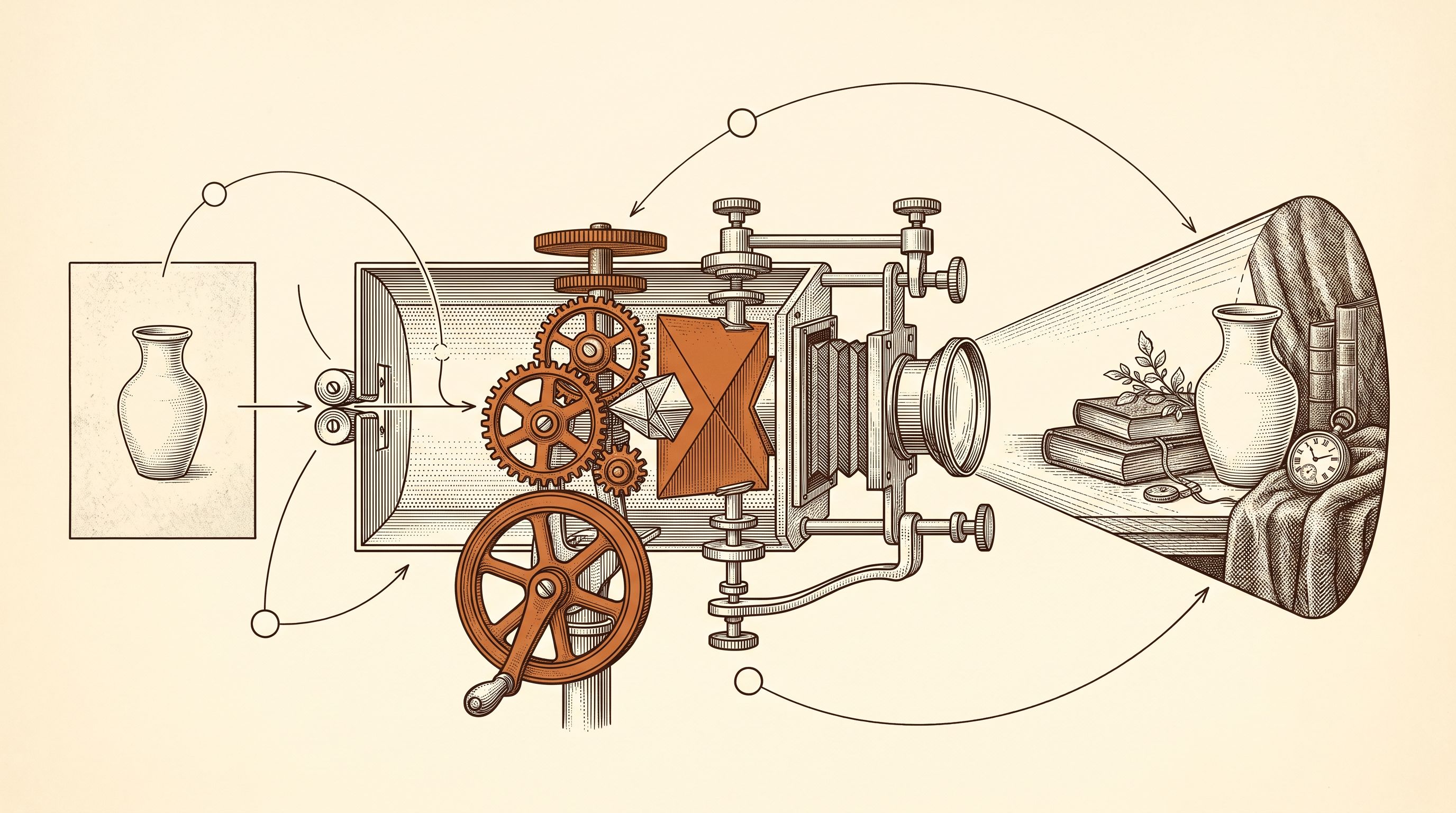
Generate social visuals from your real photos — in your style and fonts, in the right format per network. Fix any detail in one sentence.
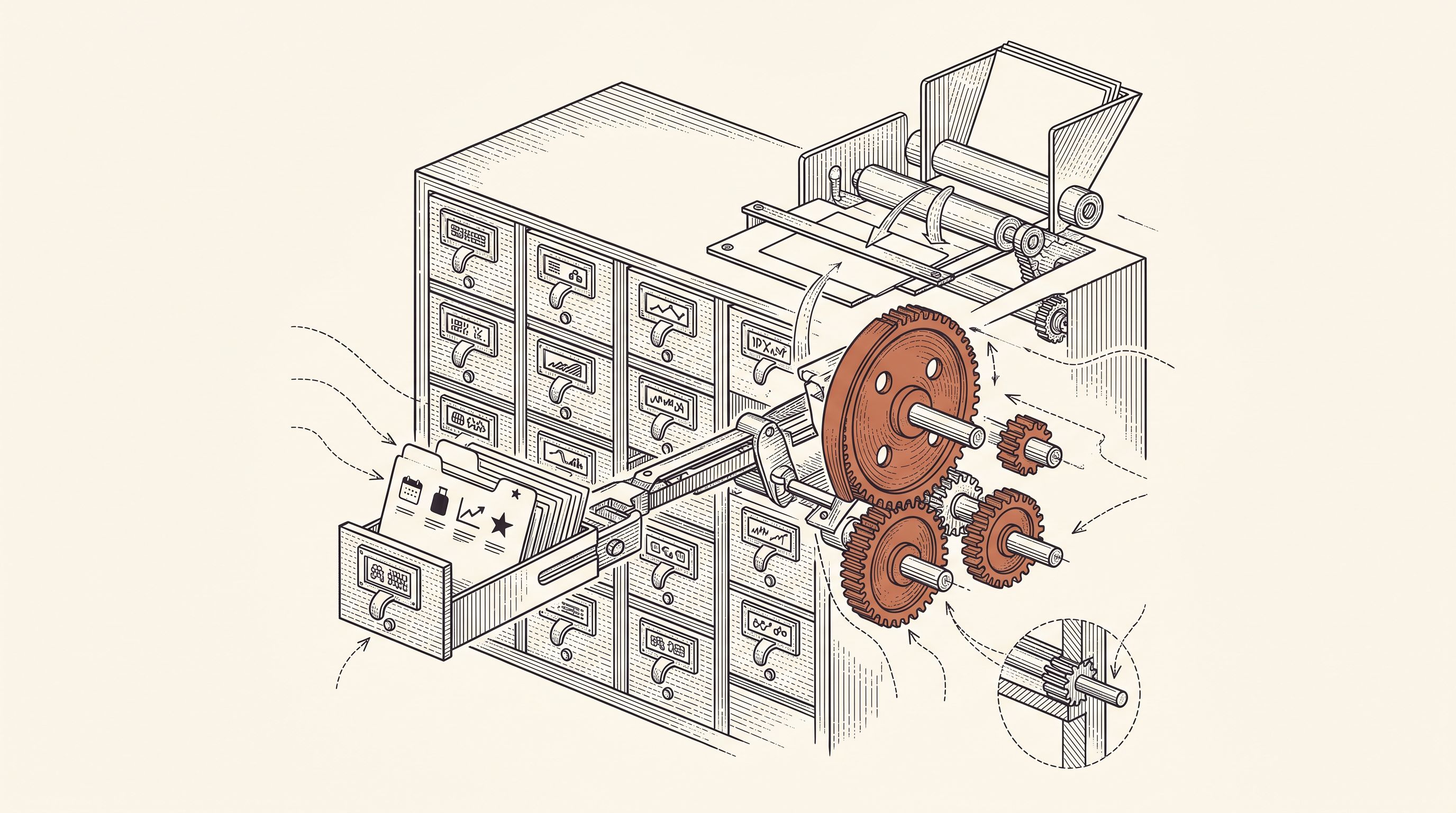
A semantic memory of your brand's real facts, so every post cites what you actually do and have.
Generate on-brand Instagram posts where the 4:5 feed visual and the caption are built together — a scroll-stopping hook, breathable paragraphs, and full-word hashtags grouped at the end, scheduled and ready to publish.
Generate professional LinkedIn posts, mention real people and companies right in the text, then publish to your profile or your company page.
Generate conversational Facebook posts, set your emoji and hashtag level, and schedule them straight to your Facebook Page. Text and visual built for the feed.
You hold the principles. Readytopost takes the communication off your plate, every week — so your method stays your method.
Monthly plansReady in minutesCancel in one click