Instagram Marketing Plan for Coaches: A Weekly System
Build a coach-specific Instagram plan that turns one clear offer into a coherent week of useful, credible posts and invitations.
As long as you're everyone's coach, you're no one's coach in particular — and nobody knows who to recommend you to.

A positioning isn't a specialty printed on a homepage. It's how precisely a stranger can decide, after reading three lines, that you're talking about them — and say so to someone else.

What if a stranger finally recognized themselves in you?
ReadyToPost turns your positioning into posts and visuals that speak to your audience.
Target my postsPositioning isn't decided in front of a blank page, it's read off your track record. List the engagements where the breakthrough was sharpest, where the client left transformed, where you yourself enjoyed the work. Look for what they have in common: the same life moment (stepping into management, hitting a glass ceiling, a career change), the same pain under different words, the same profile. That common thread isn't a constraint you impose on yourself — it's the zone where your method produces the most effect. You're not picking a niche at random: you're recognizing the one that already picks you.
If you're just starting and don't have a track record yet, take the three people you understand best from lived experience — your former job, your own transition. Credibility grows out of where you've already been.
A weak positioning describes a target ("small-business owners"). A strong positioning describes a lived problem the target recognizes instantly ("the founder who carries it all alone and has no one to talk to about the real decisions"). The audience is deduced from the problem, never the other way around. Write the pain exactly the way your clients phrase it in session — not in coach jargon. "I can't bring myself to delegate" is a positioning; "leadership coaching" is not. The test: a prospect should be able to read your sentence and think "I wrote that in my own head last night".

Simple structure: I help [who, precisely] move from [a concrete shift] without [the false fix they keep trying]. Example shape: "I help newly promoted technical managers lead without disowning who they were before." No "in order to maximize their fulfillment" — that dilutes it. Cut every word that could apply to another coach. If the sentence stays true in a competitor's mouth, it isn't yours yet. Once you've found it, it becomes the filter for everything: the LinkedIn bio, the first post, the title of the discovery call.
Read the sentence aloud to someone who knows nothing about your work. If they can repeat it ten minutes later without warping it, it's good. If they say "so you do personal development", start over.
A positioning that lives only on the "about" page is useless. It has to run through every post. On LinkedIn — the number-one channel for this profession — the bio, the cover image, the content: everything must speak to the same profile, about the same problem. The trap is to tighten the promise but keep posting broadly "so as not to miss out". The opposite is true: the more precisely your posts address one person, the more that person recognizes themselves and shares. ReadyToPost generates those posts and their visuals from your positioning, with no photo required — the image conveys the idea, not a product you don't have.
Give your positioning sentence to ReadyToPost once: it becomes the foundation of every generated post. You keep the consistency without rewriting your identity for every publication.
The sentence is yours — ReadyToPost spins the variations.
ReadyToPost adapts your positioning to every network and generates the visuals to match.
Adapt my sentenceDo
Don't

Situation
A coach introduces her LinkedIn bio like this: "Certified coach, I support individuals and professionals toward greater confidence and fulfillment." She posts twice a month about motivation and letting go, gets three likes from acquaintances, and hasn't had a single inbound inquiry since she started. When asked who she's for, she answers "a bit of everyone, it depends on their needs".
Action
She rereads her last six engagements and notices the four that worked best were women who had just stepped into management for the first time, paralyzed by impostor syndrome. She rewrites her sentence: "I help women who've just become managers dare to decide without waiting until they're 100% sure." She redoes her bio, her cover, and launches a series of generated LinkedIn posts built around that single promise — each with a visual created from the idea, no photo.
Outcome
Within three weeks, the posts that target that exact profile get ten times more comments than her old generic ones. Two women who fit the target precisely message her privately: "this is exactly what I'm going through right now". A former client recommends her to a colleague by simply saying "she's the one for new managers" — the sentence traveled without her. The pipeline no longer depends on inspiration: it depends on a promise people know how to repeat.
Your sentence could travel without you, like hers did.
ReadyToPost turns your sharpened positioning into posts your audience recognizes at once.
It's the opposite. A generalist coach captures no one's attention and gets only lukewarm prospects, the ones who showed up by default. A positioned coach attracts fewer people but prospects who recognize themselves, arrive already convinced, and convert on the call. Narrowing doesn't close the market: it concentrates your visibility where it produces clients. You can always take on an off-target client who knocks — but you don't build your communication around the exception.
"NLP coach", "systemic-approach practitioner", "ICF-certified coach": these are tools, not positionings. The prospect isn't looking for a method, they're looking for the way out of a problem. Leading with the method forces the reader to translate it themselves — and they won't. Name the pain they're living first; the method will come to reassure them later, once they've raised their hand.

A positioning isn't a copywriting exercise, it's a bet on a real market. "I help deep-tech startup founders scale their leadership" sounds great, but if you have no network, no proof, no access to that audience, the sentence is hollow. Anchor the positioning in a population you can actually reach on LinkedIn and that you understand from the inside.
A method is set — still, you need time to put it to work. Readytopost frees that time by taking one front off your plate: your presence on the five social networks. Everything written, illustrated, scheduled — calibrated on your work, week after week. So your energy stays on the trade.
Start with ReadyToPostSee how these principles play out day to day. Practice for independent coaches gives you concrete, illustrated, adaptable levers — directly applicable the following week. No quarterly plans, no annual roadmaps: weekly gestures that touch something right away.
See it in practice
It's the most common fear, and it rarely holds up. A broad positioning drowns you in the noise: the prospect doesn't recognize themselves, remembers nothing, refers no one. A tight positioning attracts fewer people but prospects who think "that's exactly me", arrive at the call already half convinced, and talk about you to people like them. You're not closing the market: you're concentrating your visibility where it turns into clients. And nothing stops you from accepting an off-target client who comes knocking — you simply build your communication around your core, not around the exception.
Without a client track record, positioning is found in your own path. What job did you do before coaching? What transition did you go through yourself? The people who looked like you five years ago are your first credible niche, because you understand their problem from the inside and speak their language effortlessly. A former salesperson turned coach has a head start coaching salespeople. Start there, post for that precise audience on LinkedIn, and refine as your first clients confirm — or correct — your intuition.
The positioning should be the same everywhere — it's your identity, not a message you adapt per channel. What changes is the form: LinkedIn stays the main channel for this profession, where your prospects actively look for support, so your posts there carry the promise in a direct, professional way. Instagram comes second, with a more personal tone. Facebook, Pinterest and X relay the same sentence in their own codes. ReadyToPost generates those variations from your single positioning: one foundation, five networks, without rewriting your identity or producing a single visual by hand.
No, but it doesn't change every month on the back of one post that flopped. A positioning is judged over a quarter of consistent communication: that's how long it takes for an audience to build and for the right prospects to start recognizing themselves. If after that window you notice the clients who convert aren't the ones you were aiming for, that's a signal to adjust — not to scrap everything. A positioning tightens through iterations, from what reality sends back, never in fits of mood.
That's the difficulty unique to coaching: you sell an intangible transformation, with no product and no before/after to display, often under a confidentiality constraint. Your positioning then becomes your main visual material. A precise promise, a conviction, a principle of your method: all of it translates into an image with no photo required. ReadyToPost generates the visuals from the idea — it gives a body to your expertise instead of leaving you in front of generic stock libraries. A sharp positioning upstream makes those visuals coherent: you always see the same coach, for the same audience, on the same problem.
Build a coach-specific Instagram plan that turns one clear offer into a coherent week of useful, credible posts and invitations.
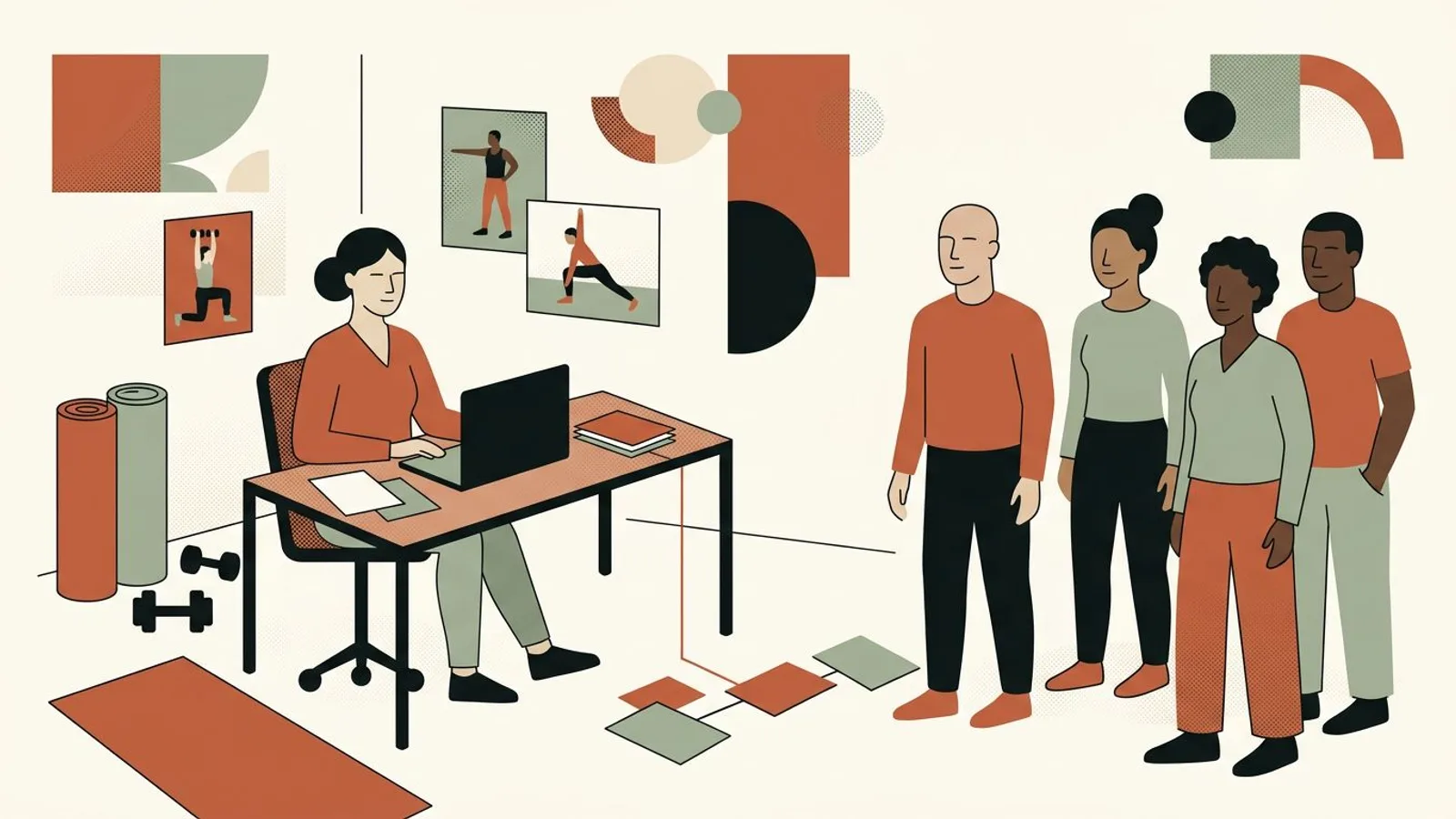
Build a visible path from one specific client problem to a clear remote offer, grounded proof content, and one simple intake action, then review it weekly.

You do not need an audience to sign your first coaching clients. You need one clear sentence, an activated first circle, and just enough public proof. Here is the five-step method.
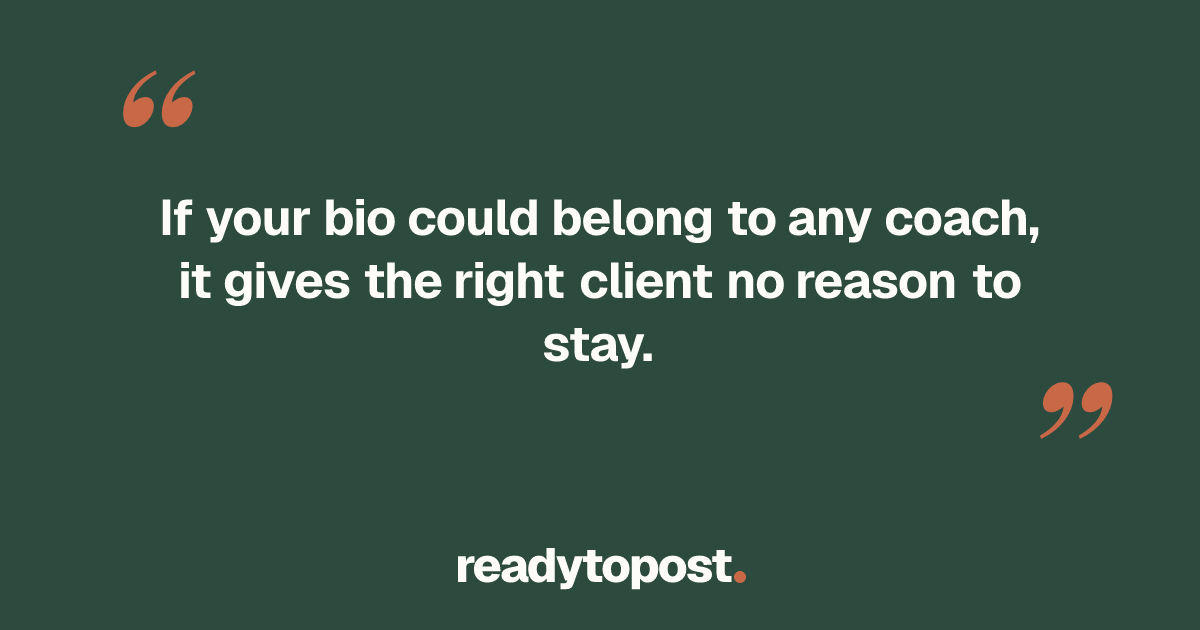
Most coach bios promise a transformation but hide the method. Use one client, one change and one observable way of coaching to make yours specific.
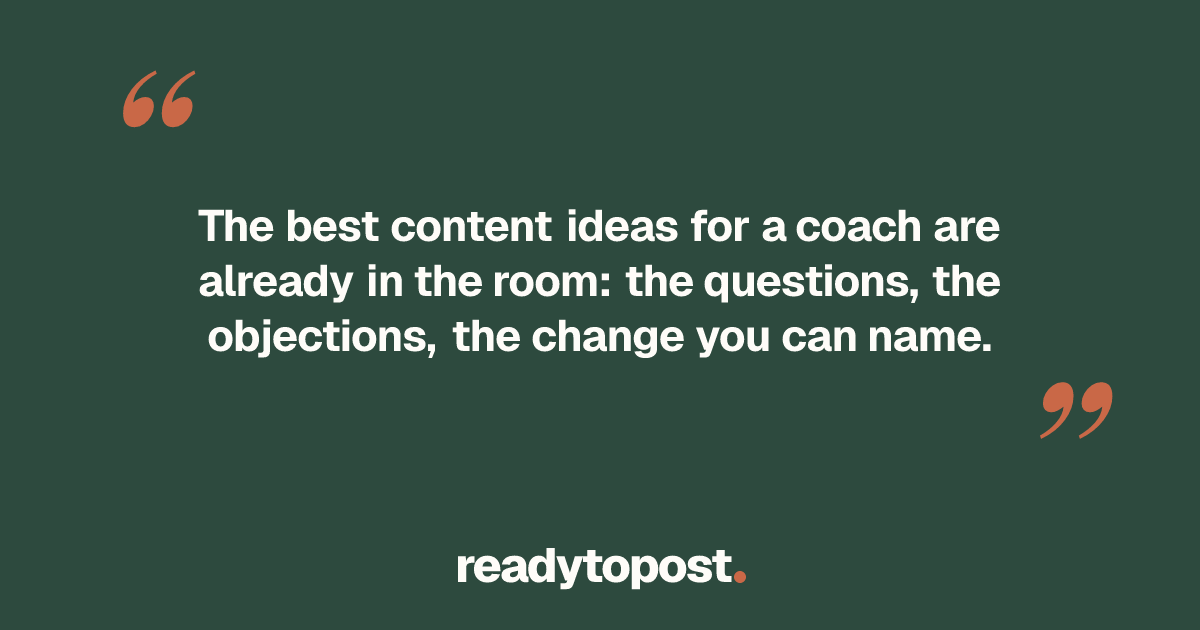
Nine notes from a year of watching coach accounts on Instagram: the posts that book discovery calls, the ones that only collect saves from other coaches, and what to publish the week nothing happened.
A fitness coach answers 8 to 12 post-worthy client questions a week, out loud, and loses them. This walkthrough turns one logged week into a month of posts.

From a single website URL, ReadyToPost builds your brand profile and starts generating on-brand posts — no manual brief to fill.
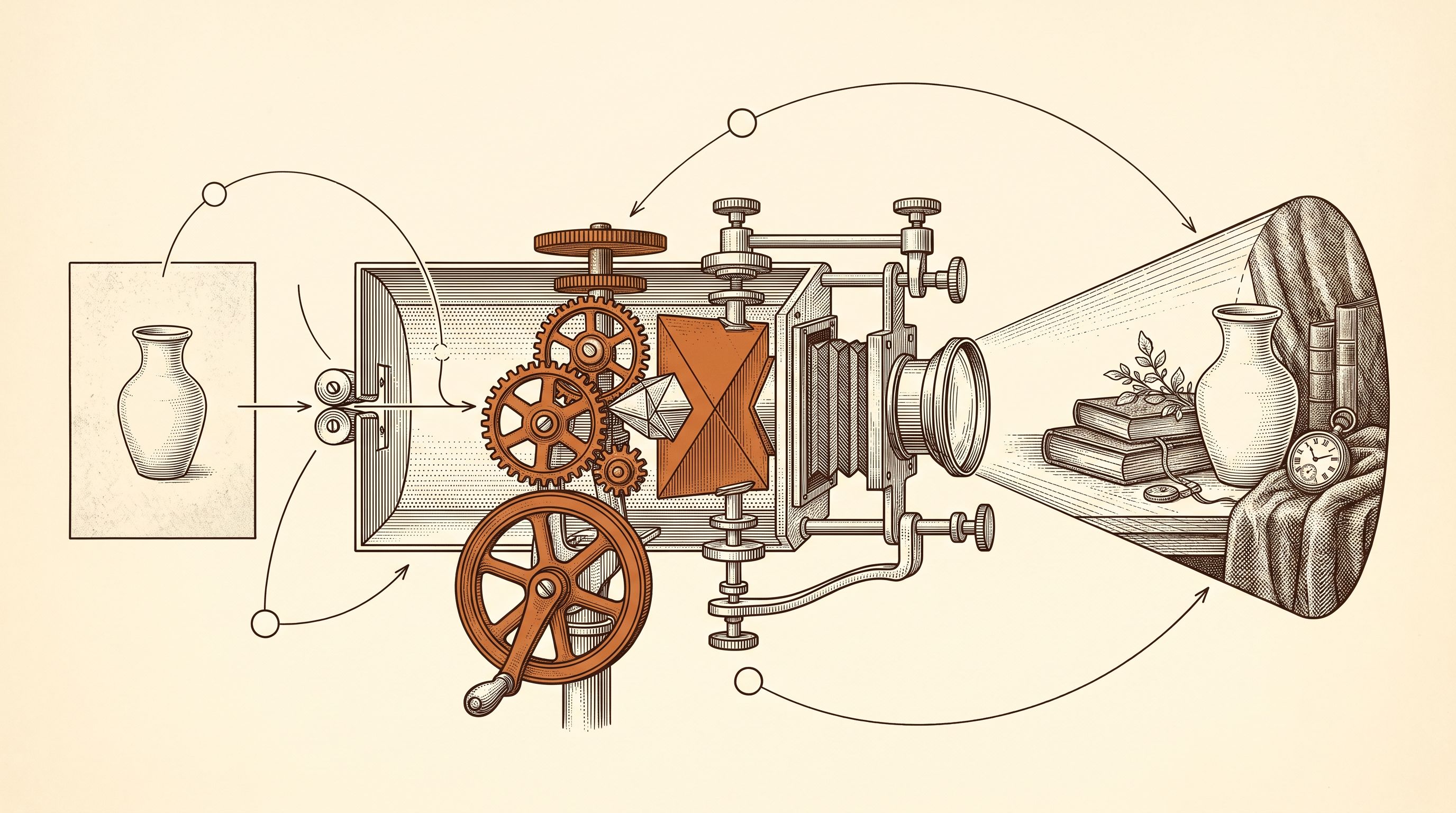
Create AI product images and social media visuals from your photos or from scratch. ReadyToPost applies your brand style in the right format for each network.
A semantic memory of your brand's real facts, so every post cites what you actually do and have.
Generate on-brand Instagram posts where the 4:5 feed visual and the caption are built together — a scroll-stopping hook, breathable paragraphs, and full-word hashtags grouped at the end, scheduled and ready to publish.
ReadyToPost prepares LinkedIn posts in your voice every week. Review and approve your content, then publish to your profile or company page on schedule.
ReadyToPost prepares Facebook images and posts in your voice every week. Review and approve them, then schedule publication to your Facebook Page.
You hold the principles. Readytopost takes the communication off your plate, every week — so your method stays your method.
Monthly plansReady in minutesCancel in one click