Instagram Marketing Plan for Coaches: A Weekly System
Build a coach-specific Instagram plan that turns one clear offer into a coherent week of useful, credible posts and invitations.
Nobody books a call because they spotted a button — they book because they recognized themselves in a problem.
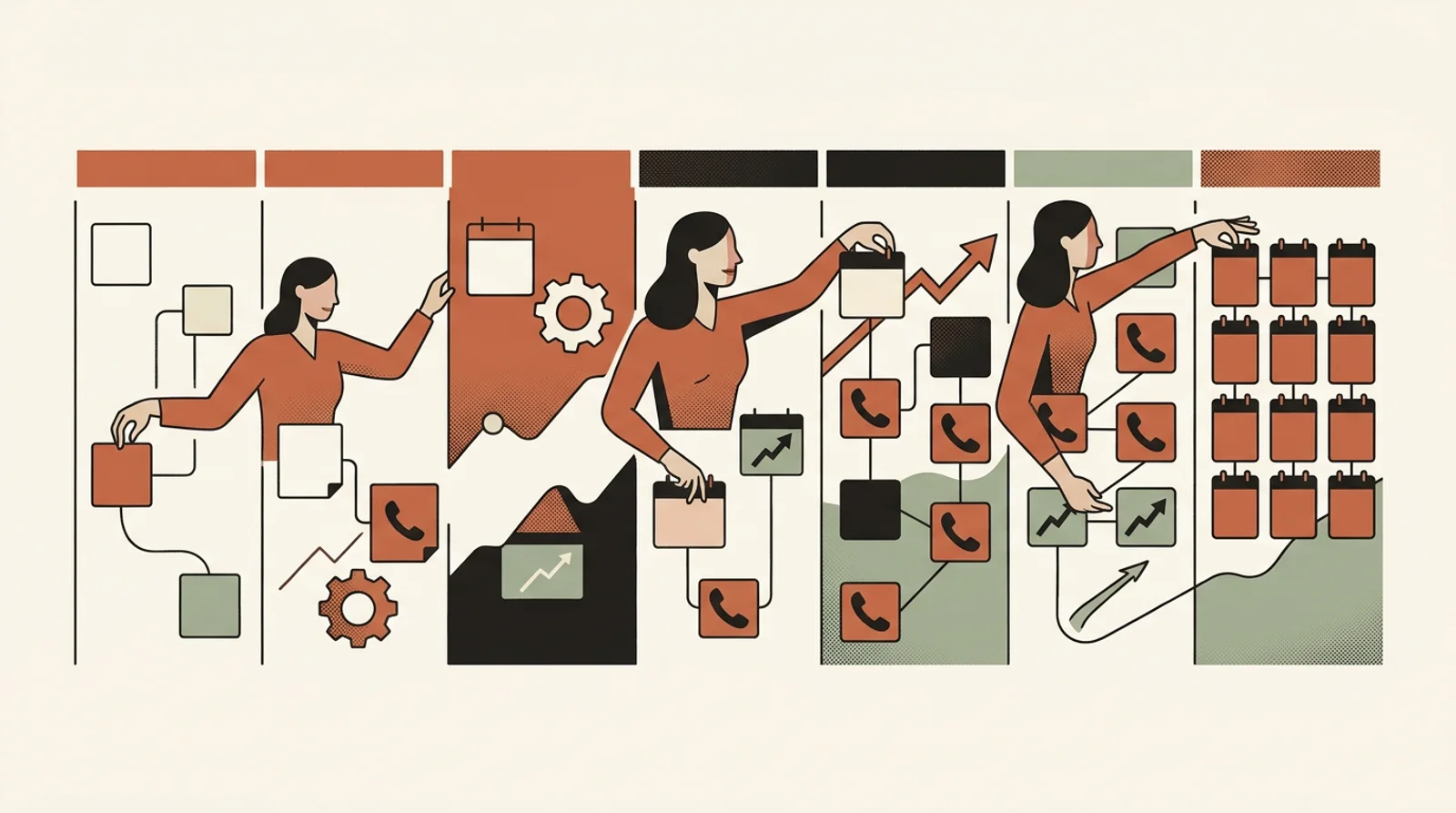
People assume you need a big audience to fill a calendar. What you really need is one well-paced week: four posts that surface a precise problem, one clear invitation at the right moment, and the confidence to make it only once.

What if a lukewarm audience were enough to book calls?
ReadyToPost structures a week of posts that gets a lukewarm audience to book a call.
Book without chasingAn audience doesn't book a call to meet a coach; it books to get out of a stuck place it has just recognized. The first two days exist only to put words on that stuck place, without talking about you or your offer. A post that describes the before-state precisely — the hesitation, the glass ceiling, the decision that keeps getting pushed back — and the right reader thinks, "that's exactly me." That moment of recognition is what makes the day-5 invitation feel obvious rather than intrusive. LinkedIn first, in text; Instagram stories that mirror the same question back.
Describe the problem in your prospect's words, not in your professional jargon. "I can't bring myself to delegate" travels further than "difficulty with managerial posture."
Now that the problem has a name, prove you know how to handle it — through your angle, not through a testimonial. One post that lays out a principle of your method, another that corrects a misconception your prospects have carried for years. You have no nameable case study and no before/after to show, and that's perfectly fine: credibility comes from the sharpness of your perspective, not from a client logo. A clean, consistent visual, built specifically for each post, is enough to give substance to an expertise that can't be photographed. This is where the trust that makes the call possible gets built.
A "misconception corrected" post almost always outperforms a "here's my method" post. It triggers a realization in the reader, and that realization invites the conversation.

Four days have prepared the ground; on the fifth, you invite. Not "reach out if you ever feel like it," not a link drowned at the bottom of a post: a crisp invitation, with a concrete frame. "I'm opening three discovery-call slots this week, Thursday and Friday, for the independents who recognize themselves in what I've been describing since Monday — 30 minutes, no commitment." The "since Monday" ties the invitation to the earlier posts: whoever recognized themselves on Tuesday knows it's them being addressed. The scarcity is real (you genuinely have three slots), so it doesn't ring false.
Date the slots. "This week" is vague; "Thursday at 2pm or Friday at 10am" creates a precise mental image and drives action far more than any "book whenever you like."
Between the desire and the click, there's almost always a silent objection: "is this for me," "is this going to be a disguised sales pitch." On day 6, a short post that says exactly what happens during the call — what you look at together, what you don't do — defuses the fear of a commercial trap. On day 7, a single light reminder in a story, with no guilt-tripping: "one slot left on Friday." If everything's full, say so: "fully booked for this week, I'll reopen next week" keeps the scarcity alive for the next sequence.
Describing how the call unfolds reassures more than any argument. A prospect's number-one fear isn't the price — it's getting trapped in a sales funnel.
You set the week’s pace, ReadyToPost publishes the posts.
You choose each day's intention, ReadyToPost writes the copy and builds the visuals.
Publish my weekDo
Don't

Situation
A career-transition coach has 1,800 followers on LinkedIn and a discovery-call calendar that's been empty for three weeks. She publishes sincere but generic posts, sometimes ending with "feel free to reach out" — which nobody does.
Action
She launches a seven-day sequence. Monday-Tuesday: two posts that describe precisely the moment when you know you have to change jobs but don't dare make a move. Wednesday-Thursday: a principle from her method, then a corrected misconception ("changing jobs fixes nothing if you haven't changed your criteria"), each with a clean visual generated for the occasion. Friday: "I'm opening three calls next week, Tuesday and Wednesday, for the women who recognized themselves — 30 minutes, no commitment." Saturday: a post on exactly how the call unfolds. Sunday: a reminder in a story.
Outcome
All three slots were booked before the weekend was over, by people who each cited one of the week's posts when explaining their request. Two of them signed up for ongoing coaching. No private follow-ups, no numbered promises — the sequence did the work, and the coach ran the same structure the following week with her own variations.
What if your slots filled before the weekend?
ReadyToPost can spark the same invitation, at the right moment, without a single DM chase.
A cold invitation, made before the problem has been named, has nothing to stand on: the reader hasn't recognized themselves yet, so the call doesn't feel like it's about them. It's the most common mistake — you jump straight to "book a call" because that's the goal. But the goal has to be prepared. Four days of recognition beat a week of invitations repeated into the void.
Repeating the invitation every day doesn't make it more effective, it makes it heavy — and the audience learns to scroll right past it. The sequence rests on the opposite: lots of value, one single ask. The content fills the calendar, but the invitation stays rare. It's that rarity, never the pushiness, that gives the open slot its force.

"Double your revenue in 90 days" might fill one more call, but it attracts the wrong prospects and undermines trust within the first minute of conversation. A discovery call exists to check the fit, not to honor an impossible promise. The sequence that lasts over time is the one that invites people already half convinced by the sharpness of your perspective, not by a number.
Pulling these levers every week is already a discipline. Adding communication on five social networks is another — and the one that gets sacrificed first. Readytopost takes the second one off your plate: posts, images, scheduling, calibrated on your work. So the first one keeps all your attention.
Start with ReadyToPostBack to the overview for independent coaches to browse all guides — diagnosis, method, practice — in whichever order fits. Three floors that complement each other: one to understand, one to think, one to act. You go in where it pinches most today, and come back when a new question shows up. No required order.
Back to the overview
Far fewer than you'd think. A well-paced sequence to 1,000 to 2,000 targeted followers on LinkedIn fills more slots than an isolated post seen by 20,000 poorly qualified people. What matters isn't audience volume but the degree of recognition: three or four people who think "that's exactly my problem" are enough to fill a week. The sequence is built to convert a small lukewarm audience, not to demand a big cold one. That's why LinkedIn, where this audience decides, beats the broad-reach networks.
LinkedIn first, always, for this audience: that's where independents and decision-makers look for coaching and make professional decisions. Instagram comes second, especially in stories, as an echo chamber: you reframe the same problem there, you relay the invitation, you show the face behind the method. Facebook and X can extend the sequence depending on where your audience is. ReadyToPost generates the variations tailored to each network from the same intention, so the cost of adapting them isn't a barrier.
The feeling of begging almost always comes from the order of things: you ask before you've given. When four days of content have named a problem and shown your perspective, the invitation is no longer a plea — it's a door you open for someone who was already searching. The second lever is transparency: announcing a real number of slots and describing exactly how the call unfolds removes the awkwardness, because you're hiding nothing. You're not begging when you're clearly offering something useful to someone who has recognized themselves.
First, don't switch to panicked private follow-ups: that's the reflex that shows and drives people away. Look instead at which link failed. If the day 1-2 posts didn't generate recognition — few comments, no "that's me" — the problem you named wasn't the right one, or wasn't precise enough. If the recognition was there but the invitation didn't convert, the frame was missing: slots too vague, agenda not spelled out, fear of the sale not cleared. A sequence is made to be replayed: fix the weak link and run the next one, without starting over.
Yes — and that's exactly where selling something intangible usually gets stuck. You have no product and no client to show, so the easy option would be to publish bare text or a generic stock photo, which weakens the perception of seriousness. A consistent visual, true to your image, built specifically for each post, gives your expertise the visual substance it deserves. That's what ReadyToPost produces: the visuals as well as the texts, so that seven posts in one week stay manageable without eating up your evenings.
Build a coach-specific Instagram plan that turns one clear offer into a coherent week of useful, credible posts and invitations.
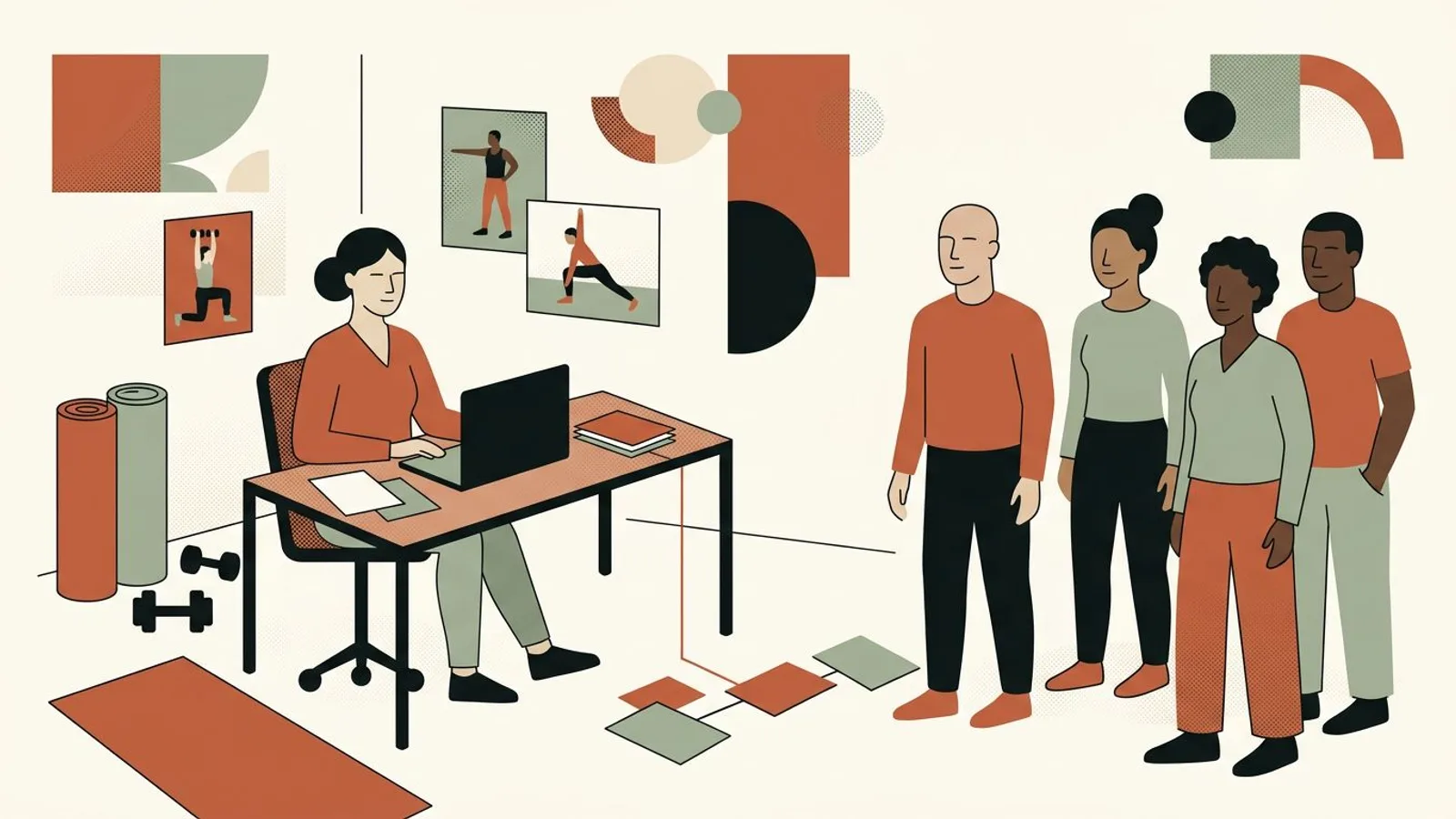
Build a visible path from one specific client problem to a clear remote offer, grounded proof content, and one simple intake action, then review it weekly.

You do not need an audience to sign your first coaching clients. You need one clear sentence, an activated first circle, and just enough public proof. Here is the five-step method.
Cover the names on five life coach websites and you cannot tell them apart. That is a client problem, not a branding one. Here is what to publish so a stranger can choose you.
Most coach bios promise a transformation but hide the method. Use one client, one change and one observable way of coaching to make yours specific.
Nine notes from a year of watching coach accounts on Instagram: the posts that book discovery calls, the ones that only collect saves from other coaches, and what to publish the week nothing happened.

From a single website URL, ReadyToPost builds your brand profile and starts generating on-brand posts — no manual brief to fill.
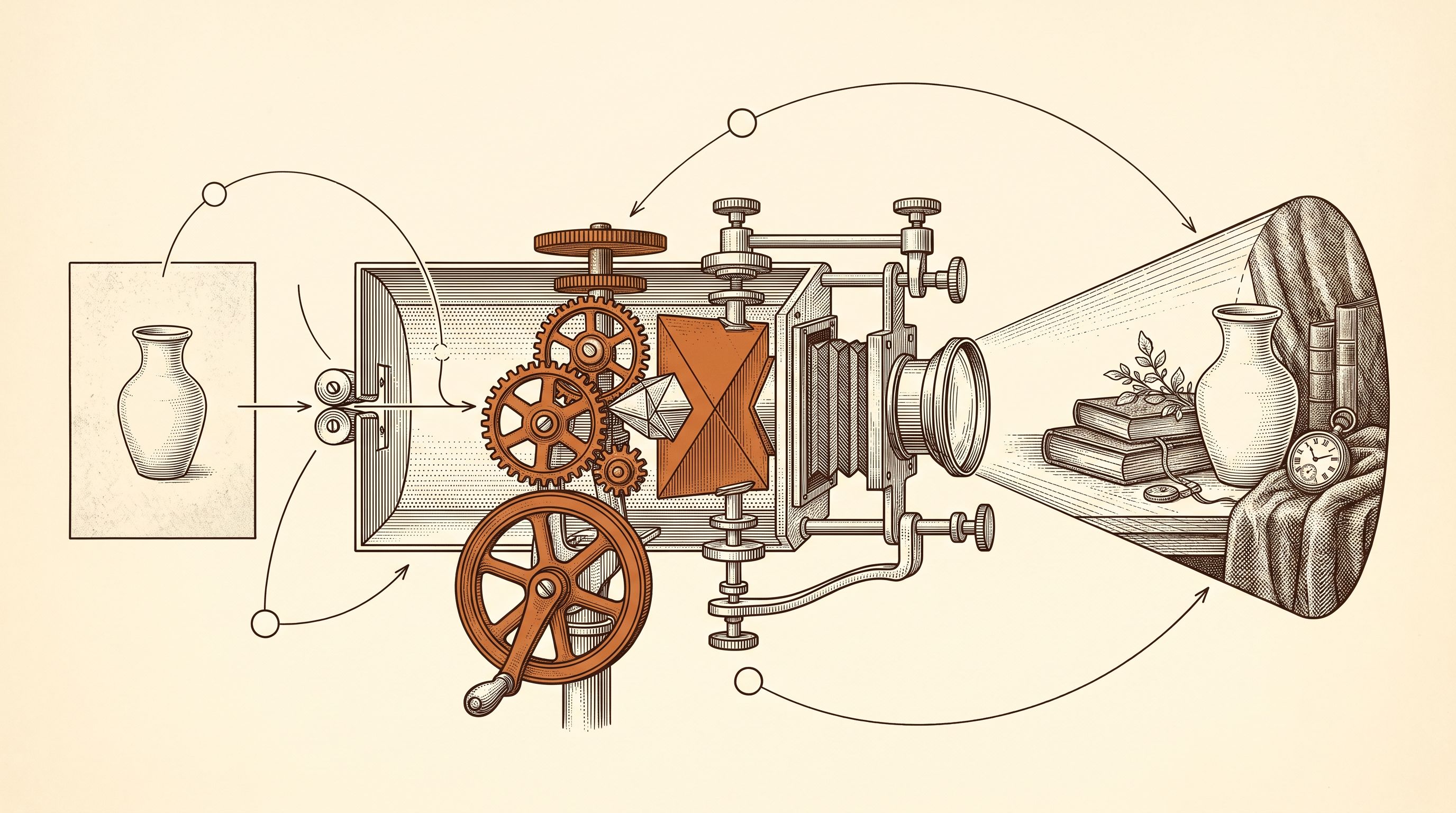
Create AI product images and social media visuals from your photos or from scratch. ReadyToPost applies your brand style in the right format for each network.
A semantic memory of your brand's real facts, so every post cites what you actually do and have.
Generate on-brand Instagram posts where the 4:5 feed visual and the caption are built together — a scroll-stopping hook, breathable paragraphs, and full-word hashtags grouped at the end, scheduled and ready to publish.
ReadyToPost prepares LinkedIn posts in your voice every week. Review and approve your content, then publish to your profile or company page on schedule.
ReadyToPost prepares Facebook images and posts in your voice every week. Review and approve them, then schedule publication to your Facebook Page.
You know what to pull each week. Readytopost takes care of the consistency of your communication — your energy stays on the floor.
Monthly plansReady in minutesCancel in one click