Instagram Marketing Plan for Coaches: A Weekly System
Build a coach-specific Instagram plan that turns one clear offer into a coherent week of useful, credible posts and invitations.
A silent feed is not a verdict on your expertise. It's information about three settings

A post with no response isn't a failed post — it's a message that hasn't found its recipient, or that promised them nothing they were waiting for. The silence can be read before it can be fixed.

What if the silence were just an address to fix?
ReadyToPost writes your posts in the language your audience speaks, not your industry’s.
Fix my addressBefore changing anything, do a cold read of your last twenty posts. Two columns: "who reacted" and "to what." If the few reactions come from fellow coaches, friends, former colleagues — but never your ideal client — the problem is the audience: you're speaking to the wrong room. If the views are decent but no reaction ever turns into a conversation, the problem is the promise: you inform without making anyone want to go further. These two silences are treated differently, and confusing them costs months.
A post with 500 views and 0 comments isn't invisible — it's read. It's not a reach problem, it's a problem of what the reader does right after reading you.
Pull three posts that drew silence. For each, ask yourself: does the person I want to reach recognize themselves in the very first line? An executive coach who writes "leadership is above all about listening" speaks to everyone, and therefore to no one. The same coach who writes "a director who inherits a team that's lost its trust has seven days to set the tone they want to adopt" makes one specific leader look up. The first line is a filter: if it could have been signed by any coach, your prospect scrolls right past.
Test the first line out loud, picturing your ideal client scrolling on their commute. If it doesn't make them think "wait, that's exactly me," it won't stop them.

Many coaches' posts are closed verdicts: a truth laid down, full stop. A verdict gets read and filed away; it doesn't invite a reply. To reopen the echo, end on an unresolved tension, a question with no obvious right answer, or a stance that asks the reader to take a side. Not "here are the 3 pillars of a winning mindset" (closed), but "most people work on their discipline when it's their environment quietly sabotaging them — which of the two is it for you?" The reader doesn't comment on a lesson, they respond to an invitation.
A closed question ("do you agree?") generates no echo — it asks for validation. An open question that touches the reader's lived experience ("which of the two, in your case?") triggers a real reply.
Silence very often comes from publishing in fits and starts: three posts one week, nothing for three weeks. LinkedIn, like people, needs repetition to connect a face to a subject. A coach who posts three times a week for eight weeks on the same area of expertise builds an expectation; a coach who posts ten times in a burst and then vanishes leaves no trace. Consistency isn't about heroic volume — it's a sustainable cadence you don't drop. That's exactly what a content system lets you keep up without depending on inspiration.
Three posts a week for two months beat a burst of eight in three days followed by a long silence. Steadiness beats intensity when it comes to being remembered.
Once audience, promise and rhythm are dialed in, stop changing everything at once. Change one variable at a time and watch over two weeks. If you tighten your audience and the comments finally arrive, you've found your cause. If you open your posts with a tension and the DMs climb, it was the promise. This discipline — one variable, two weeks, one reading — is worth a thousand generic tips on "how to break through on LinkedIn." You're not optimizing an abstract platform, you're learning what wakes up your own audience.
The diagnosis is yours — ReadyToPost restarts the feed.
ReadyToPost holds the rhythm and generates the visuals, until the algorithm recognizes you.
Restart my feedDo
Don't

Situation
A career-transition coach has spent six months publishing polished posts about "realigning with your values." Decent views, 3-4 likes a post — always other coaches. No messages, no discovery calls from LinkedIn. She's starting to think her target audience isn't on the platform.
Action
She does the cold read: every reactor is a peer. Diagnosis = wrong audience. She tightens it: no longer "realigning with your values" (coach-speak), but "the moment a job you once chased suddenly loses all meaning, at 42, with a mortgage and two kids" (prospect language). She ends each post on a tension instead of a tip. And she holds three posts a week for eight weeks, no burst, no gap.
Outcome
By the fifth week, the first comments from executives in the thick of doubt appear — not coaches. Three DMs in two weeks, two discovery calls booked. The silence wasn't an absence of audience: it was a promise written in the wrong language, addressed to the wrong room, without the consistency that builds recognition.
Your audience can comment too, not only your peers.
ReadyToPost adapts your posts to who you’re really speaking to, prospects included.
The reflex is to tell yourself "nobody cares about my ideas" and either go take another course or give up. But the expertise that works in session is intact — it's its public framing that hasn't found its recipient. Confusing the quality of the substance with the performance of a post means solving the wrong problem: you work on your session content when it's the first line, the targeted audience and the cadence that are stuck.
When a post doesn't produce the intended effects, the temptation is to copy the latest format that's "crushing it" — the hook-laden carousel, the vulnerability post, the bulleted list. But a format grafted onto the wrong audience or the wrong promise just produces the same effect, in new packaging. The foundations — who, what to promise, at what rhythm — come before the form. A good format amplifies a clear promise; it doesn't rescue a fuzzy one.

Recognition for an area of expertise builds over weeks, not over isolated posts. Many coaches stop at the fourth or fifth week, just before the audience starts connecting their name to a subject. The silence of the early weeks isn't a failure — it's the normal phase where the audience learns to place you. Bailing there means starting from zero with every attempt.
You've just identified where it's breaking. Addressing it will take your time, your focus, your energy. Meanwhile, your communication can't go dark — or turn into filler. Readytopost keeps it at a demanding level on the five social networks: posts written, images generated, calendar filled — calibrated on your work.
Start with ReadyToPostKeep going on your own. The method for independent coaches lays out the principles that turn a diagnosis into durable action — across every lever, not just communication. Concrete markers to help you decide on the fly, without imposed recipes or rigid calendars. At your pace, at your scale.
Continue to the method
Views are the wrong metric for a coach. A post with 5,000 views and no conversation whatsoever is worthless for your pipeline; a post with 400 views that triggers two DMs from prospects is worth a discovery call. What you're after isn't reach, it's the echo that converts: comments from your target, DMs, call requests. Measure the conversations a post opens, not the number of pairs of eyes that skimmed it. A silent feed with high views is a feed speaking to the wrong audience, not a feed short on reach.
Almost never. LinkedIn is full of executives, managers, independents, people in transition — the target of nearly every coach is there. Silence comes far more often from three other causes: you speak in a language your target doesn't read (coach jargon), you post without consistency so no one recognizes you, or your posts inform without opening a conversation. Before concluding there's no audience, check those three settings. In the vast majority of cases, the target is there — they simply didn't recognize themselves in what you were writing.
What matters isn't the maximum frequency but consistency over time: three posts a week held for two months build recognition far more solidly than a daily burst that burns out in ten days. The audience and the algorithm connect a face to a subject through spaced repetition.
Look at who reacts to the rare posts that did get a reaction. If they're fellow coaches, friends, former colleagues — but never your ideal client — the problem is the audience: your content attracts the wrong room. If, on the other hand, your views are decent and even your target reads you without reacting, the problem is the promise or the opening: you inform without making anyone want to reply. The diagnosis lives in the nature of the reactions, not in their number. That distinction is what tells you which variable to fix first.
Start by translating what you do in session into the language of someone who doesn't know you yet. The expertise that works face to face often fails online because it stays framed for insiders. Take a breakthrough you regularly spark in a client, and tell the concrete situation that leads up to it — not the concept, the scene. Then hold that territory over time. A content system that generates your posts and your visuals from your method, with no photo to supply, lets you make that expertise visible consistently without spending your evenings on it.
Build a coach-specific Instagram plan that turns one clear offer into a coherent week of useful, credible posts and invitations.
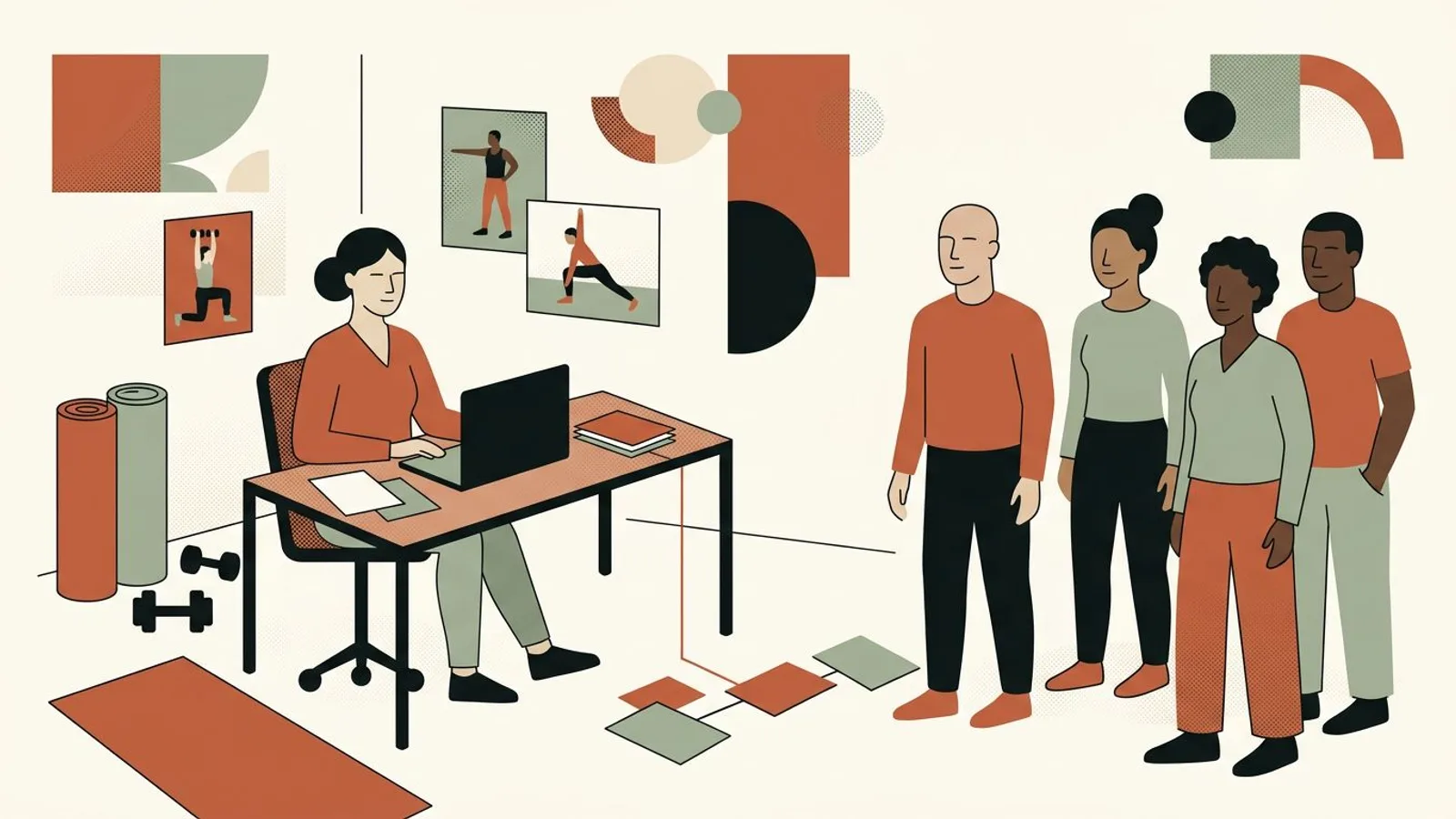
Build a visible path from one specific client problem to a clear remote offer, grounded proof content, and one simple intake action, then review it weekly.

You do not need an audience to sign your first coaching clients. You need one clear sentence, an activated first circle, and just enough public proof. Here is the five-step method.
Cover the names on five life coach websites and you cannot tell them apart. That is a client problem, not a branding one. Here is what to publish so a stranger can choose you.
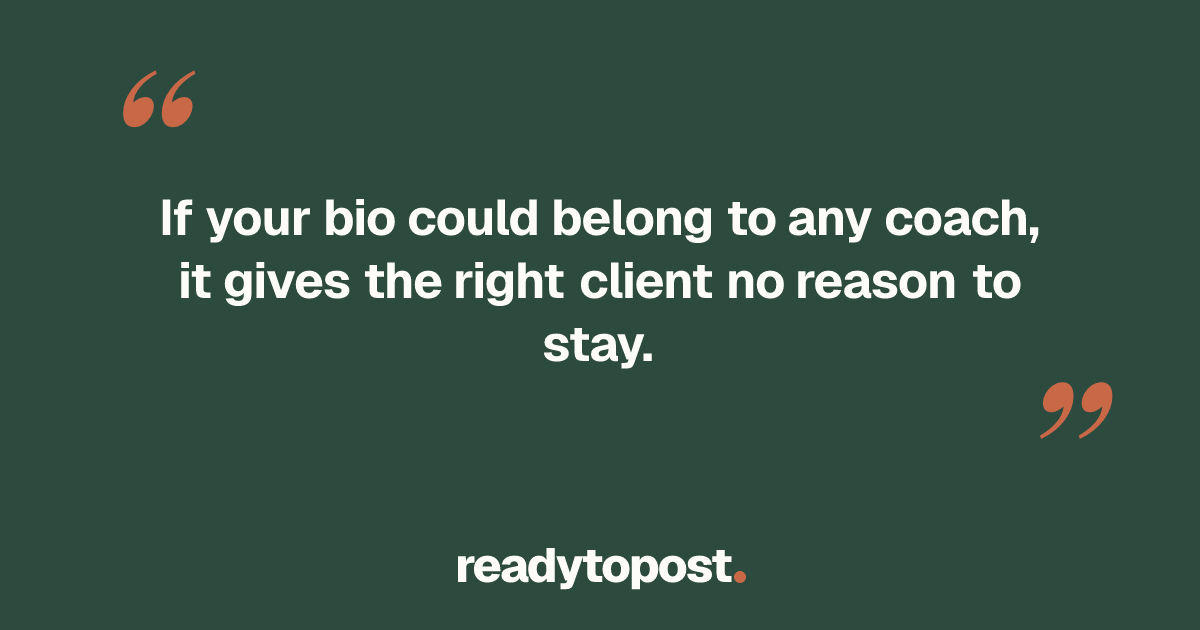
Most coach bios promise a transformation but hide the method. Use one client, one change and one observable way of coaching to make yours specific.
Nine notes from a year of watching coach accounts on Instagram: the posts that book discovery calls, the ones that only collect saves from other coaches, and what to publish the week nothing happened.
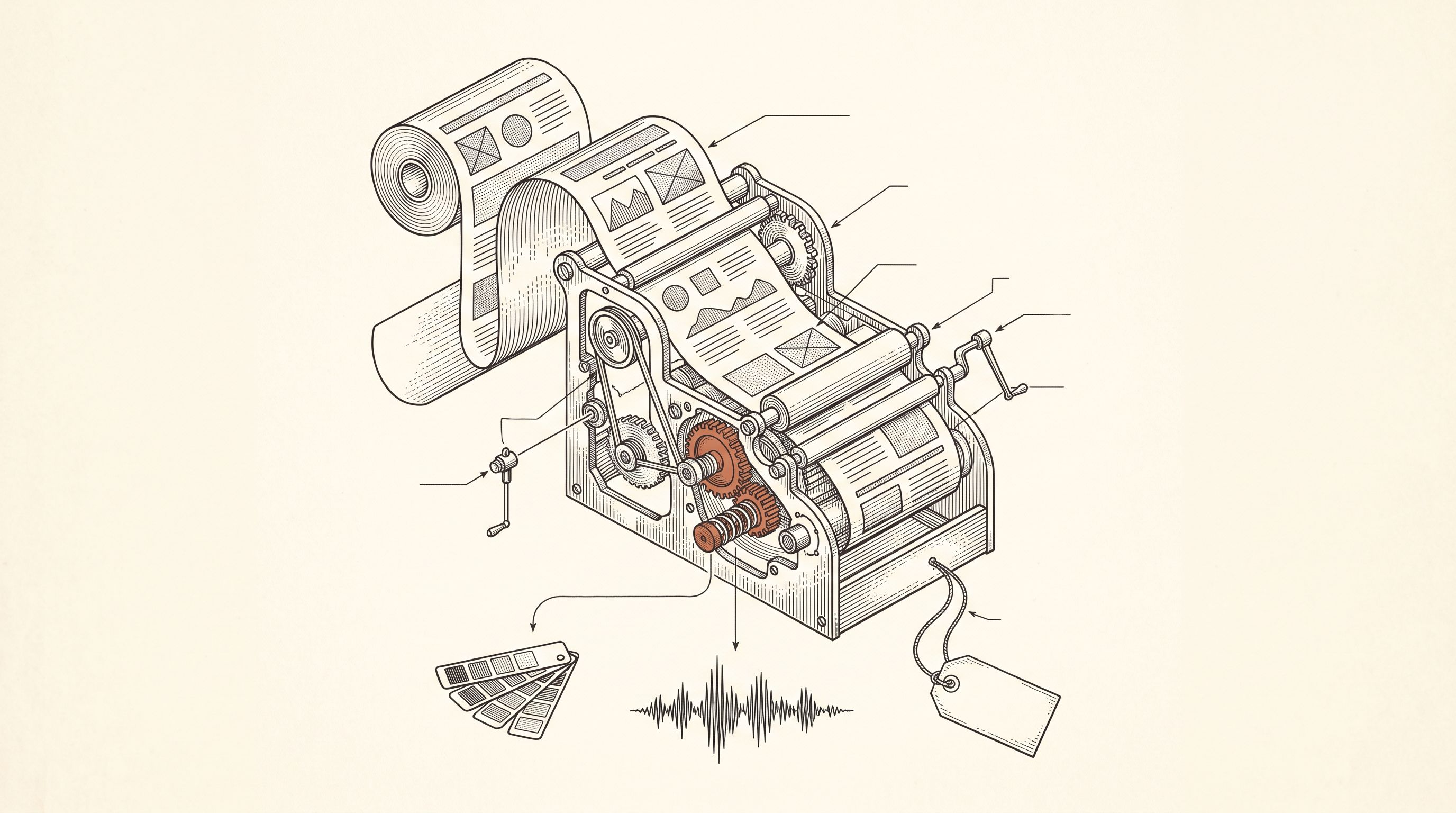
From a single website URL, ReadyToPost builds your brand profile and starts generating on-brand posts — no manual brief to fill.
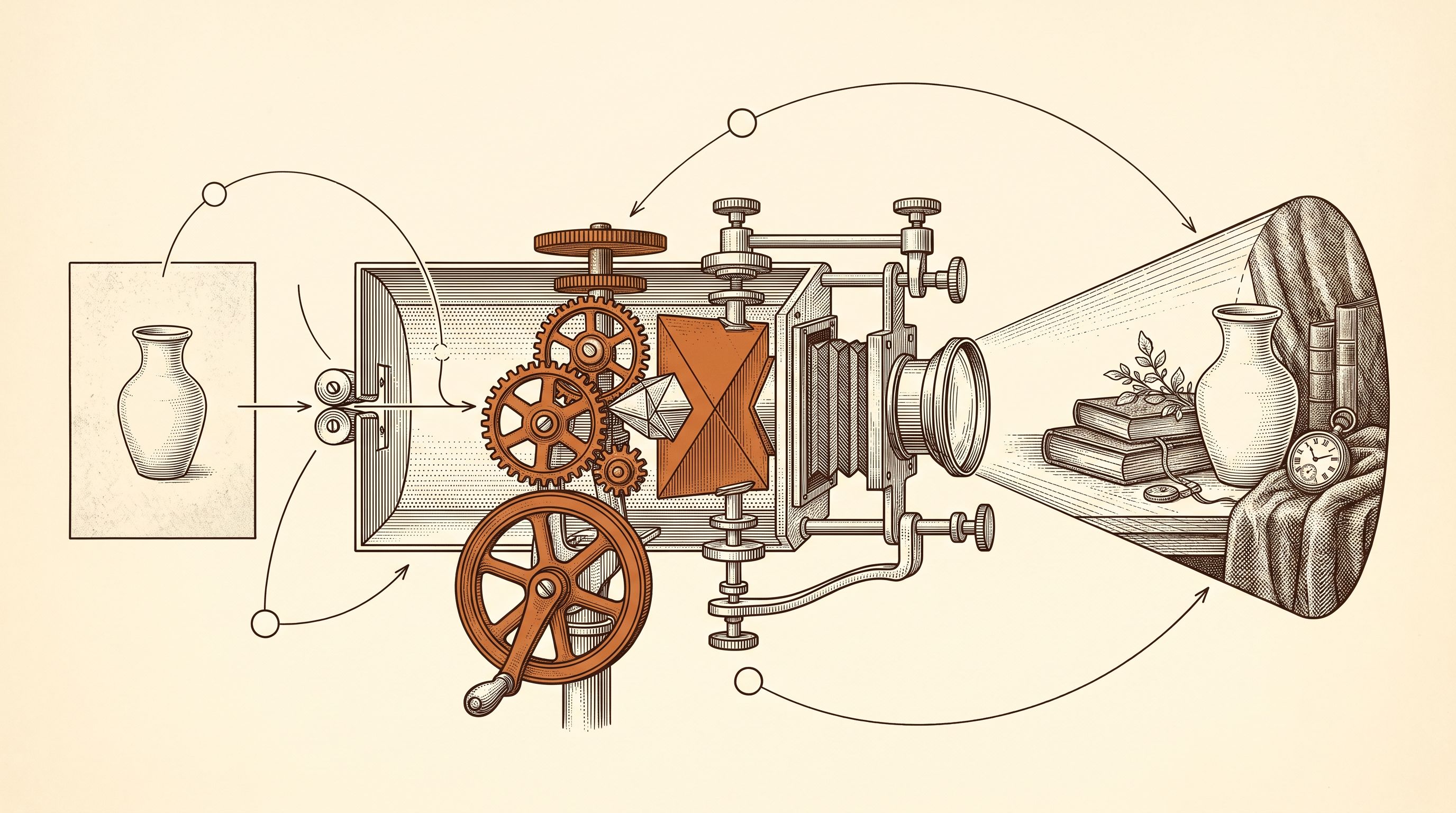
Create AI product images and social media visuals from your photos or from scratch. ReadyToPost applies your brand style in the right format for each network.
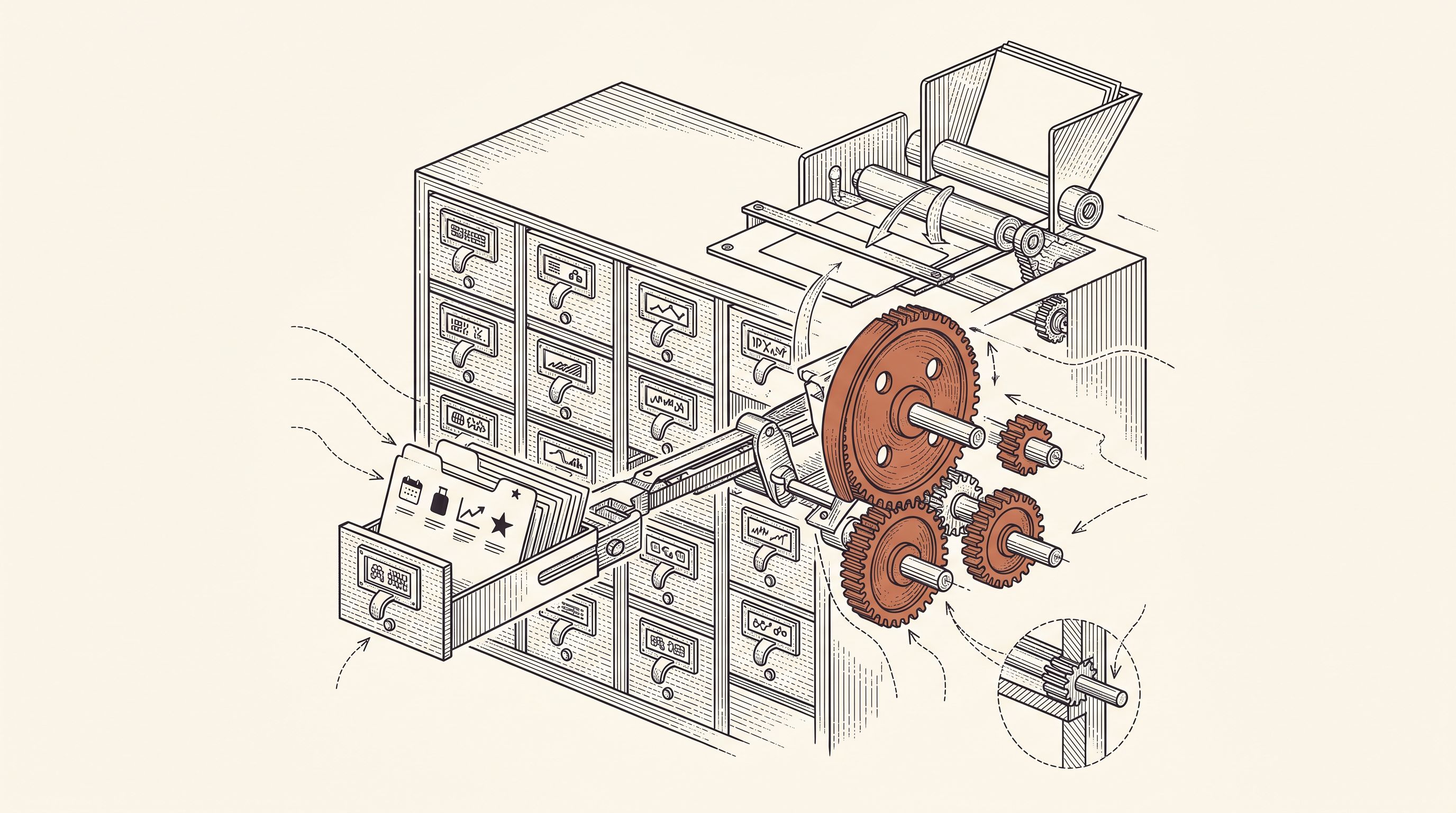
A semantic memory of your brand's real facts, so every post cites what you actually do and have.
Generate on-brand Instagram posts where the 4:5 feed visual and the caption are built together — a scroll-stopping hook, breathable paragraphs, and full-word hashtags grouped at the end, scheduled and ready to publish.
ReadyToPost prepares LinkedIn posts in your voice every week. Review and approve your content, then publish to your profile or company page on schedule.
ReadyToPost prepares Facebook images and posts in your voice every week. Review and approve them, then schedule publication to your Facebook Page.
You know where to look. While you address it, Readytopost keeps your communication alive — written, illustrated and scheduled every week.
Monthly plansReady in minutesCancel in one click