Artist content ideas, sorted by what you sell
Artist content ideas sorted by what you sell: originals, prints, commissions or classes. The posts each one needs, and why generic idea lists stay quiet.
The best artist content ideas come from what you sell, not from what you paint, throw or print. Originals need posts about scale, availability and what already sold. Prints need posts about size, paper and the room they end up in. Commissions need your process and your open slots. Classes need the work your students made.
A generic list of fifty ideas mixes all four. That is how an artist can post every week, collect likes, and still sell nothing: each post answers a question no buyer was asking. If that sounds like your account, the diagnosis for likes that never turn into orders starts from the same place.
Why do generic artist content idea lists fall flat?
Most lists sort ideas by effort or medium: work in progress, studio tour, meet the artist. None is wrong, but the same list goes to a painter selling $3,000 canvases and an illustrator selling $25 prints.
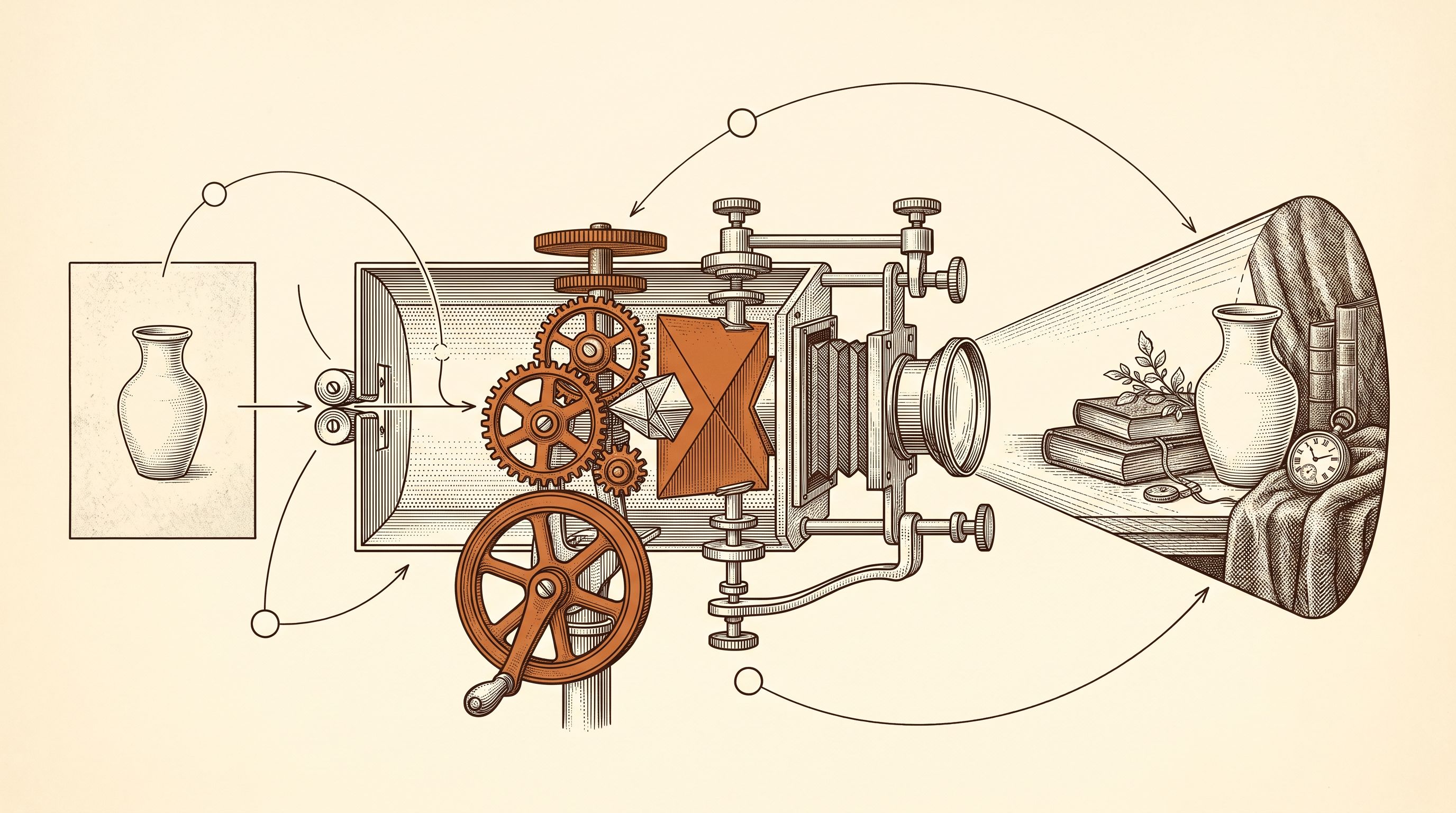
Ask any AI chat assistant for "content ideas for an artist." Then ask again with one line added: "I paint pet portraits on commission, $400, six-week wait, two slots a month." The first answer is the list everyone gets. The second talks about reference photos, open slots and delivery dates.
The model did not get smarter between the two prompts. It received the one fact that decides which buying question a post should answer. Without that fact, any idea source, human or software, falls back on the average artist. And the average artist sells nothing in particular.
A sold original tells the next buyer two things no caption can: your work sells at this price, and waiting has a cost.
Originals, prints, commissions, classes: how do they compare?
| Originals | Prints | Commissions | Classes | |
|---|---|---|---|---|
| Buyer's question | How big, still available, what price? | Which size, what paper, how will it look at home? | What will I get, how long, can I trust you? | Can someone like me do this, and when? |
| What refills the ideas | Each finished piece | The same image, for months | Each open slot and each delivery | Each class date and each student |
| What a post ends on | Price range and how to reserve | A link to the right size | How to claim a slot | The date and the seats left |
| Idea often skipped | The sold piece | The size lineup | The reference next to the result | The student's first attempt |
Originals: ideas that sell one piece, once
An original sells once, so its posts run as a short sequence that ends at the sale. A phone screen hides the two things the buyer needs: size and surface.
- The scale shot. The piece above a sofa or in your hands. A 24x36 canvas and an 8x10 look identical as a thumbnail.
- The detail crop. One corner at close range, where brushwork, glaze or paper grain shows.
- The availability post. Available, reserved or sold, said plainly, with the price range.
- The sold post. Keep sold pieces in the feed and say they sold. Archiving them removes your strongest proof.
A sold original tells the next buyer two things no caption can: your work sells at this price, and waiting has a cost. To stretch one piece across several posts, the content cycle for growing on Instagram as an artist lays out the sequence.
Prints: ideas that sell the same image a hundred times
Prints reverse the logic. The image never sells out, so one artwork can carry posts for months. The buyer's worry is not "is it still there" but "which size, and will it look cheap."
- The size lineup. The same print at 8x10, 11x14 and 18x24 on one wall, shot from the same spot.
- The paper close-up. Cotton rag texture, the deckled edge, the signature and edition number.
- The room series. One print in a hallway, a nursery, above a desk: three posts from one file.
- The edition count. "Edition of 50, 12 left" is the one form of urgency a limited print has.
Prints are also where Pinterest earns its place. A pin of the print in a real room answers searches like "blue abstract print for living room" long after an Instagram post has stopped circulating, so Pinterest pins built around your prints keep sending visitors to the shop for months. If they still get admired and scrolled past, the six patterns that stop art print orders on Instagram usually explain it.
Commissions: ideas that sell your time before the piece exists
A commission client pays for something that does not exist yet. They need to trust your process, your timing and your judgment with their photo, their dog, their house.
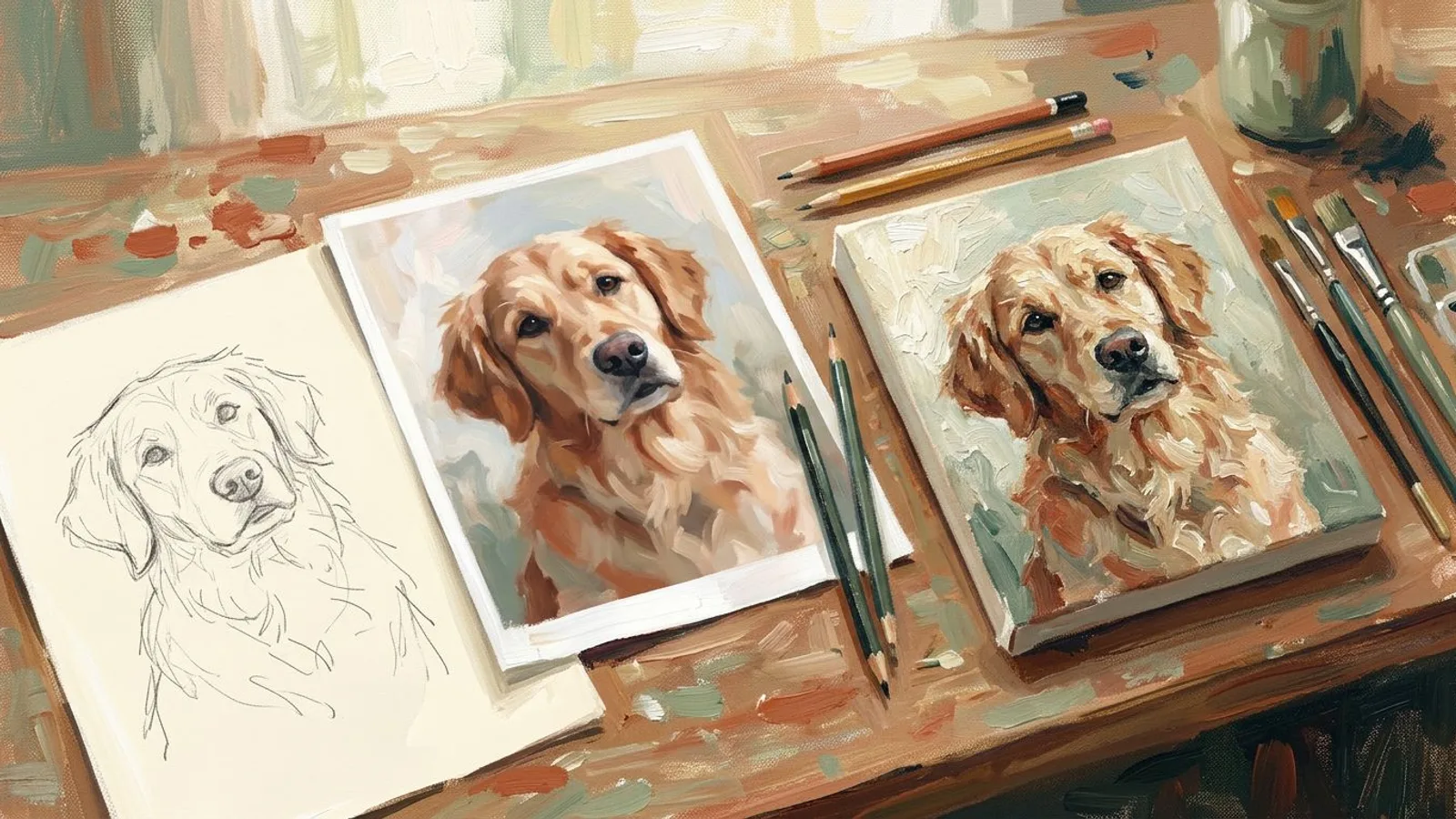
- The before-and-after pair. The client's reference photo next to the finished piece.
- The process in four stills. Sketch, first layer, detail, final, as one carousel.
- The slot post. "Two slots open for December delivery." The most direct post you have, and it refills every time a slot opens.
- The questions you ask first. Your five intake questions as one post. It shows your method and filters out bad fits.
Add a line to your order form asking permission to share the reference and the result. Without it, your best material stays in a private email thread.
Classes and workshops: ideas that sell what the student will make
People booking a class are not buying your art. They are buying what they will be able to make.
- The student result. A beginner's first piece next to their third, shared with permission.
- The one-step lesson. A single technique in three stills: mixing a warm gray, centering clay.
- The kit. Everything included, laid out on one table.
- The date post. Date, place, seats left, booking link. Local workshops travel well on Facebook, where community groups and events still pass class dates to people nearby.
Which content ideas should you post if you sell more than one way?
Many artists sell two or three ways. That works if the feed never makes a $2,000 original and a $30 print look like the same offer.
- Weight the week by revenue, not preference. If commissions bring in most of your income, slot posts and before-and-after pairs fill most of the week.
- Name the format in the first line. "Original, 30x40 in" or "Print, from $35" comes first, because the first line is often all that shows before the caption is cut. A caption that sells puts the offer there for the same reason.
- Keep one post, one sale. A canvas that ends with a link to prints tells the buyer the original is not for sale.
- If you have not sold yet, post the sale you want as if it exists. A price, a size, a slot. A feed without one buying detail converts no one, however good your work is.
How many posts a week does this give you?
Each of the four rows has an event that repeats: a finished piece, a restock, a slot opening, a class date. Each event gives three or four posts from the table above.
A painter who finishes two originals a month and runs one print restock has about eleven posts before brainstorming anything: four per original, three for the restock. That is two to three posts a week from the sales calendar alone, and a steady presence stops depending on inspiration.
"Nothing to post this week" usually means you searched for ideas instead of reading your own offer. The same holds for software: a generator that reads your shop pages, with their sizes, prices, slots and class dates, proposes these posts instead of the generic list. That is the point of social media content built from your own website.
Which of the four brought you the most money last year? That row is where next week's posts come from.
FAQ
What should an artist post when there is no new work?
Post from the sale you already run: a print in a new room, an open slot, a detail crop of an available piece, a student's result. None needs a new artwork.
How often should an artist post on social media?
As often as your sales events produce material. Split each piece, restock, slot and class date into three or four posts, and a studio selling two ways can usually fill four or five a week.
Is it OK to post the same artwork more than once?
Yes, and for prints it is the whole strategy. Change the room, the size or the paper, and the same image answers a new question each time.