How to sell art prints on Instagram
Selling art prints on Instagram means making the print buyable in the post: real size, named price, direct link. Six patterns that stop orders, and their fixes.
Selling art prints on Instagram comes down to three things being present in the post itself: a print shown at a size the viewer can judge, a price named out loud, and a link that goes to the print. Most art accounts do none of the three. The work is good, the likes arrive, the checkout stays quiet.
The gap has one cause. You are posting the artwork. A buyer needs the object. On screen the image is free, infinite and weightless. The thing you sell is a sheet of paper with a size, a price and a delivery date. Every pattern below is a version of the same slip: the post shows the art and hides the print.
Six of them turn up again and again on accounts with real work and no orders. Each has a symptom you can spot in ten seconds, a mechanism that produces it, and a replacement.
The print fills the entire frame
Symptom: every shot is the piece, corner to corner, straightened and cropped to the edge of the paper.
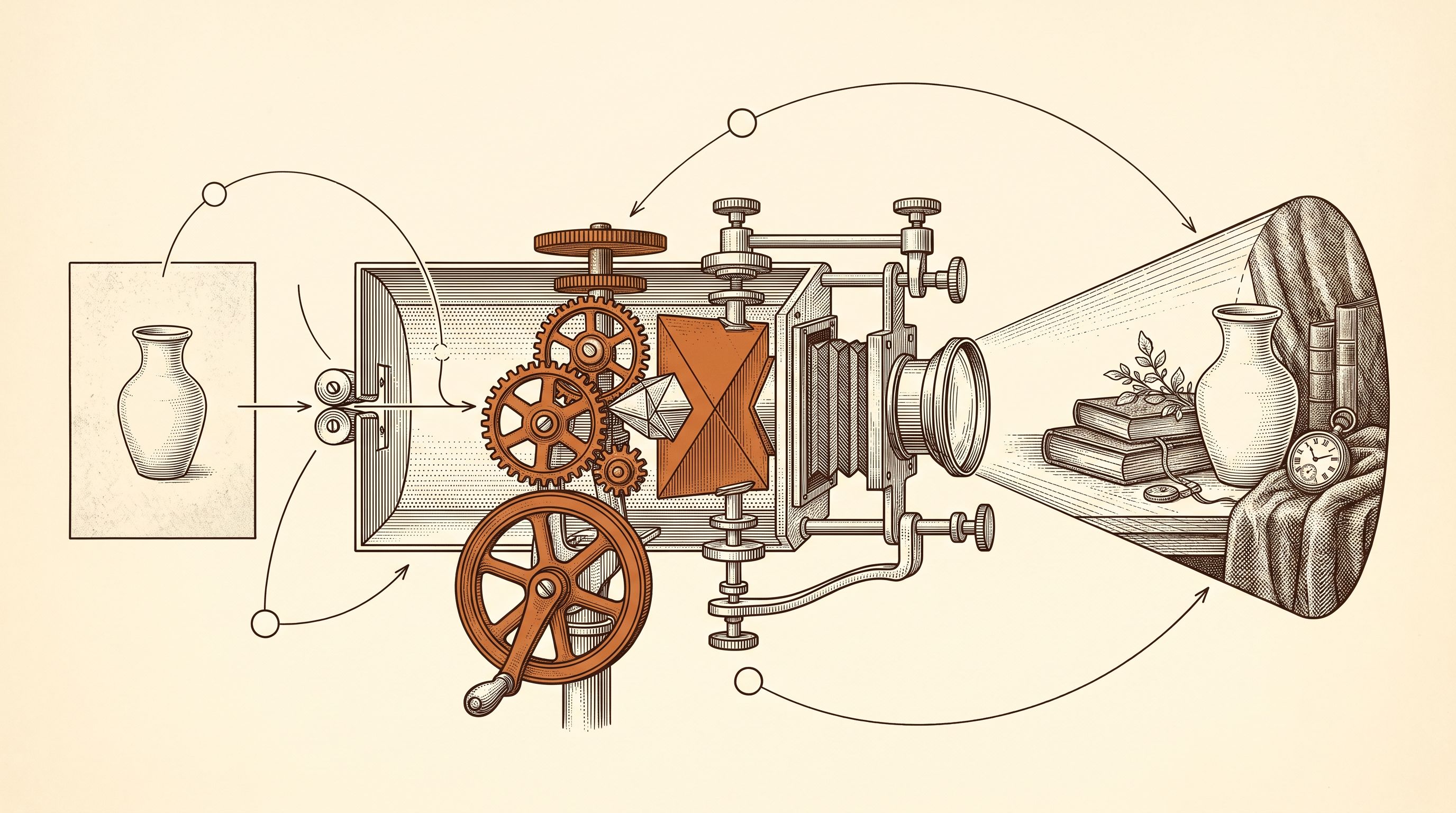
Mechanism: this is the portfolio reflex. You photograph work to document it, the way it would appear in a catalogue or a submission. That framing deletes every cue of scale. Nobody can tell an A5 from an A1, and nobody can picture where it goes. The image reads as an image, something to look at rather than something to own.
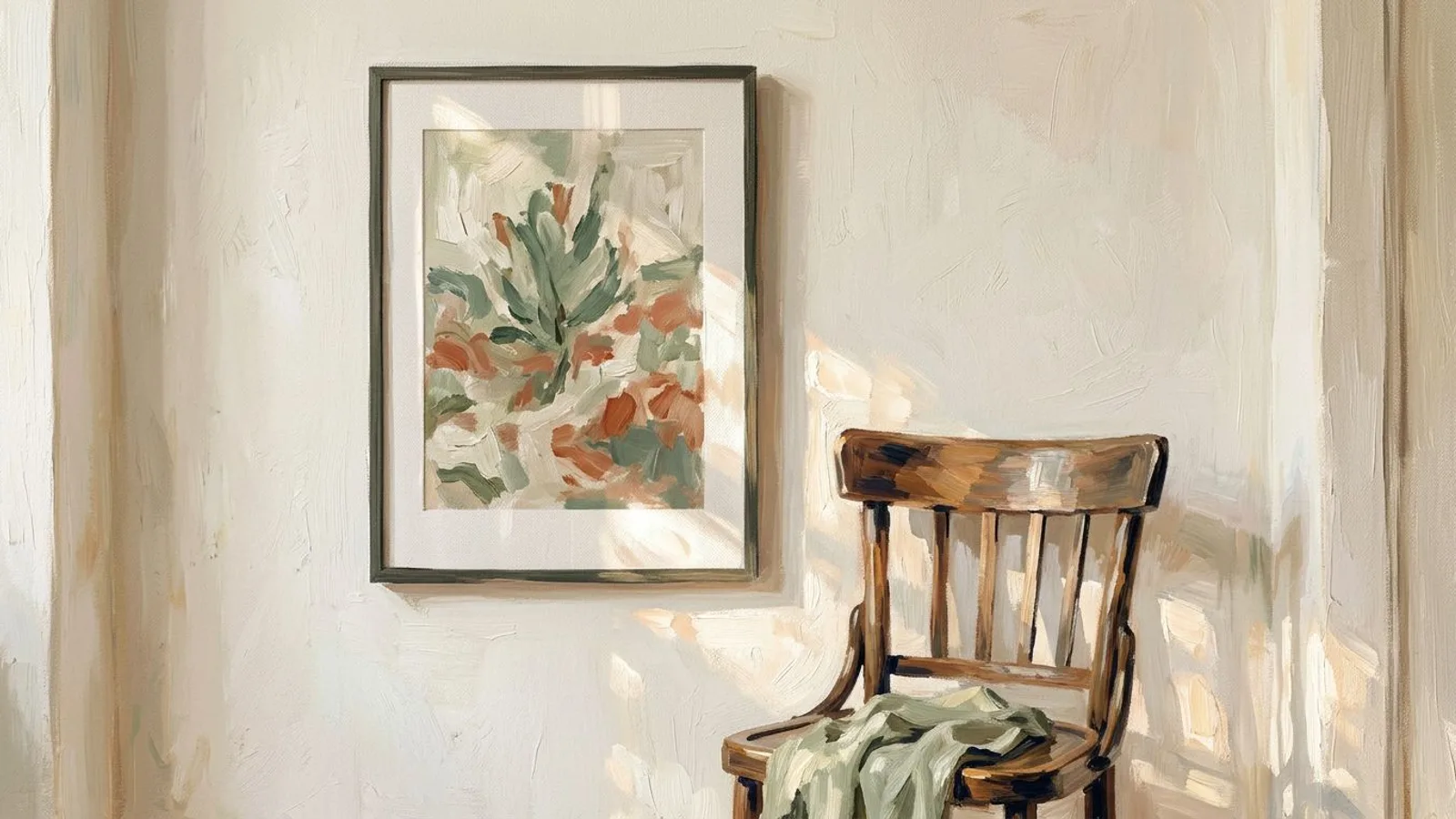
Instead: give at least one shot per print a size anchor. Framed on a wall above a chair. A hand holding one corner. Three sizes laid side by side. You are not making the photo prettier. You are answering "how big is it", which is the question sitting between a like and a cart.
The caption is a gallery label
Symptom: the caption explains what the piece explores, the palette, the mood, the two weeks it took. Nothing says the print exists as a product.
Mechanism: artists are trained to write about work. The artist statement is a real skill, and it is the wrong instrument here. It performs meaning where the reader needs availability.
Instead: keep the statement. It is why people follow you. Then add the object line underneath it: giclée print, A4 and A3, 45 and 75 euros, shop link in bio. One sentence turns a label into a listing, and it costs you nothing in voice.
Comments made of price questions read as engagement and convert worst.
"DM for price"
Symptom: no price anywhere. The comments fill with "price?" and "how much?".
Mechanism: holding the price back feels like it protects the work and starts conversations. The metrics agree, because the comment count climbs. This is the pattern worth staring at, because it is the one that lies. On art accounts, comments made of price questions read as engagement and convert worst. That volume is produced by missing information, not by desire. Each of those comments is a person you have asked to take an extra step, and most of them scroll instead.
Instead: put the number in the caption. You will get fewer comments and more orders. If you want the DM, ask for it after the price, not in place of it.
The grid is an archive of what is already gone
Symptom: SOLD across half the profile.
Mechanism: you post like a diary. A piece finishes, you show it, and the post records that it happened. After a year the grid is a museum of unavailable things. Someone landing on your profile for the first time scrolls a page of work they cannot buy, and leaves thinking you are closed.
Instead: this is where the difference between an original and a print earns its keep. An original sells once, so SOLD is true. A print does not sell out, because it is reproducible by definition. A grid marked SOLD on prints is saying something false about your own inventory. Show what is available, not what happened.
Each print gets exactly one post, forever
Symptom: forty available prints, forty posts, each published once on the day it was made.
Mechanism: this is the original's logic applied to a reproduction. An original is news. One exists, it is an event, it gets announced. A print is inventory. It exists in quantity, indefinitely, and it needs to be findable in six months. Treated as news, it gets one appearance in front of a fraction of your followers and then drops into the grid forever.
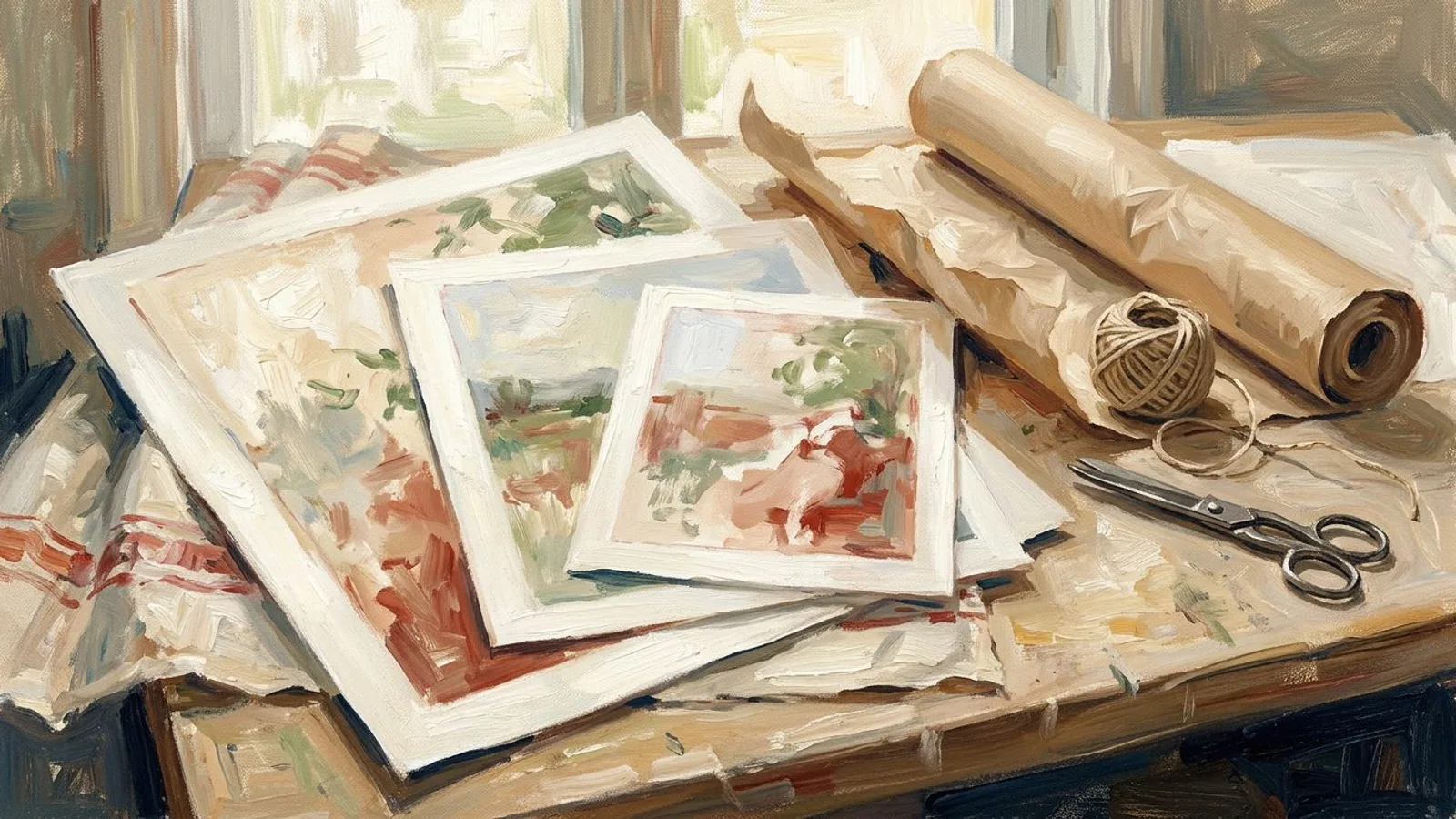
Instead: bring prints back. Repeating a post is not laziness, because your audience saw almost none of it the first time. Change the angle each round: the detail, the framed version, the one hanging in someone's hallway, the stack before it ships. One print, four posts, four chances. Writing those four Instagram variations from a single piece is mechanical work, and mechanical work is exactly what is worth handing off.
The link goes to your portfolio, not your print
Symptom: link in bio, then a homepage, then About, then a menu.
Mechanism: your site was built to show, not to sell. It opens on a statement and a picture. A buyer arriving with intent has to navigate to reach the thing they had already decided to buy, and intent decays at every click.
Instead: the link goes to the print. And if you have no shop, you do not need one to start. A payment link and a DM take an order today, and plenty of prints sell that way long before a store exists. The place where likes stop turning into orders is almost always this step, not the work.
FAQ
How do you sell art prints on Instagram without a website?
Take the order in a DM and send a payment link. Any payment tool issues one in a minute. A shop makes repeat orders easier later, but nothing about a first sale requires it.
How many followers do you need to sell prints?
Fewer than you think. A few hundred people who like your work is a viable base if the posts are buyable. Ten thousand followers looking at unpriced, unscaled images is not.
Should originals and prints live on the same account?
Yes. Just make clear which is which in the caption. The confusion between the two is what puts SOLD on a reproducible object.
Do hashtags help sell prints?
Barely, and not the way people hope. They work as a narrow search signal, not a reach lever. A specific tag naming your style or your subject does more than a block of thirty generic ones.
Take your last ten posts. Count how many name a price, how many let someone judge the size, and how many link to the print instead of the front door. Whatever number you land on is the one that explains your orders, not your follower count.