How to Grow a Small Business on Instagram
Learn how to grow a small business on Instagram with a repeatable system for profile clarity, evidence-led posts, publishing, and review.
To grow a small business on Instagram, make the account easy to understand, publish evidence from your real work on a repeatable cycle, and review signals connected to customer intent. You do not need a fresh campaign every week. You need a system that turns customer questions, jobs, products, and photos into posts with distinct purposes.
This walkthrough builds that system in six steps. Each step fits into regular work without forcing you to restart the strategy every week.

How does the Instagram growth system start?
Step 1: Choose one business outcome
Start with the action you want from the right person. A local service business may want qualified enquiries. A shop may want product-page visits. A venue may want reservations. “More followers” is too broad to guide a post because it says nothing about whom you want to attract or what they should understand.
Use one outcome for a four-week block. Then write a plain description of the customer behind it: what they are trying to decide, what makes them hesitate, and what proof would help. This is an editorial choice, not an Instagram setting.
The distinction matters. Ten thousand unrelated followers do not solve a quiet appointment book. A smaller audience that understands your work can. Follower count is useful context, but it cannot carry the whole growth plan.
Step 2: Make the profile answer the first questions
A useful profile tells a visitor what you do, who it is for, and how to take the next step. Check the name field, bio, profile image, link, and pinned posts as one page. Each element should reduce uncertainty rather than repeat a slogan.
A first-time visitor often reaches the profile after seeing one post. Give that person enough context to interpret the rest of the grid. If the account is new, use a short opening sequence instead of asking one introduction post to explain everything. These first Instagram post ideas for a new business show how to divide that job across several posts.
A varied feed can still feel repetitive when every post is trying to make the same sale.
What should a small business post to grow?
Step 3: Build an evidence bank from real work
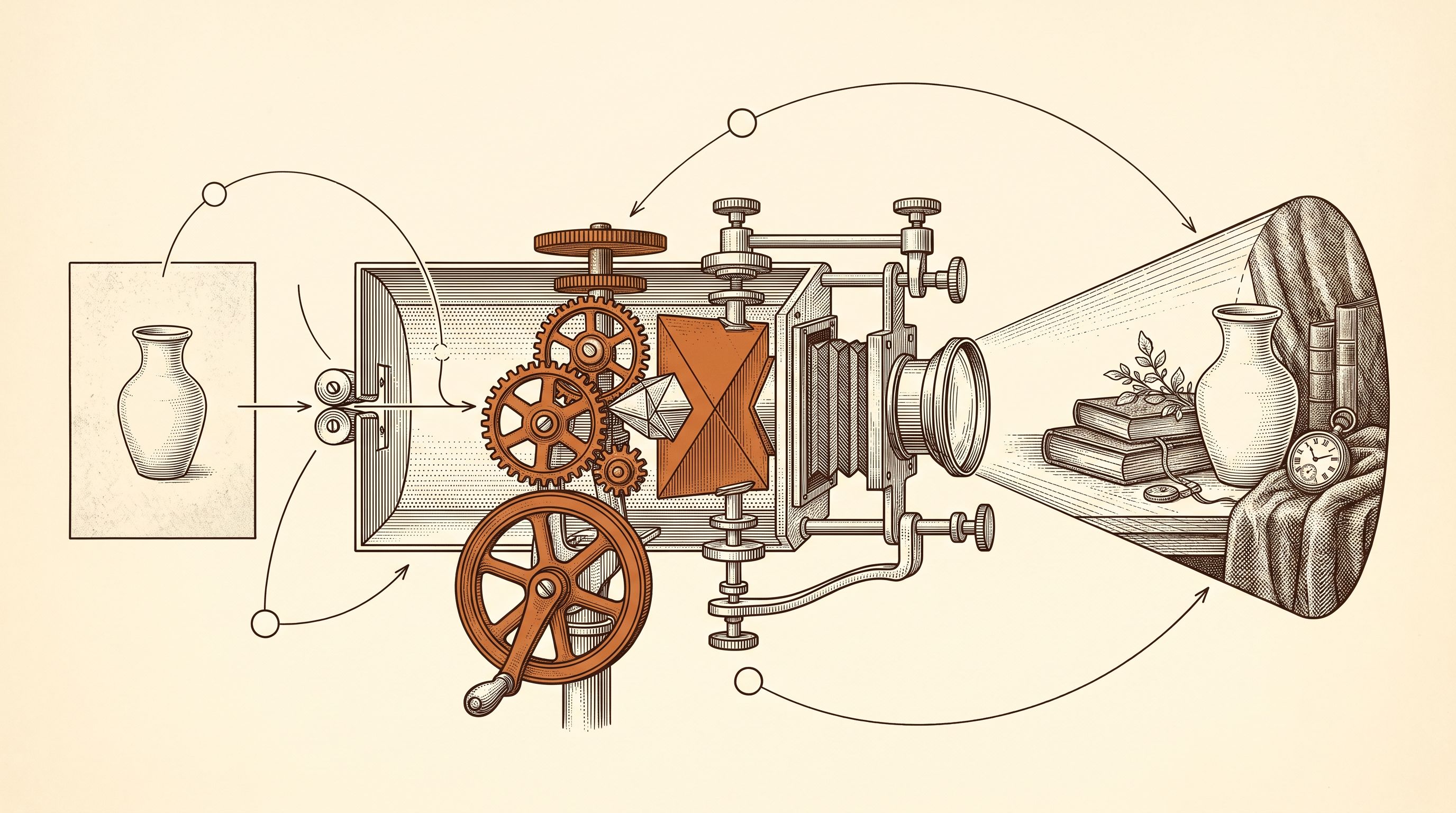
Do not begin with a list of formats. Begin with source material. At the end of a working day, capture one or two useful facts: a question a customer asked, a choice you made, a product detail that mattered, a before-and-after state you can honestly show, or a photo of work in progress.
Keep the source note factual. “Customer chose the smaller mug because it fits under her coffee machine” is usable. “Talk about quality” is not. The first note contains a person, a constraint, and a decision. It can become a caption without inventing a lesson.
This is where many content systems fail. They collect topics such as “behind the scenes” or “customer story” but discard the detail that would make the post credible. The model or writer then fills the gap with familiar marketing language. A better source bank preserves the nouns, choices, objections, and photographs that belong only to your business.
When you turn those notes into copy, keep one concrete detail at the centre. The guide to Instagram captions for a small business explains why specific material produces stronger drafts than polished generalities.
How do you turn that material into a weekly sequence?
Step 4: Give every post one decision job
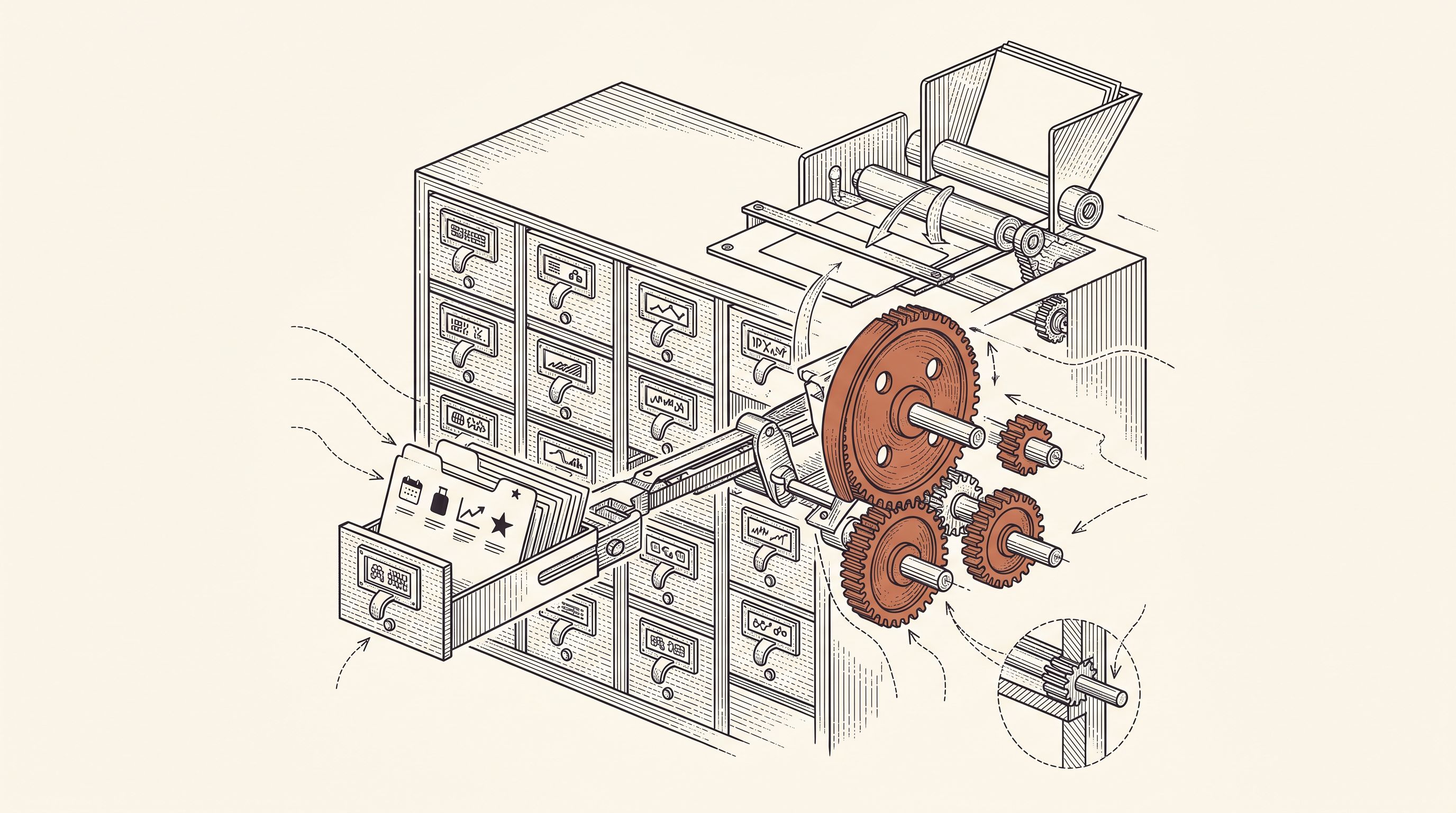
Sort each source item by the job it can do for a potential customer:
- Recognition: name the situation that makes the right person stop.
- Understanding: explain a material, method, choice, or constraint.
- Proof: show the work, result, or reasoning without inflating the claim.
- Action: state what is available and the next manual step to enquire or buy.
A week can contain all four jobs without sounding like a campaign. The same finished mug might support a scale photo, a note about the glaze choice, a customer-use scene, and a clear availability post. The facts remain consistent while the customer question changes.
A common failure starts before the writing: a batch can look visually varied and still feel repetitive when every input is a product description. Five different captions then perform the same sales job. Variety has to exist in the source material and the decision job before it appears in the wording.
A varied feed can still feel repetitive when every post is trying to make the same sale.
Step 5: Produce the batch without losing the brand
Draft the week together. Batch production exposes duplication that is hard to see one post at a time. It also lets you preserve the same vocabulary, visual palette, and level of detail across the sequence.
Use the website as a factual baseline, then add current photos and business material. Write positive voice directions: “open with the customer’s practical constraint,” “use ‘made in the workshop’ instead of ‘crafted with passion,’” or “describe the finish before the mood.” Those instructions are more useful than a long blacklist.
Automation is valuable here because it removes repeated setup while keeping review in your hands. An Instagram post generator grounded in your brand can prepare aligned images and captions from the material you already own. Check every post for factual accuracy, tone, and the next step before scheduling it.

How should you publish and measure Instagram growth?
Step 6: Publish, participate, then review the right signals
Schedule the approved batch, but keep human participation separate. Reply to real comments and messages. Ask permission before reusing customer material. If a supplier, venue, or collaborator genuinely appears in the work, tag them accurately rather than treating tags as distribution tricks.
Review the block after four weeks. Look beyond likes. Compare profile visits, link activity, enquiries, reservations, or sales conversations with the outcome you chose in Step 1. The available signals will differ by business and account setup, so use the ones closest to a customer decision.
Keep source items that produced useful conversations. Rewrite weak posts only when you can identify the missing fact, unclear customer question, or confusing next step. Do not change the entire system because one post was quiet.
Then repeat the loop: collect real material, assign distinct jobs, produce a coherent batch, review it, and schedule it. Instagram growth becomes easier to manage when publishing is attached to the work already happening inside the business.
FAQ
How often should a small business post on Instagram?
There is no universal number. Choose a cadence you can supply with specific, accurate material and maintain it as a batch. Quality and regularity should reinforce each other.
Do hashtags make a small business grow on Instagram?
Hashtags can add context and help classification or search, but they cannot repair an unclear profile or generic posts. Use a small, relevant set after the post itself answers a real customer question.
How long does Instagram growth take for a small business?
There is no defensible fixed timeline. Starting audience, offer, location, customer cycle, source material, and publishing consistency all change the result. Review business signals in defined blocks instead of promising a date.
Should a small business buy Instagram followers?
No. Purchased followers do not represent potential customers and make account-level numbers harder to interpret. Build reach around people who can understand, recommend, enquire about, or buy the work.