

Method · Arrival weighs 80% of the stay

Arrival fixes 80% of the final rating  the room won't catch up

The room won't rescue a botched arrival. The reverse, however, forgives a lot.
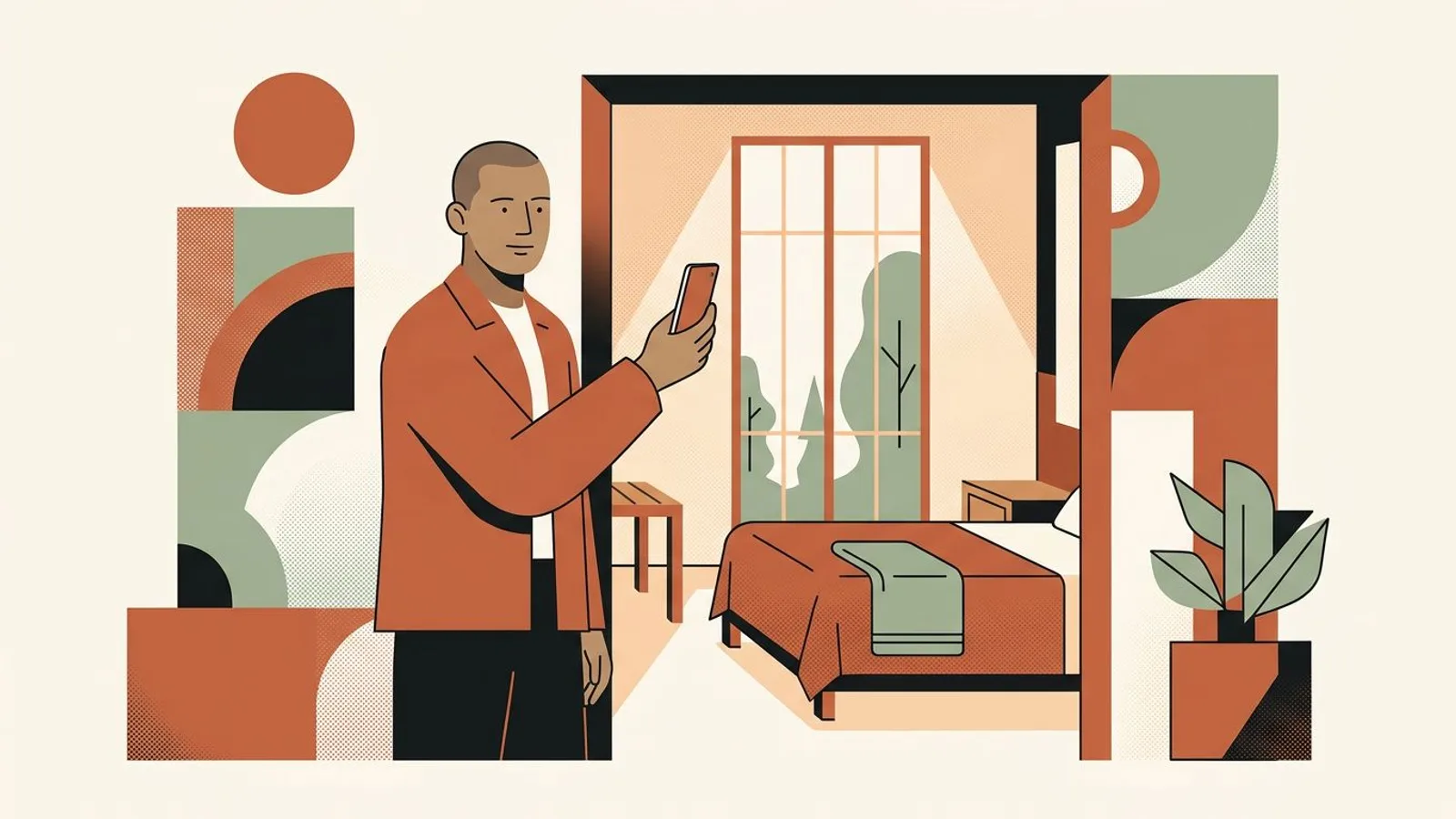
the window that fixes perception of the whole stay — from car park to the first door of the room.
The setup

_Method isn''t an annual plan — it''s the step back that decides where to spend energy when you can''t do everything._ In an indie hotel, energy pays five times more at arrival than across the rest of the stay. The guest doesn''t score a thirty-six-hour average — they score a first impression, and the Booking number locks in there, in the twenty minutes when they''re still wondering if they chose right.

Symptoms

You might recognise these signs.

  • Your Booking reviews talk about a ''decent room'' and a ''cold welcome'' on the same stay — the final score is 7.8 while the room is worth 8.5.
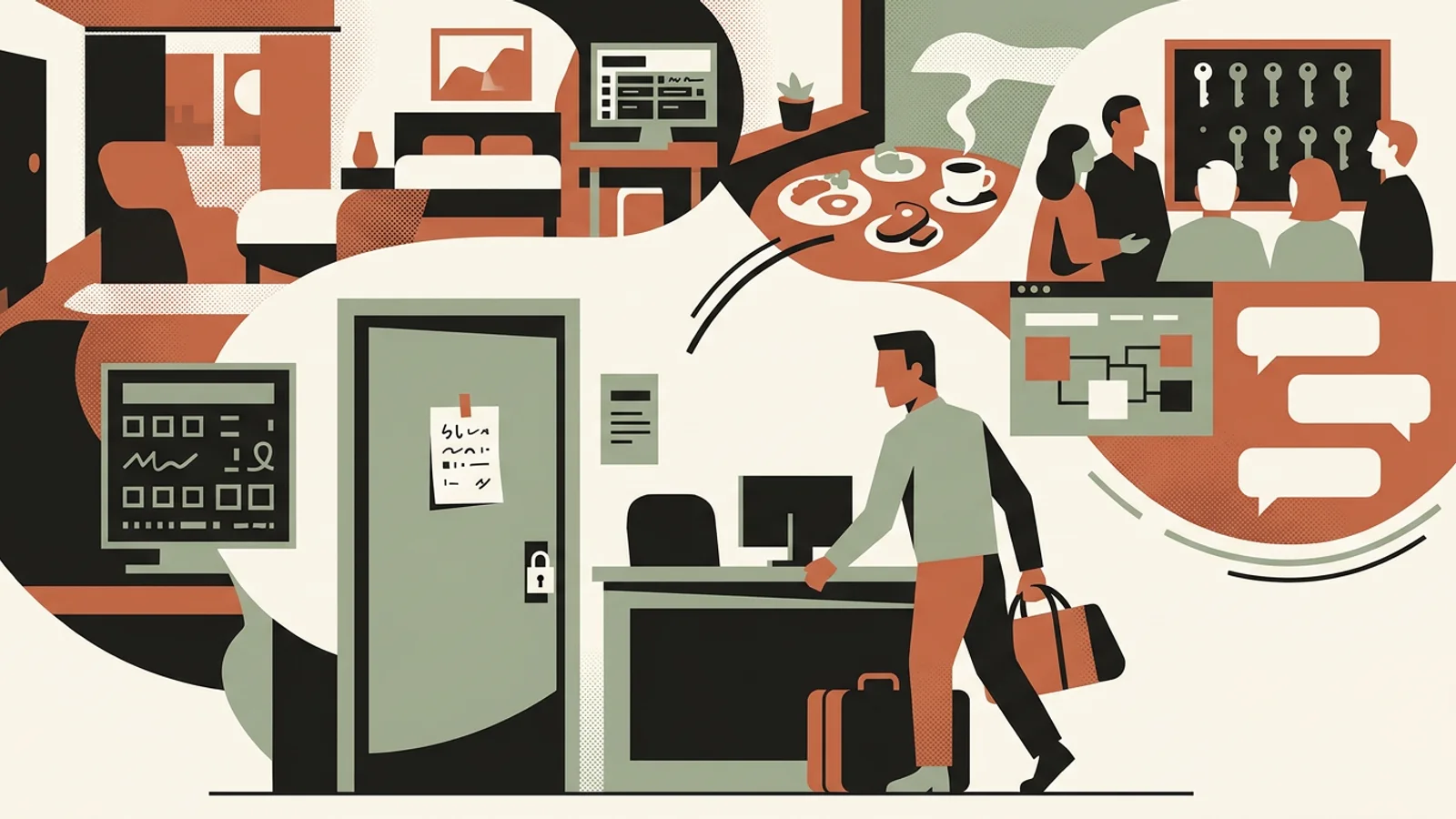
  • The guest arrives at 7pm after eight hours on the road, finds reception locked with a taped note saying ''call this number'' — the rest of the stay starts in emotional debt.
  • You work on the room (fresh linen, branded soap, green plant) but you have no defined ritual on check-in: it depends on who''s on shift that day.
  • Breakfast is fine but has no signature — it''s the generic buffet you''d find in ten similar hotels.
  • You get the same questions every morning (''where can I park?'', ''what time is breakfast?'') — proof the pre-stay email either doesn''t exist or isn''t doing its job.
Method

Step by step.

  1. Treat the pre-stay email as a first welcome, not a confirmation.

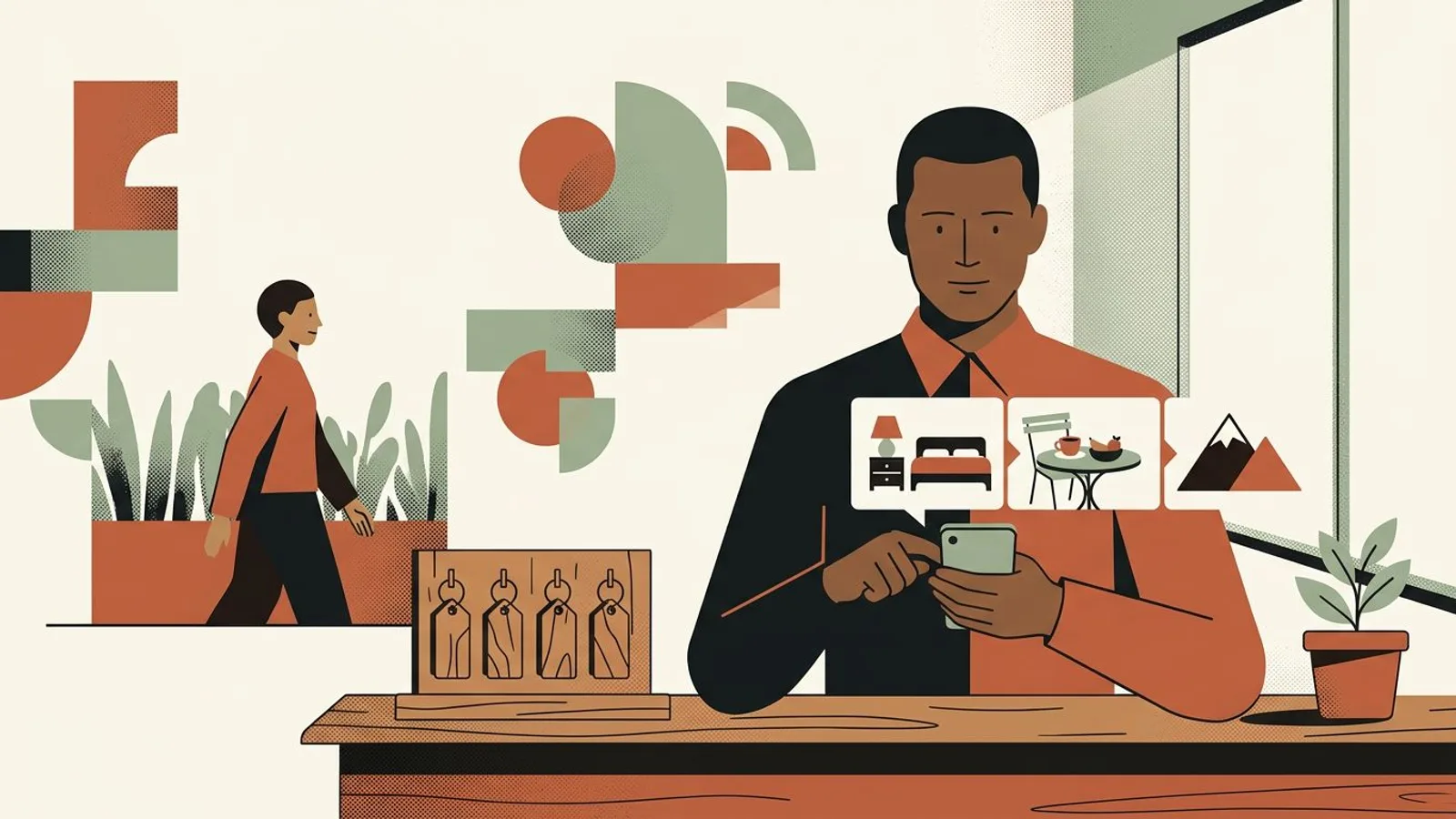
    Three days before arrival, the guest receives — or doesn''t — an email. Most operators send an admin confirmation: booking number, check-in hours, cancellation terms. That''s a confirmation, not a welcome. The email that weighs is signed by a first name (the owner, the front-of-house manager) and says three concrete things: how to get here (two sentences on parking, the street to avoid, the useful bus stop), when they''re expected (a window, not a hard cutoff), and an open question (''is this a special occasion?''). It''s also the moment to tell the guest whether room 12 has the sea view or 7 has the quiet courtyard side. The stay starts the day this email arrives.

    The generic auto-mail from your PMS doesn''t count. An email that weighs is one a human can adjust or personalise even by 5%.

  2. Prepare arrival as an evening service, not a formality.

    The expected arrival time is known 24h in advance in 80% of cases. That information has to trigger something: the room ready at 2pm rather than 4pm for the couple announced early, a chilled water bottle on the table for the family driving in from far, the blind drawn for the guest landing after a red-eye. Three anticipated physical preparations per day are enough — it''s not a personalisation promise, it''s service discipline. On an 8-room boutique in Burgundy, it adds fifteen minutes to the morning and changes the first sentence the guest says walking into the room. The opposite of Make guests return — here you prepare the first contact, not the return.

  3. Hold the check-in under five minutes, standing or seated, never behind a wall-counter.

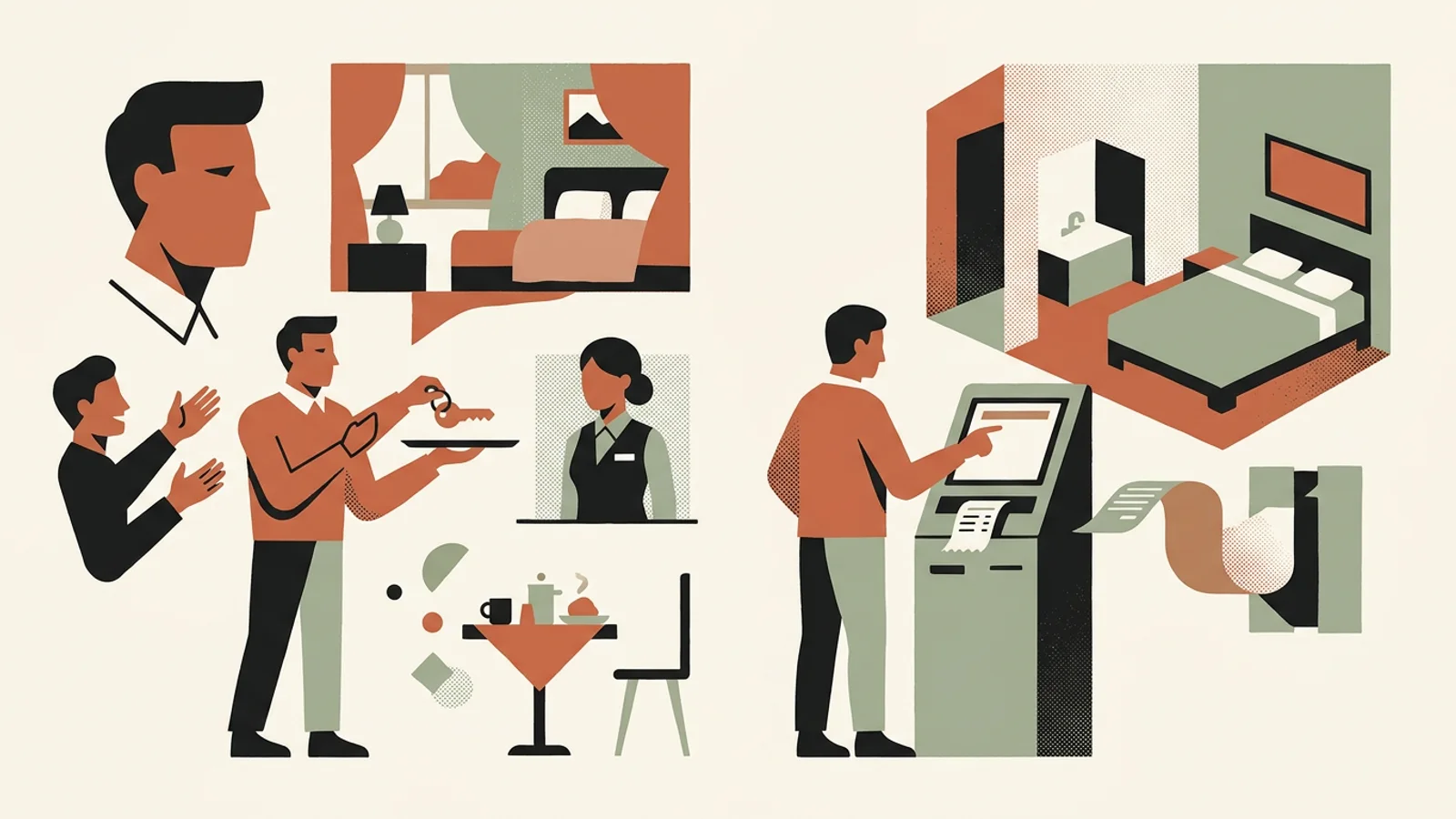
    The guest has travelled, they''re hungry, they want their room. Anything stretching check-in works against you — the police form filled in by hand, the laborious passport scan, the eight-page explanation of every opening hour in the building. Method: pre-fill the form online before arrival, scan ID in ten seconds, hand over the key with a precise sentence (''room 8, first floor right, stairs or lift, I''ll swing by around 6pm to check everything''s fine''). Five minutes, not ten. The wall-counter (high, separating) is the opposite of a welcome — prefer a low counter, a desk, or ideally standing in the middle of the lobby for hotels that allow it.

    Time your check-in over two weeks, stopwatch in hand. Beyond five minutes for a guest with no special request, you''ve got fat to trim.

  4. Care about the first five seconds in the room.

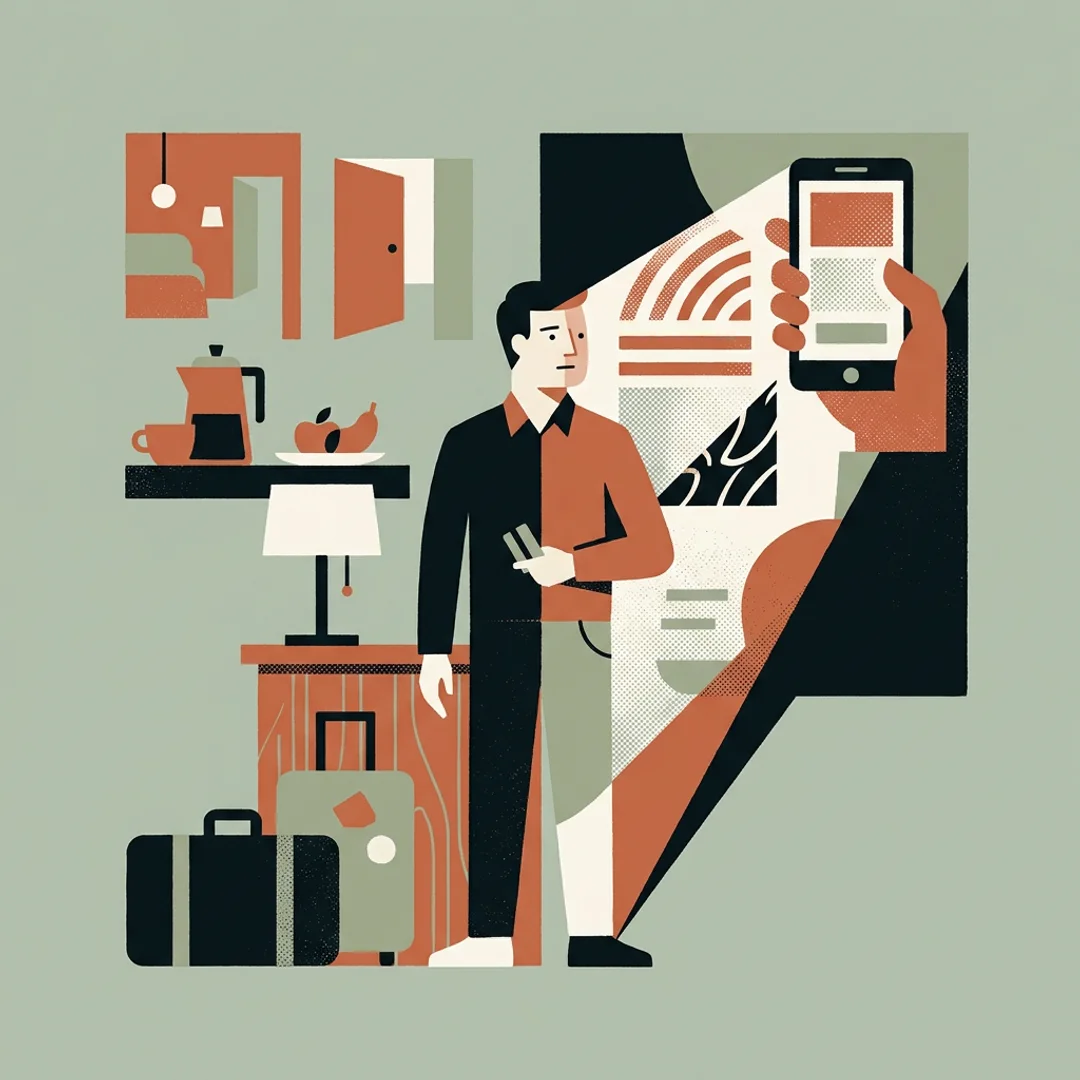
    The guest opens the door. They see, they smell, they hear. That''s where the Booking score locks — not after breakfast. Five variables matter, in this order: smell (neutral fresh, not chemical), light at the entrance (a lamp on in the evening beats a cold ceiling spot), temperature (not freezing nor stifling), silence (AC off on arrival, window shut if noisy), the first thing they see (a made bed, clean, not the previous guest''s forgotten case behind the door). None of these costs a budget — all of them demand a discipline of preparation. A guest walking into a clean room, softly lit, at 21°C, in silence, is won for 36 hours.

  5. Care about the breakfast ritual — the second moment of truth.

    Breakfast is the second check-in of the stay. The guest has slept, they re-score. Three durable principles. The format must reflect your chosen guest type (cf. Pick a guest) — family buffet for family long-stay, room-service tray for couples weekend, continental quick for business short-stay. Presentation beats quantity — three home-made jams beat ten industrial ones. Staff presence matters at ''hello'' (two minutes), not during the meal. The guest must be able to serve themselves and sit back down without asking.

Do / Don't

Do

  • Send a pre-stay email signed with a first name, 3 days out, with three useful pieces of info and one open question.
  • Physically prepare the arrival (room, water, blind) based on the time and profile announced 24h ahead.
  • Hold check-in under 5 minutes by pre-filling formalities, and welcome standing or at a low desk.

Don't

  • Rely on the room quality to rescue a botched arrival — the rating has already locked.
  • Confuse automatic PMS confirmation and pre-stay welcome — perceived humanity is what counts, not the email itself.
  • Turn check-in into a ten-minute admin interrogation — the guest already handed over their info at booking.
A concrete case

Situation

Two 14-room independent hotels in the same Auvergne spa town, average rate €145/night, same clientele (50-65 year-old couples on a week-long cure). Hotel A works arrival as a ritual. Hotel B does what everyone does: automatic Booking confirmation, standard check-in, clean room.

Action

A sends an email 72h ahead signed by Sylvie (the owner): a map avoiding the town centre roadworks, the ideal arrival window (4-7pm to enjoy the open lounge), and a question about the cure to prepare a short orientation folder. On arrival, pre-filled form, lobby welcome standing with carafe of water and herbal tea offered, room at 22°C with mood lamp on and spa brochure laid on the bedside table. Breakfast served on a tray in a veranda corner for guests leaving early for treatment. B follows the standard Booking process, check-in behind the counter, decent room, breakfast buffet 7am-10am.

Outcome

Over 12 months, A holds a Booking score of 9.1 (vs 8.2 for B) at equivalent room quality. Year-2-on-year-2 return rate: 38% at A, 14% at B. Estimated annual revenue gap: €31,000 in RevPAR — for an investment that boils down to 25 minutes/day of preparation and a manual email per arrival. The room isn''t better at A. The arrival is.

Common pitfalls

Where it usually goes wrong.

  • Believing the welcome depends on who''s on shift.

    As long as arrival hinges on the receptionist''s personality that day, you haven''t set a ritual — you''ve got lucky or unlucky. An arrival ritual holds because it''s written: three physical preparations per day, pre-filled form, calibrated welcome sentence, first room check-in around 6pm. An average staffer with a solid ritual beats an exceptional one without — because the exceptional isn''t on every night.

  • Over-equipping the room and under-serving the arrival.

    Classic mistake of the hotel buyer: €40,000 into room renovation, €0 into check-in training. The guest perceives the room as the new normal by night two; the arrival, they''ll remember six months later. On a tight budget, priority is almost always on the arrival ritual, not the new bathroom. It''s also why Weekly piloting keeps review sentiment in the 4 key indicators — it''s the barometer of perceived arrival.

  • Forgetting that digital is a first contact.

    Today the guest has seen your site, read your Booking reviews, compared three photos, maybe got a Booking email already. Arrival doesn''t start at 4pm on day D — it starts at booking, on average seven days earlier, sometimes 40 for longer trips. The pre-stay email is the first moment YOU take that relationship back. Leaving it to the PMS auto-mailer means leaving half the perception built without you.

Takeaway

Your checklist.

  • Does a personalisable pre-stay email exist, signed with a first name, sent 3 days out.
  • Are the 3 daily physical preparations (room, water, blind, light) formalised in the morning routine.
  • Is the average check-in time, measured over 2 weeks, under 5 minutes for a guest with no special request.
  • Is the welcome standing or at a low desk, or still behind a separating wall-counter.
  • Are the 5 first-five-seconds variables (smell, light, temperature, silence, first glance) checked before each arrival.
  • Does breakfast format reflect your chosen guest type, or is it a generic buffet for everyone.
What's next?

Method in hand. Time to put it to work.

A method is set — still, you need time to put it to work. Readytopost frees that time by taking one front off your plate: your presence on the five social networks. Everything written, illustrated, scheduled — calibrated on your hotel, week after week. So your energy stays on the trade.

Start with ReadyToPost

See how these principles play out day to day. Practice for independent hotels gives you concrete, illustrated, adaptable levers — directly applicable the following week. No quarterly plans, no annual roadmaps: weekly gestures that touch something right away.

See it in practice
hotel

Other guides for independent hotels

Weekly piloting for indie hotels

Four Monday indicators: piloting a boutique property

Four indicators read every Monday are enough to pilot an independent hotel. Not ten, not twenty: four — pickup J+7 vs J+30, ADR vs local market, direct/OTA channel mix, review sentiment last 7 days. Each triggers a clear decision at every reading. The rest is dashboard that reassures without changing anything. And it all fits in a shared spreadsheet — no €400/month revenue manager required.

Come back every year

The method for guests who come back every year

In hotels, the guest who returns a second time costs almost nothing to acquire — no OTA commission, no campaign, no Booking discount. And they're worth five times the margin of a new guest captured at 18% commission. Yet most independent hotels pilot acquisition and forget the cadence of return. A word, an attention, a well-placed email is enough — but it has to land at the right time.

Pick a guest type to serve

Picking the guest type you serve: the pivot decision

With 20 keys, chasing the weekend couple and the Tuesday business traveller at once means serving both badly. Naming one or two guest moments — short weekend, mid-week business, family long-stay, 7+ night digital nomad — is the call that aligns the breakfast offer, the front-desk tone and the rate quoted direct.

Push direct bookings

Push direct bookings: 5 moves over 7 days

OTA at 63% of mix, 18% commission: each point gained in direct is worth 14% more net revenue. Five moves placed over 7-14 days to push direct booking without destroying room value.

Further reading

Related blog articles

  • case-studies

    A boutique hotel reclaims its margins

    No pro shoots. No agency. Just iPhone photos taken between two services, processed differently. Six months later, the numbers shift.

  • social-media-strategy

    Google is ending its search bar.

    Google rebuilt the search bar as an AI agent. The click on the top organic result already dropped 58 percent. For an independent, the marketing minutes shift from SEO long-tail to social presence, the field where your name still gets remembered.

  • case-studies

    The product photo threshold

    A product photo on a plain background gets catalog reach. The same product photographed in context gets saved. Here is where that line sits.

  • content-creation

    When the image says one thing

    The most common failure in a social post is not the caption. It is the gap between what the image shows and what the text claims.

Questions

Frequently asked.

  • Why is it said arrival weighs 80% of the stay?

    Because perception locks in the first twenty minutes — pre-stay email, parking, first sentence at reception, first five seconds in the room. The rest of the stay confirms or nuances that first impression, it no longer overturns it. It''s a psychological anchoring effect verified countless times in customer satisfaction studies. On an indie hotel, that means the priciest room won''t rescue a check-in that dragged on for twelve minutes behind a wall-counter, while a simple room well prepared with a personal welcome holds Booking scores above 9.

  • Should the pre-stay email be automated?

    The skeleton yes, the content no. A fully automated email reads as administrative — the guest scans it in two seconds and moves on. An email that weighs is one where a human can add or adjust 5 to 20% of the text — a detail about the assigned room, an answer to a booking-time question, a local recommendation calibrated for the season. Useful rule: if sending 30 emails a month takes more than 90 minutes, you''re over-investing; if it takes zero minutes, you''re not sending a welcome, just an auto-mailer.

  • How do you shorten check-in without making it cold?

    By moving the formalities out of the arrival moment. A pre-filled police form online at confirmation (most PMS do this now), a quick ID scan on arrival, and a payment already captured at booking leave time for what matters: the welcome sentence, the question about the journey, the orientation to the room. A short check-in isn''t a rushed one — it''s a check-in where every second serves the relationship, not the paperwork. Target five minutes on average, four spent talking to the guest, one on the motions.

  • Won''t the pre-stay email feel intrusive?

    Very rarely, if it''s short and clearly useful. A five-line email signed with a first name, with three practical pieces of info and one open question (''is there a special occasion?'') reads as attentive, not intrusive. What bothers guests isn''t the email — it''s the generic fifteen-line one trying to sell a spa package or a dinner. Useful rule: utility first, never sell in the pre-stay email. Selling happens at arrival, in person, on the back of a question.

  • What signals say my arrival isn''t up to par?

    Four reliable signals. Booking reviews talk about a decent room and a so-so welcome on the same stay. You get the same questions the day after (''where''s parking?'', ''breakfast hours?'') — proof there was no orientation on arrival. Guests leave their case at reception instead of going straight up — proof the key handover wasn''t clear. And if you look at Booking sub-scores, ''staff'' is almost always below ''room'' and ''cleanliness''. That inversion is the clearest signal: the room holds, the arrival doesn''t.