





Method · Weekly piloting for indie hotels

Four Monday indicators: the piloting that's enough for a boutique hotel

An indicator that triggers no decision isn't an indicator. It's decoration.
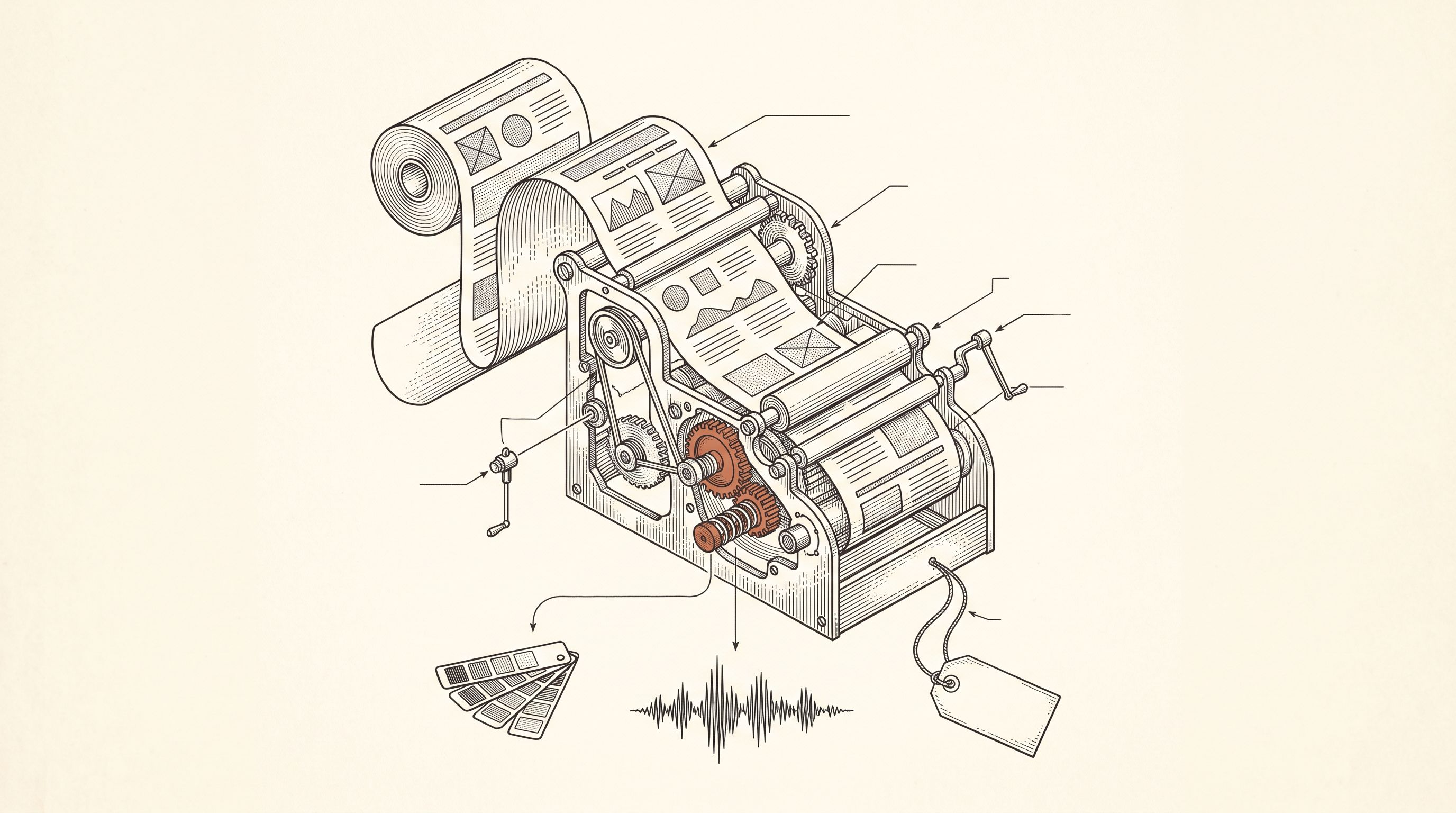
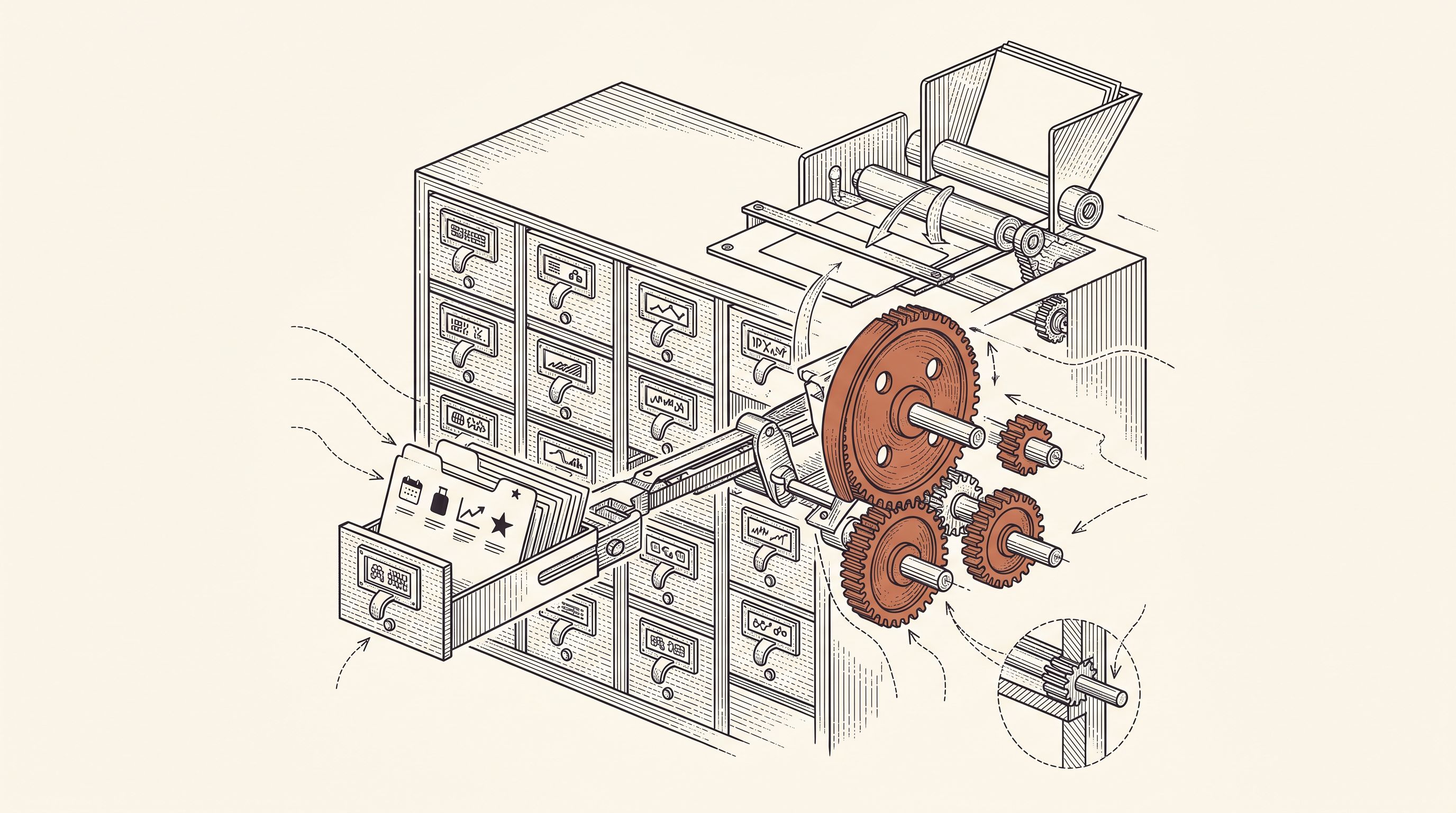
Monday indicators that suffice to pilot an indie hotel — beyond that, attention dilutes.
The setup

_Method isn''t a dashboard, and piloting isn''t monitoring._ It''s a short weekly ritual that turns numbers into decisions. The difference: a dashboard gets watched, a piloting routine triggers. On an independent 3-30 room hotel, four indicators read on Monday with a decision attached to each delivers more RevPAR than twenty indicators read at month-end with no follow-through.

Symptoms

You might recognise these signs.

  • You open your PMS Monday morning, look at twenty numbers, and close it without deciding anything.
  • Your structural decisions — weekend pricing, season open/close, seasonal hiring — still get made on gut feel despite the data piling up.
  • You rediscover your Booking monthly report on the 5th of the month and can no longer explain why November dropped.
  • Your team can''t say which indicators really count this week — everyone has their hunch, no one has the same.
  • You change software every eighteen months hoping a new dashboard will show what the previous ones didn''t.
Method

Step by step.

  1. Read pickup J+7 vs J+30 to decide the week''s marketing pressure.

    Pickup is the number of reservations gathered each week on a future window. Useful read: how many for the next 7 days (short term — react now) and how many for J+30 (medium term — observe the trend). If J+7 pickup is low, you activate short levers — guest file follow-up, local Google Ads, direct push. If J+30 pickup drops two weeks running, that''s a more structural season signal — comms or pricing aren''t hitting the market tone. This read ties into Decode RevPAR: pickup explains RevPAR before it materialises. 2026 booking window target: 40 days average on independents, so J+30 captures most purchase decisions.

    Note pickup in a simple 4-column spreadsheet: week, J+7 pickup, J+30 pickup, decision made. Over three months, seasonal patterns emerge without software.

  2. Read your ADR against the local market — basic rate shopping, not Lighthouse.

    ADR (Average Daily Rate) only means something against your direct competition — not the Parisian average hotel, not Lighthouse at €280/month. Basic rate shopping fits in five tabs: open Booking on five comparable hotels in your range (15 km), same category, on three key dates (weekend in 2 weeks, Tuesday in 1 month, weekend in 3 months). Note your prices and theirs in a spreadsheet. If your weekend ADRs drift more than 12% under (or over) the local market for two weeks, you decide: adjust, or own it (e.g. if you hold a premium positioning on a specific segment). In 2026, ADR -5.8% YoY on independents — so dropping a touch isn''t losing the war, but dropping without knowing it is.

    Tuesday morning is more representative than Sunday evening — Booking runs visibility adjustments overnight. Read at a fixed hour to compare over time.

  3. Track direct/OTA channel mix to measure real margin.

    On the 2026 independent market, OTA is on average 63% of the mix — meaning 18% commission eaten every month on most nights. Channel mix isn''t a pride indicator (''I''ve got 50% direct''), it''s a margin indicator. On €100 of ADR, a direct night earns €100 minus payment fees (~2%). The same night via Booking earns €82. On 1,200 annual nights, moving 10 mix points from OTA to direct = roughly €11,000 of recovered margin. Useful piloting: track direct share each week, see whether your efforts (anniversary email, Make guests return, brand-name Google Ads, home-page booking widget) actually move the line — not whether OTA dependence recedes in the yearly report. Healthy independent target: 35-45% direct, more depending on your market.

  4. Read review sentiment for the last 7 days — the human barometer.

    Booking scores are 12-month smoothed averages. They say nothing about this week. The 7-day sentiment, on the other hand, is live: how many reviews, what average score, which word recurs. The indicator that says whether the last week held. Useful ritual: Monday morning, read the last 5 to 10 reviews (Booking, Google, TripAdvisor), spot the recurring words — ''warm welcome'', ''night noise'', ''nice breakfast'', ''reception closed too early''. Three mentions of the same word in a week = signal, not noise. A targeted action gets decided this week, not after the monthly report. And a negative review read and answered within 24h weighs less than one ignored for 5 days — it''s the perceived-arrival barometer (cf. Arrival matters).

  5. Hold the ritual to 30 minutes Monday morning, team included.

    A two-hour piloting routine ends up skipped every other week. Thirty minutes Monday morning, no more, ideally with the front-desk or rooms manager. Four steps: pickup (5 min), ADR vs market (10 min), channel mix (5 min), review sentiment (10 min). One decision per indicator, written down. After a quarter, you''ve got 13 weeks of traced decisions and you can see what worked. A short ritual that holds beats an exhaustive one that drops. Same trade-off logic as Decode RevPAR — knowing where energy pays.

    Block the slot in the calendar like a service. 9am Monday, no email, no check-in: read, decide, write. Thirty minutes max.

Do / Don't

Do

  • Limit piloting to 4 structuring indicators — pickup J+7/J+30, ADR vs market, channel mix, 7-day sentiment.
  • Attach to each indicator the decision it''s meant to trigger, and write it in a shared spreadsheet.
  • Hold the ritual to 30 minutes Monday, key team included, and block the slot like a service.

Don't

  • Buy a revenue manager at €400/month before holding the manual weekly ritual for 3 months.
  • Stack 20 indicators because they''re in the PMS — beyond 6-7, attention drops.
  • Confuse monthly reading (report, analysis) and weekly piloting (short-term decision).
A concrete case

Situation

Two independent hotels, 16 and 14 rooms in southern Brittany, same pricing (€110-160/night), same seasonality (July-August at 92% occupancy, November-February at 45%). A pilots on instinct with a PMS exporting 23 monthly indicators; B has held a 30-minute Monday weekly ritual on 4 indicators for 18 months.

Action

A reads the monthly report on the 5th and notices the following month that November dropped — pushes a generic Booking promo. B saw as early as week 41 that J+30 pickup for November was -22% vs N-1; adjusted weekend ADR in week 42 (-8% on the soft Friday-Saturdays), launched a targeted anniversary email on November N-1 guests, and bumped brand-name Google Ads spend by 5%. Direct channel mix moved from 32% to 41% over the period in two months — visible every week.

Outcome

At 12 months, A holds a RevPAR down 8% YoY (in line with market), OTA mix stable at 69%, and still reads numbers a month late. B holds RevPAR at -2% YoY (3× less than market drop), direct mix up to 44%, and a sentiment score lifted from 8.3 to 8.9 (the 3 recurring negative words — ''cold room in November'' — were handled in early October). Estimated annual difference of €26,000 net margin. No expensive software bought — just a shared Google Sheet and 30 minutes Monday.

Common pitfalls

Where it usually goes wrong.

  • Thinking a revenue manager replaces human piloting.

    Tools like Lighthouse or Duetto push dynamic prices based on automated competitive data. Useful past a certain size, useless if you haven''t first established a human reading routine on your 4 indicators. Why: a revenue manager executes, it doesn''t decide your positioning. If you can''t say why your weekend ADR is €145 (and not €165), the tool will suggest prices without business logic — and you''ll follow blindly. Human weekly piloting is the condition for a tool to pay, not its replacement.

  • Stacking indicators thinking ''more = better''.

    The opposite. Beyond 6-7 seriously tracked indicators, attention dilutes, correlations become noise, and you stop reading. Four is already very good for an indie hotel. The right reflex: remove an indicator when you want to add one — don''t stack. Same rule as for rooms in a boutique (better 12 well-kept than 25 average) applies to dashboard lines.

  • Letting the PMS dictate indicators.

    Most hotel PMS (Mews, Cloudbeds, Hotello, Misterbooking) ship with a pre-set 15-25 indicator dashboard. Useful to start, dangerous as a piloting frame. The PMS pushes what it can compute, not what you need to decide — it doesn''t do competitive rate shopping, doesn''t read external review sentiment. Right order: set your 4 indicators, then find the tool that serves them (often a spreadsheet). The opposite — accepting the default dashboard — produces generic piloting on a non-generic business.

Takeaway

Your checklist.

  • Can you cite your 4 weekly indicators without looking at the screen?
  • For each indicator, do you know which decision it''s meant to trigger this week?
  • Does the Monday ritual stay under 30 minutes, or does it spread across the morning?
  • Are your indicators written in a shared spreadsheet with at least one other team member?
  • Is competitive rate shopping done weekly on 5 comparable hotels (not once a quarter)?
  • Are last-7-day reviews read every Monday, and an action decided if a word recurs 3 times?
What's next?

Method in hand. Time to put it to work.

A method is set — still, you need time to put it to work. Readytopost frees that time by taking one front off your plate: your presence on the five social networks. Everything written, illustrated, scheduled — calibrated on your hotel, week after week. So your energy stays on the trade.

Start with ReadyToPost

See how these principles play out day to day. Practice for independent hotels gives you concrete, illustrated, adaptable levers — directly applicable the following week. No quarterly plans, no annual roadmaps: weekly gestures that touch something right away.

See it in practice
hotel

Other guides for independent hotels

Come back every year

The method for guests who come back every year

In hotels, the guest who returns a second time costs almost nothing to acquire — no OTA commission, no campaign, no Booking discount. And they're worth five times the margin of a new guest captured at 18% commission. Yet most independent hotels pilot acquisition and forget the cadence of return. A word, an attention, a well-placed email is enough — but it has to land at the right time.

Arrival weighs 80% of the stay

Arrival matters: the moment of truth in a small hotel

A guest decides their Booking score within the first twenty minutes: the pre-stay email they received, the smile at the front desk, the first five seconds in the room, the bathroom smell. The rest of the stay confirms or nuances — it no longer overturns. Everything that plays out before and at arrival weighs more than pillow quality or balcony view.

Pick a guest type to serve

Picking the guest type you serve: the pivot decision

With 20 keys, chasing the weekend couple and the Tuesday business traveller at once means serving both badly. Naming one or two guest moments — short weekend, mid-week business, family long-stay, 7+ night digital nomad — is the call that aligns the breakfast offer, the front-desk tone and the rate quoted direct.

Push direct bookings

Push direct bookings: 5 moves over 7 days

OTA at 63% of mix, 18% commission: each point gained in direct is worth 14% more net revenue. Five moves placed over 7-14 days to push direct booking without destroying room value.

Further reading

Related blog articles

  • case-studies

    A boutique hotel reclaims its margins

    No pro shoots. No agency. Just iPhone photos taken between two services, processed differently. Six months later, the numbers shift.

  • social-media-strategy

    Google is ending its search bar.

    Google rebuilt the search bar as an AI agent. The click on the top organic result already dropped 58 percent. For an independent, the marketing minutes shift from SEO long-tail to social presence, the field where your name still gets remembered.

  • case-studies

    The product photo threshold

    A product photo on a plain background gets catalog reach. The same product photographed in context gets saved. Here is where that line sits.

  • content-creation

    When the image says one thing

    The most common failure in a social post is not the caption. It is the gap between what the image shows and what the text claims.

Questions

Frequently asked.

  • What are the 4 essential indicators to pilot an indie hotel?

    Four indicators suffice for a 3-30 room hotel: pickup at J+7 and J+30 (how many bookings gathered for the next week and the next month, to decide marketing pressure), ADR vs local market (your average price compared to 5 comparable hotels on 3 key dates, to decide adjust or own), direct/OTA channel mix (direct share each week, to measure real margin), and 7-day review sentiment (average score and recurring words on Booking/Google/TripAdvisor, to spot a service issue before it weighs on the average score). Each triggers a concrete decision every Monday.

  • Do you need a revenue manager like Lighthouse to pilot?

    Not as a starting point. A revenue manager costs €200-400/month and automates rate shopping and dynamic pricing. Useful when you''ve stabilised a manual weekly ritual for at least 3-6 months and consolidation takes longer than the decision. Before that, it''s expensive tooling for a problem that solves with a Google Sheet and 30 minutes Monday. The classic mistake is buying the revenue manager hoping it''ll pilot for you — it suggests prices, it doesn''t decide your positioning.

  • How does hotel piloting differ from restaurant piloting?

    Three major differences. First the decision window: a restaurant pilots daily (evening covers, no-shows), a hotel pilots at 7-40 days (pickup, 40-day average booking window). Second platform dependency: a restaurant has TheFork charging 2-7% per cover, a hotel has Booking and Expedia charging 15-25% — so channel mix is a critical indicator on the hotel side, secondary on restaurants. Third the return cadence: a restaurant builds loyalty monthly (weekly regular), a hotel builds it annually — so retention indicators don''t read on the same horizon. Hotel piloting is longer in horizon, more platform-dependent, more seasonal.

  • How do you rate-shop without a paid tool?

    Five Booking tabs in your browser. Identify 5 comparable hotels within 15 km (same star rating, same price range), and 3 reference dates (weekend in 2 weeks, Tuesday in 1 month, weekend in 3 months). Every Monday morning, open the 15 combinations (5 hotels × 3 dates), note prices in a spreadsheet, compare to yours. 15 minutes max. That''s what paid tools do automatically at €250/month — except on 5 hotels only (the true comparables, not a pseudo-market of 80 properties), manual is more accurate. Always do it at the same time to compare over time.

  • How often should you revise the 4 indicators themselves?

    Once a quarter, ask the same question as at setup: have these indicators triggered decisions? If yes, they stay. If no, one is a candidate for removal. Your indicators aren''t fixed — seasonality changes, strategy evolves, team members come and go. An indicator that triggered nothing across 13 weeks should yield its slot. Target: each of the 4 indicators should have triggered at least 2 decisions in the quarter. Otherwise, one is decoration.