How to Sell Food Products on Instagram
How to sell food products on Instagram: the posts that turn compliments into orders and what buyers need to see before trusting your food.
Food products sell on Instagram when your feed answers the questions a buyer silently asks before trusting food from a small producer: who makes this, what exactly goes into it, and how does it reach me. The appetizing photo starts that conversation. On its own, it has never closed a first order.
That claim meets resistance every time. So here it is as it actually plays out — a maker of jams, sauces or baked goods on one side, and on the other what keeps showing up across the small food brands that sell.
Why do food posts get likes but no orders?
The objection: "Instagram is where food gets admired, not bought. My best photo did everything a post is supposed to do — likes, saves, compliments in the comments. Not one order came out of it. People scroll food for pleasure, then buy their jam at the supermarket."
Our read: The likes are real. They just answer a different question than the one you care about. A beautiful shot triggers appetite, and appetite costs the viewer nothing. An order asks that same person to pay, hand over an address, and put an unfamiliar product in their mouth. The supermarket jar already carries that trust for them — a known brand, a regulated label, a counter to return it to. Your account starts at zero on all three. Until the feed replaces them, the compliments stay compliments.
The objection: "So the problem is my product? Everyone who tastes it reorders."
Our read: That sentence is the diagnosis. Taste converts — and Instagram cannot transmit taste. So the feed's job is not to make the product look better; you are past that. Its job is to remove, one post at a time, every reason a first-time buyer has to hesitate.
What makes someone trust food from a small producer?
The objection: "I'm not going to post hygiene paperwork. Nobody follows an account for certificates."
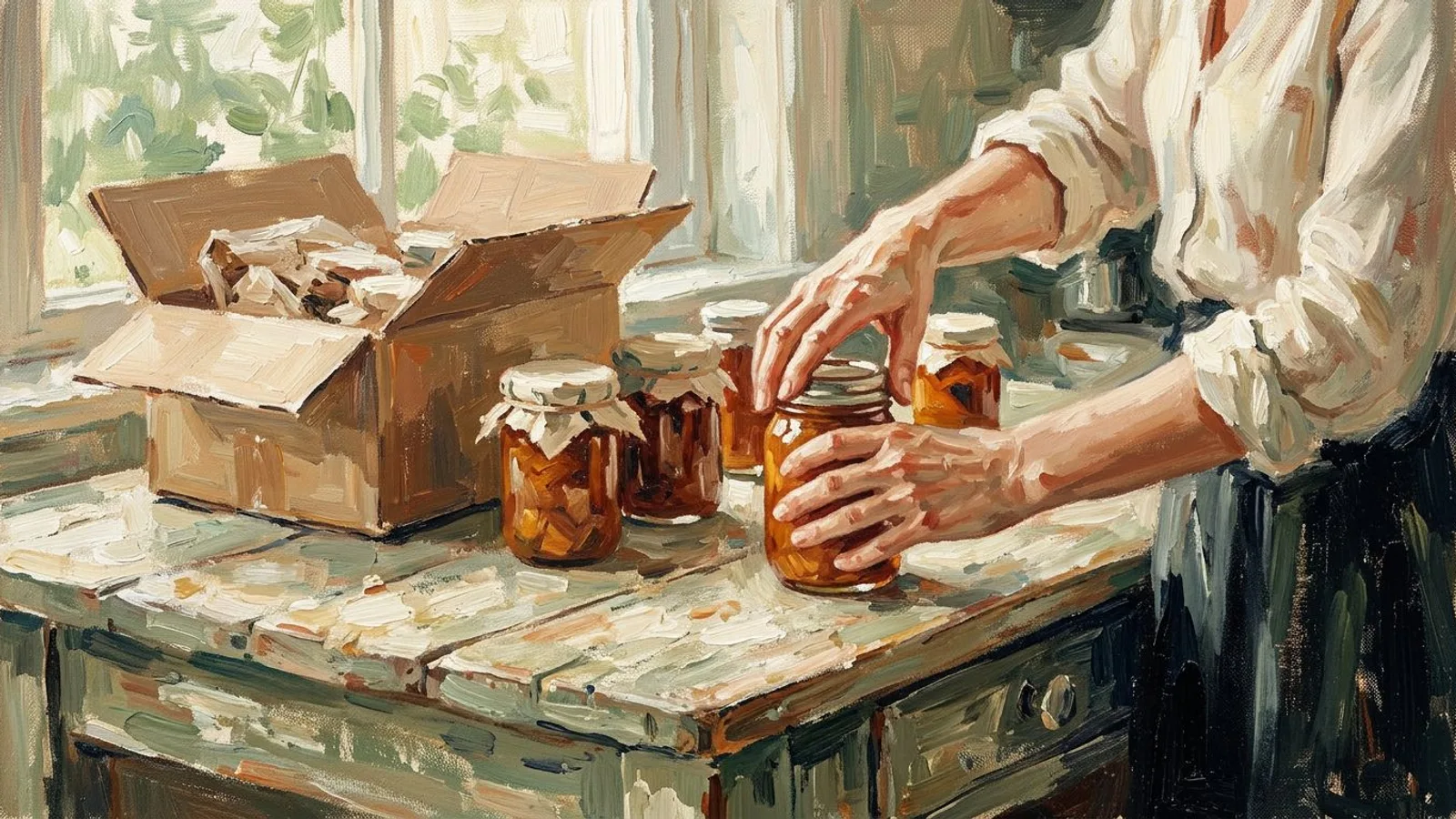
Our read: Nobody asks for paperwork. Trust content is evidence, and evidence is photogenic: the batch in progress, the label that names every ingredient, the space where you produce, your hands doing the work, the parcel being packed. The post most likely to trigger a first order is not the best plate shot — it is the packing post. Sealed jars going into a box, batch date visible. A buyer orders at the moment they can picture the parcel arriving intact. Beauty shots collect saves; evidence collects order messages.
There is a second threshold worth knowing: a product photographed in its real context already outperforms the same product on a white background — that line between catalog and scene is measurable. For food, context does double duty. The toast under the jam is setting and proof at once.
Beauty shots collect saves; evidence collects order messages.
What should a food business actually post?
The objection: "There are only so many ways to photograph a jar. I'll run out in three weeks."
Our read: You don't need thirty ideas. You need four families in rotation. The product in a real moment of use — on the breakfast table, not floating in studio light. The production evidence — batch, label, sourcing, workspace. The order mechanics — what it costs, where to click, when the current batch closes, what shipping looks like. And other people's orders — a repeat buyer, a review, a sold-out notice. That last family outsells the other three once it exists, and it renews itself; turning your customers into content is a method of its own. An account cycling all four families in any two-week stretch reads like a shop. An account posting only the first reads like a portfolio, and portfolios collect compliments.
Do the caption and the bio actually sell?
The objection: "Nobody reads captions. Why sweat the writing?"
Our read: Nobody reads captions under beauty shots. The same people read every word once they consider ordering — and they read your bio like a shop sign on a street they don't know. On a selling post, the caption has three jobs: name the product, name the price or where it stands, name the route to order. Link in bio, DM, website — whichever it is, the same route, spelled out every time. The bio has three lines to say what you make, where you ship or sell, and how to order. A food bio that does this converts profile visits you never see. A clever one sends buyers away to guess.
Can you keep this up while actually making the food?
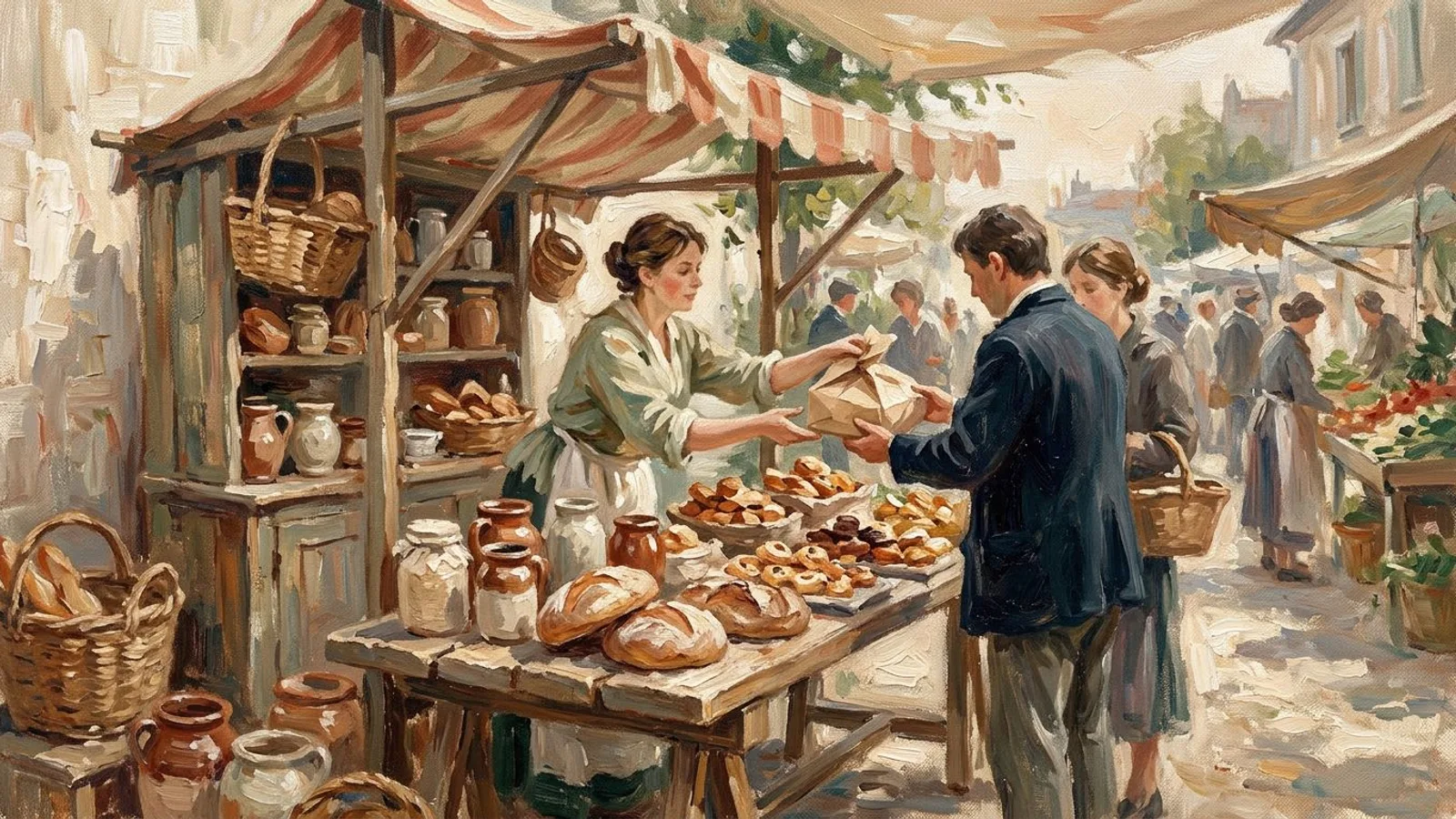
The objection: "I cook, label, pack and do the Saturday market myself. A feed that runs like a shop is a second job."
Our read: Run by hand, it is — and by hand is where most food makers stop, never for lack of material. Your production week already contains the posts: every batch, label run and packed box is a photo the account never made. What changed is the cost of turning that material into a steady presence. Tools now generate Instagram posts tuned to your brand from what already exists — your website, your photos, your products — so the shop-window rhythm holds even through a full production week. Steadiness is not cosmetic here: a feed that moves weekly tells a first-time buyer this is a real, living business; three silent weeks say the opposite, to the buyer and to the algorithm.
The objection: "And if I do all of it — the compliments finally become orders?"
Our read: The compliments keep coming; they were never the problem. What changes is what stands next to them: a route to order in every selling caption, evidence behind every product, a profile that reads like a place to buy. The appetite your photos create was always real. Confidence is the part you can build on purpose — and it is the part that turns into orders.
FAQ
Do I need a website to sell food products on Instagram?
No. At small scale, a DM-based order flow works: post, receive the message, confirm, get paid through whatever your customers already use. A simple order page becomes worth it when the DMs outgrow your evenings.
Can I sell homemade food on Instagram?
The platform doesn't stop you; your local food regulations decide. Most places have small-producer rules covering registration and labeling. Sort those out first — then let the compliant label appear in your photos. It reassures exactly the buyers you want.
What should a food business bio say on Instagram?
Three lines: what you make, where you ship or sell, how to order. Skip the poetry — a buyer on your profile is looking for a reason to stay, and clarity is one.
Do hashtags help sell food on Instagram?
They don't sell; they help people searching for a product or a place find you. A handful of specific tags — your product, your city — does more than thirty generic food tags.