The product photo threshold
Product shots on a plain background get treated like catalog pages by Instagram and Pinterest. Here is the exact threshold that changes reach.
A product shot on a white background gets one kind of reach on Instagram. A photo of the same product sitting on a kitchen counter, or worn by someone on a walk, gets a different kind entirely.
This is not about photography skill. The iPhone photo taken in three seconds on the kitchen counter often outperforms the studio shot. The variable is context — not quality.

What the algorithm is actually reading
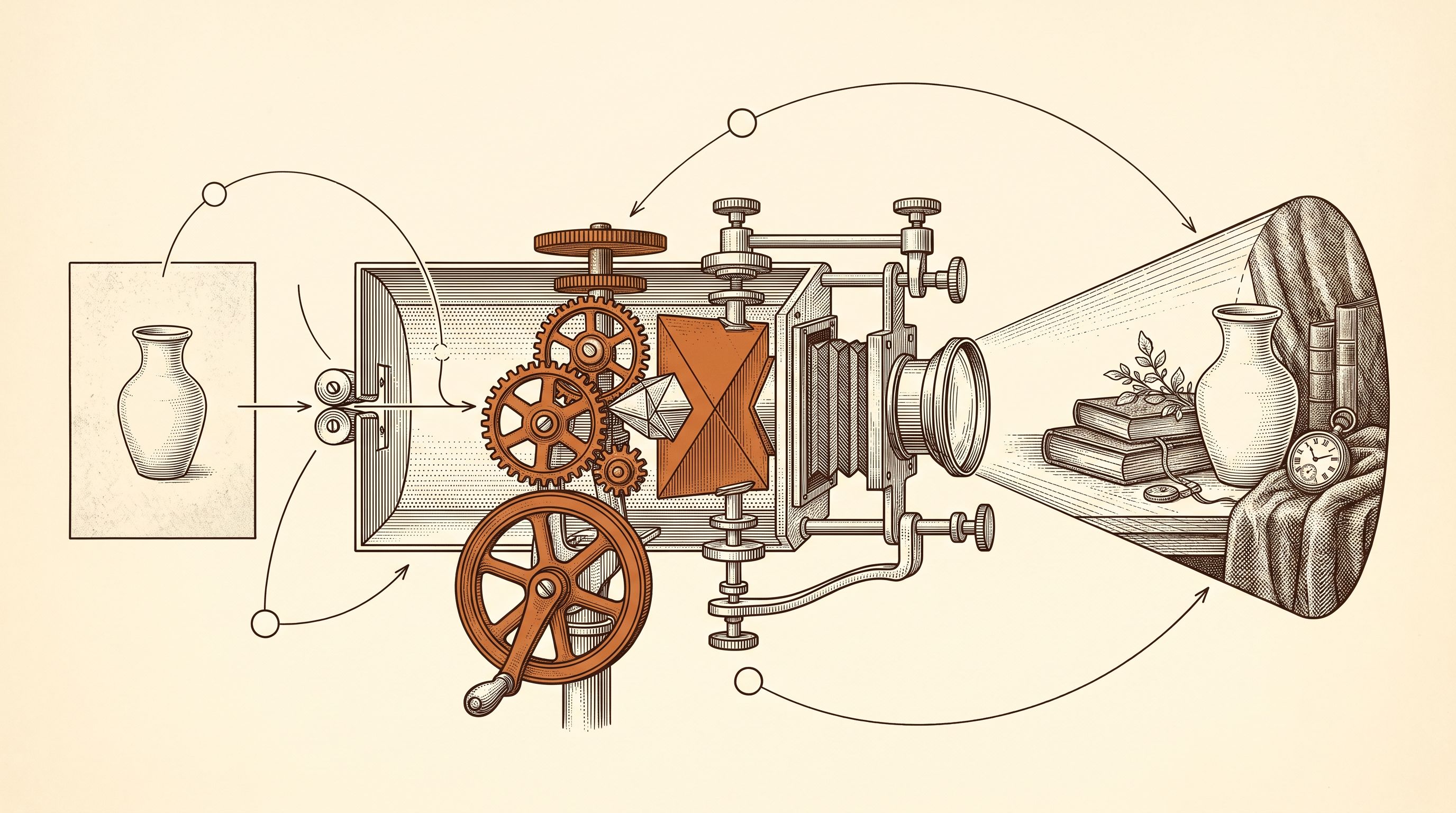
Instagram and Pinterest do not evaluate your product in isolation. They look at what surrounds it. A product photographed against a plain background provides almost no semantic signal beyond the object itself. The platform cannot infer who uses it, in what setting, for what purpose.
A scene provides all three. The algorithm reads the couch, the coffee mug, the morning light. It maps your product to a cluster of interests: home interiors, slow mornings, minimalist living, whatever the scene actually contains. That mapping is what drives distribution beyond your existing followers.
The save rate tells the story clearly. Product images with no context — even technically excellent ones — are the ones users save least on Instagram. The same product photographed in a real setting, even a quick iPhone shot, gets saved far more often. That gap is not random variation. It is the platform's signal that the second type of image is worth surfacing to people who do not follow you yet.
Why this matters more on Pinterest
On Pinterest, the effect is sharper because the platform is a search engine, not a feed. When someone searches for "home office gift ideas" or "weekend breakfast setup," the results that surface are not the ones with the most followers. They are the ones whose images contain semantic context that matches the query.
A product on a white background cannot match those queries. There is no spatial context to index. A product placed on a wooden desk next to a notebook and a plant can match a dozen of them.
Independent sellers who photograph their products in plain studio conditions and never vary the format often see their Pinterest traffic plateau within six months. The images are technically correct. They just have nothing to say to the platform's indexing logic.
The variable is context, not photography skill.
The one-scene rule
The threshold is not high. You do not need a photo studio, a photographer, or a set budget. The minimum effective dose is one contextual image per week alongside whatever else you post.
One contextual image in a seven-post week is enough to change the distribution pattern. The platform uses it as a signal about the kind of brand you are: one with actual customers in actual spaces, not a catalog drop-shipping from a warehouse.
That signal compounds. After six to eight weeks of consistent contextual posting, the platform's understanding of your account shifts. Your plain product shots — which you may still need for e-commerce clarity — start to benefit from the brand signal established by the contextual ones.
What "scene" actually means here
A scene does not mean a styled shoot. It means a photograph where the product exists in relationship to something else: a person's hands, a surface it would live on, a setting where it would be used.
"In relationship to something else" is the operative phrase. A product sitting on a table, unposed, in natural light qualifies. A product in someone's bag on the way to work qualifies. A product next to a morning coffee qualifies.
What does not qualify: a product in front of a gradient background, a product against a textured studio backdrop with no other objects, or a product photographed at an angle that removes all spatial reference. Those still read as catalog.

The practical question
If you sell online and post on Instagram or Pinterest, look at your last 20 posts. Count the ones where your product exists in a real context vs. the ones where it is isolated against a background.
If the ratio is less than one contextual image per four posts, the reach data is probably telling you the same thing. The fix applied to a 30-day content plan shows up faster than most operators expect: within two weeks of adding one scene per week, save rates tend to shift visibly.
The product is the same. The image tells a different story — one that platforms can read and distribute.