How to grow Instagram as a tattoo artist
How to grow Instagram as a tattoo artist: stop chasing reach. Get found by the style you tattoo and make booking obvious. Here is the mechanism.
To grow on Instagram as a tattoo artist, two levers matter more than reach: being found by the style you tattoo, and making a booking obvious. Chasing follower counts and thirty-hashtag blocks is noise around those two. We spent time where tattoo artists actually compare notes, to work out why.
On r/TattooArtists, and in the replies under working artists' posts, one complaint resurfaces every few weeks: "Instagram used to bring me clients. Now it shows my work to nobody." It is worth taking seriously. For this trade, Instagram was never just marketing. It was the portfolio, the booking form and the shop window in one app. So what actually changed, and what still works?
What changed on Instagram for portfolio accounts
Start with the platform's own words. In 2022, Instagram's head Adam Mosseri said the app would lean harder into recommendations — surfacing accounts you don't follow, picked by an algorithm, instead of a plain feed of the people you do. Photo-first portfolio grids lost their default reach in that shift. A tattoo portfolio is photographic by nature: a healed piece, shot in good light. So part of the complaint is real. The feed stopped handing reach to still images the way it did in 2016.
But that is only half the app. The other half is search — and this is where the tattoo trade is unusual.
A search result has to match one query. A grid that answers three styles at once answers none of them cleanly.
Why tattoo clients search instead of scroll
Watch how someone actually books ink. They rarely stumble on an artist mid-scroll and book on impulse. They decide on a style first — fine line, blackwork, traditional, realism — then they search it, often with a city attached. They open the tag or the location, they scan grids, and they judge each artist on one thing: does this person do my style, consistently, and does the healed work hold up?
That is search behaviour, not feed behaviour. The reach panic is aimed at the wrong layer. Discovery can widen the top of the funnel, but the booking happens in the search-and-judge layer, where a clean still image of healed work still wins. It is also why the handful of hashtags that still do something are the ones that name a style: they are search terms, not reach levers.
The pattern that separates accounts that grow
Compare accounts posting finished work and one thing stands out. The ones that grow are almost never the ones posting most. They are the ones whose grid reads as one recognisable style at a glance.
When a feed mixes fine-line florals, heavy blackwork and colour realism, a profile visit stalls. The visitor cannot tell what they would be booking, so they do not follow. A narrow, legible style beats a broad one — the familiar "niche down" advice, but with the mechanism named. The profile is a search result, and a search result has to match one query. A grid that answers three styles at once answers none of them cleanly.
It is the same reason a consistent visual signature outperforms a clever isolated post: the eye decides in under a second whether a feed is a thing, and it decides on the grid, not on your best single image.
What to post, and how to caption it
Three moves follow from all this.
Show one style, and let the grid prove it. Nine squares that clearly say "this is what I do" turn a search visit into a follow. Keep the one-off experiments in Stories, off the main grid.
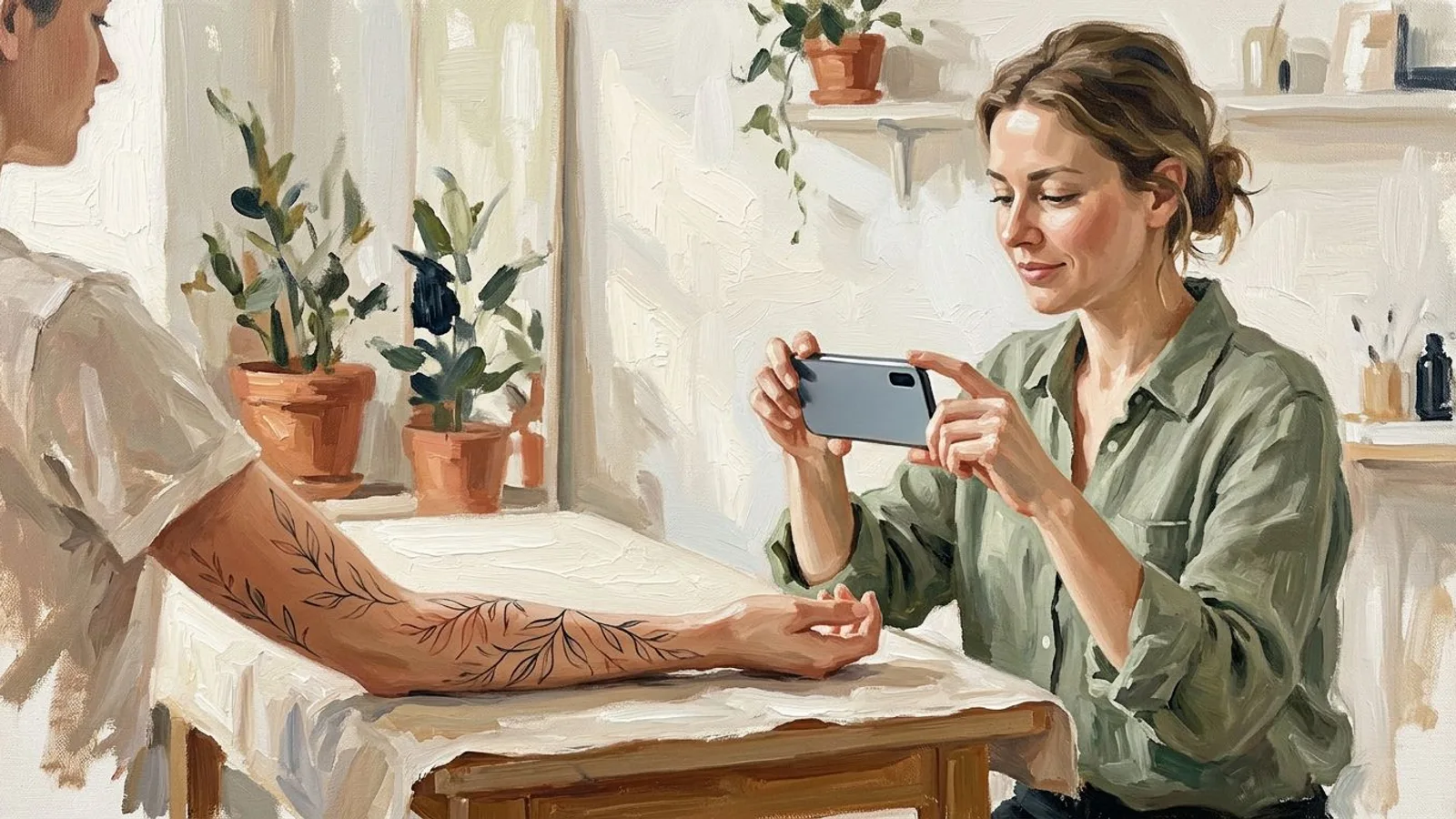
Post the healed result, not only the fresh one. A tattoo the day it is done and the same tattoo six weeks healed are different images. Clients book on healed work, because that is what they will actually wear. An account that only shows day-one shots quietly loses the visitors who know to look for healed proof.
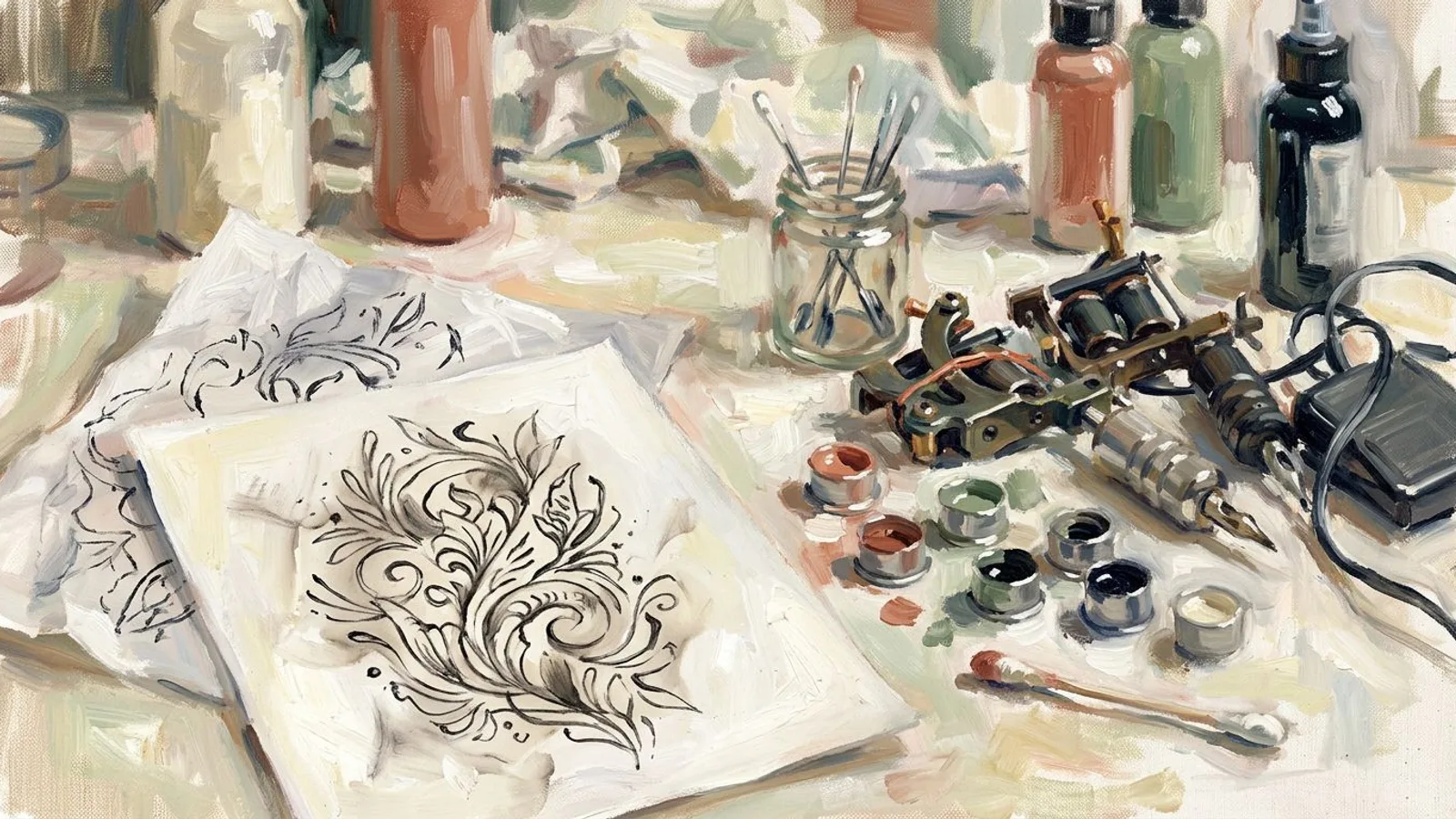
Show the making, not just the outcome. The drawing, the stencil, the session in progress — this is real growth material, because it is proof only you can post. It is worth building a steady rhythm of behind-the-craft posts instead of saving everything for the final reveal.
Then caption for the two jobs that matter: search and booking. Name the style, the placement, the city and how to book — in that order, above the fold. A caption that reads "healed fine-line piece, inner forearm, [your city], books open for spring" does more than a paragraph about your creative journey. If writing five of those a week is where the hours go, that is exactly the part an Instagram post generator that already knows your style is built to take off your plate.
None of this is about posting more. It is about making the profile do its real job: matching one clear style to the person already searching for it. Get that right, and reach stops being the thing you chase.
FAQ
How often should a tattoo artist post on Instagram?
Consistency beats volume. Two to four posts a week that clearly show your style do more than a daily mix that blurs it. A steady rhythm keeps you in the grids people scan.
Do hashtags still get tattoo artists found?
Yes, but as search terms, not reach magnets. A few precise style-and-place tags outperform a block of thirty generic ones. Pick the tags a client would actually type.
How many followers do you need to get booked?
Fewer than you think. A searchable profile with two hundred followers and a legible, healed portfolio books more than a scattered account with two thousand. Bookings track findability and trust, not follower count.
Is Instagram still worth it for tattoo artists in 2026?
Yes. It is still the default place clients search for a style and judge a portfolio. What changed is where growth comes from: search and consistency, not a viral feed.