

r.
Diagnosis · Measure platforms

Escaping the grip of booking platforms

The setup

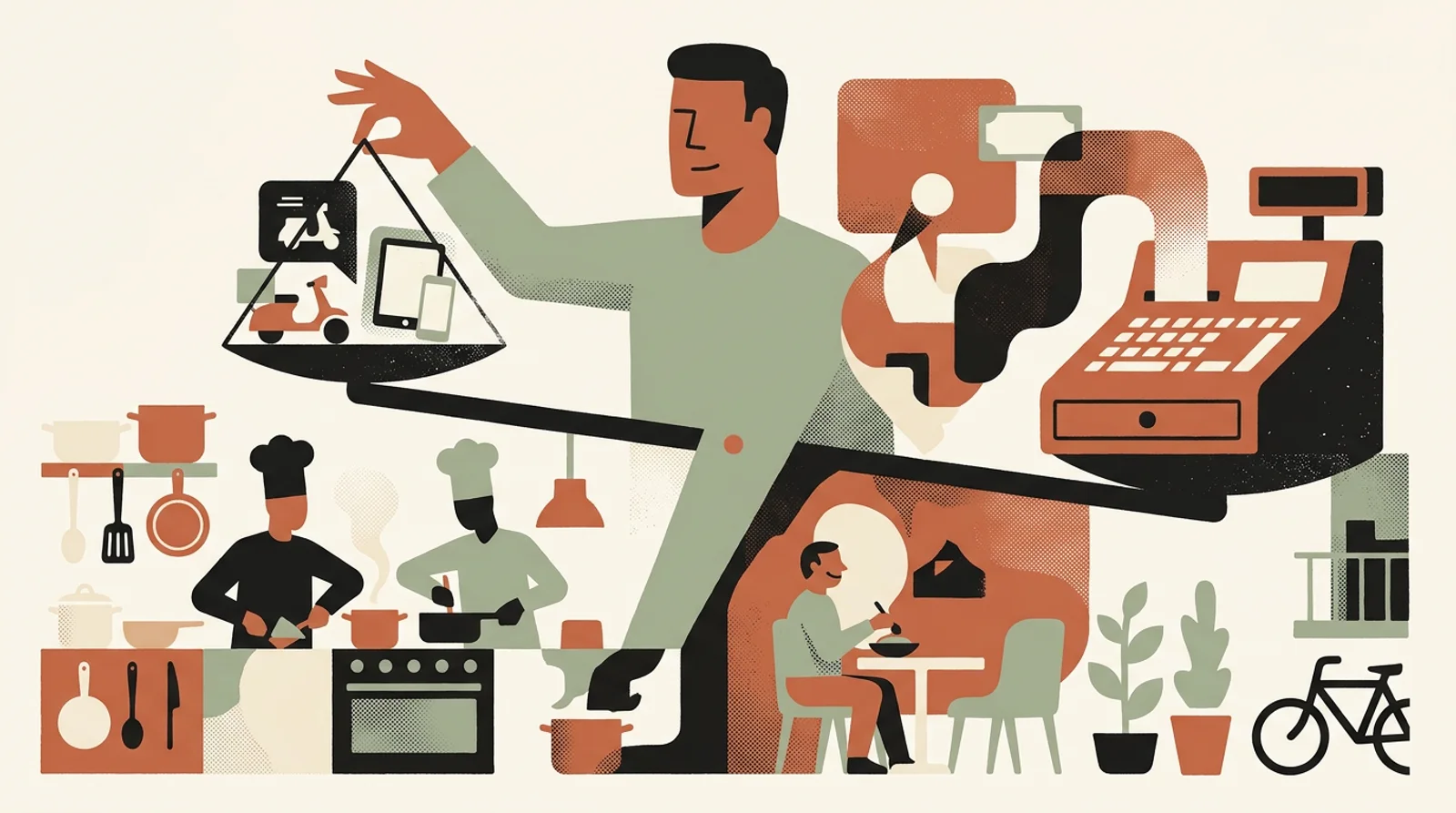
Platforms serve a real purpose: they bring in covers or orders you would not have had otherwise. The point is not to run from them. It is to measure what they truly cost, and what they actually leave in your till once every fee is paid.

Symptoms

You might recognise these signs.

  • The share of revenue coming from platforms climbs year after year, without you ever deciding to lean into them.
  • Your Google and TripAdvisor reviews mention TheFork or UberEats almost as much as they mention you. The customer experience is being captured by the middleman.
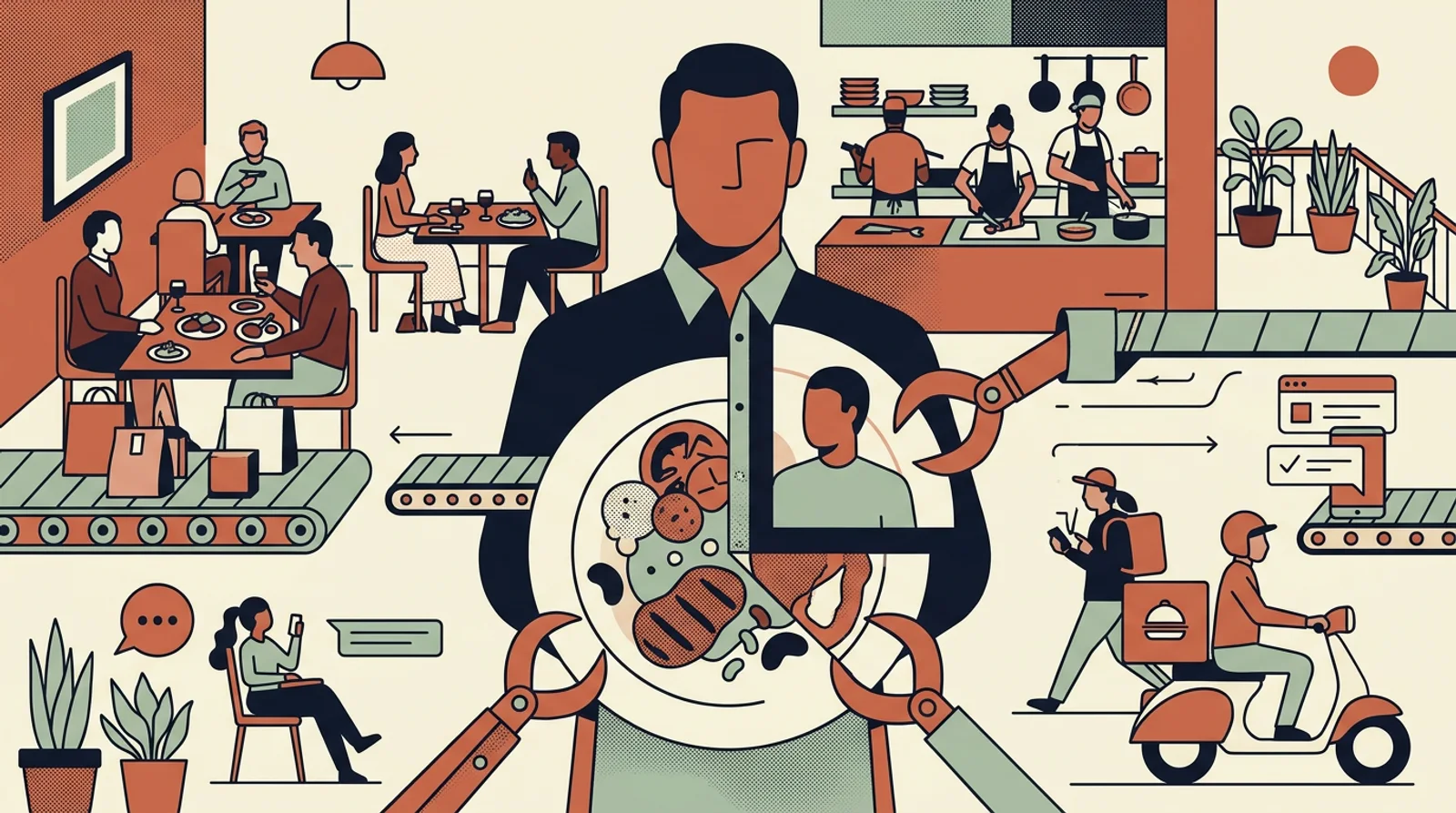
  • Regulars who used to phone for a table now book through TheFork. The platform is wedging itself between you and a customer who was already yours.
  • You discover '-50%' or '-30%' promotions the platform pushed onto your listing without your explicit sign-off.
  • On UberEats / Deliveroo / Just Eat orders, your net margin dish by dish is lower than the same dish served in the dining room, and the gap keeps widening.
Method

Step by step.

  1. Work out the share of revenue coming from platforms.

    Over the last twelve months, pull out the gross revenue from TheFork (bookings turned into paid covers in the room), UberEats, Deliveroo and Just Eat, each on its own. Divide by your total revenue. A platform at 5% of revenue is a top-up channel. At 25% or more it is no longer a channel. It is a partner you depend on. That distinction reshapes every reading that follows.

    If one platform passes 30% of your revenue, ask yourself the mirror question: how many days could you survive if it cut you off tomorrow, over a dispute or a policy change? The answer frames the stakes far better than any commission figure.

  2. Rebuild the effective commission, hidden fees included.

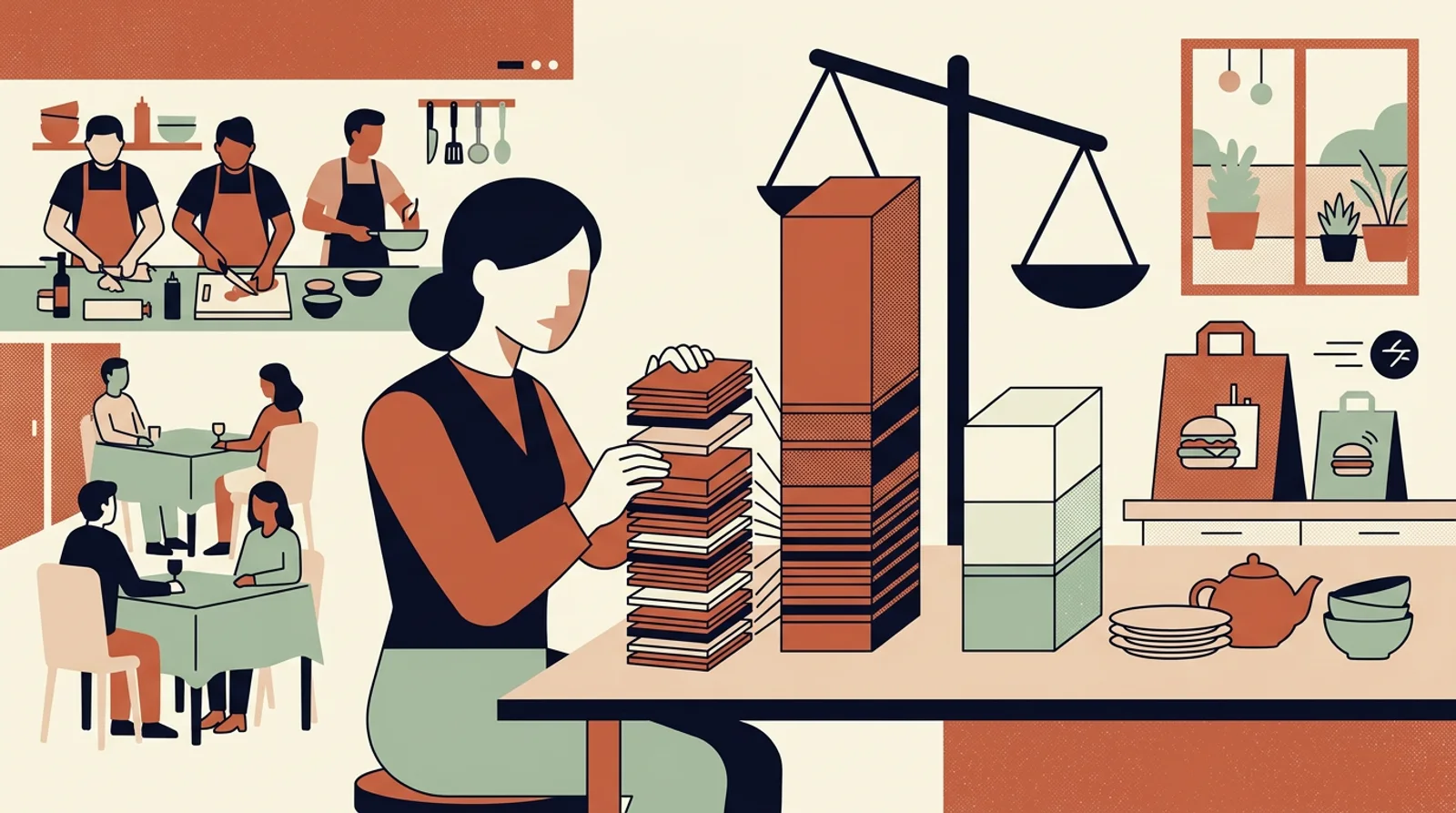
    The headline commission (around 2 euros per TheFork cover, 25-30% per order on delivery) is only one line. Add the rest: the monthly subscription fees, the promotional discounts the platform pushed ('Yums', '-50% to get acquainted'), the online payment fees, the delivery fees you absorbed when you did not pass them on to the price. Redo the maths order by order, dish by dish. The effective commission often lands between 13% and 30%, sometimes more.

  3. Compare the platform average ticket with the direct average ticket.

    A TheFork cover on a '-30%' promotion does not spend like a walk-in cover. Pull out the TheFork average ticket, the walk-in average ticket and the average ticket of a customer who booked by phone. If the gap is a few euros, the promotion is doing its job of drawing people in. If the gap passes 15-20%, the platform is mostly attracting deal-hunting covers. Useful for filling a quiet slot, costly to generalise on an already fragile margin.

  4. Measure the return rate of platform customers.

    Over the last six months, how many customers who arrived via TheFork came back at least once, whatever the channel (TheFork again, phone, walk-in)? Match the emails or names if the data can be exported. A low return rate (under 20%) tells you the platform brings price tourists, not customers worth keeping. A high return rate tells you it works as a genuine acquisition channel, which is a different call.

    TheFork exports your list of bookings with emails in the pro dashboard. Matching it by hand against a till export once a quarter is enough to see whether the cohort comes back.

  5. List what the platform controls on your behalf.

    Take stock of what you no longer control: the main photo on your listing, the description text, the promotions visible to customers, the algorithm that decides who your restaurant appears to, your menu prices on UberEats (which can be higher than your in-room prices without anyone telling you). The longer the list, the more the platform has become your public face, and the more the real cost goes beyond commission alone. The diagnostic counterpoint is to reread what the dining room is actually telling you, beyond the image the platform projects in your place.

Do / Don't

Do

  • Work out the effective commission with every fee included (subscription, pushed discounts, payment fees, absorbed delivery), not the headline commission.
  • Split the metrics by platform: TheFork, UberEats, Deliveroo and Just Eat do not carry the same cost or the same customer.
  • Measure the return rate of platform customers over 6 to 12 months before judging their value.

Don't

  • Trust the headline commission to estimate what the platform costs you.
  • Confuse platform covers with customers you can turn into regulars. They are two different populations until you actually measure it.
  • Assume leaving a platform means losing 100% of the covers it sends you: a fraction comes back direct, but that fraction is measured, not guessed.
A concrete case

Situation

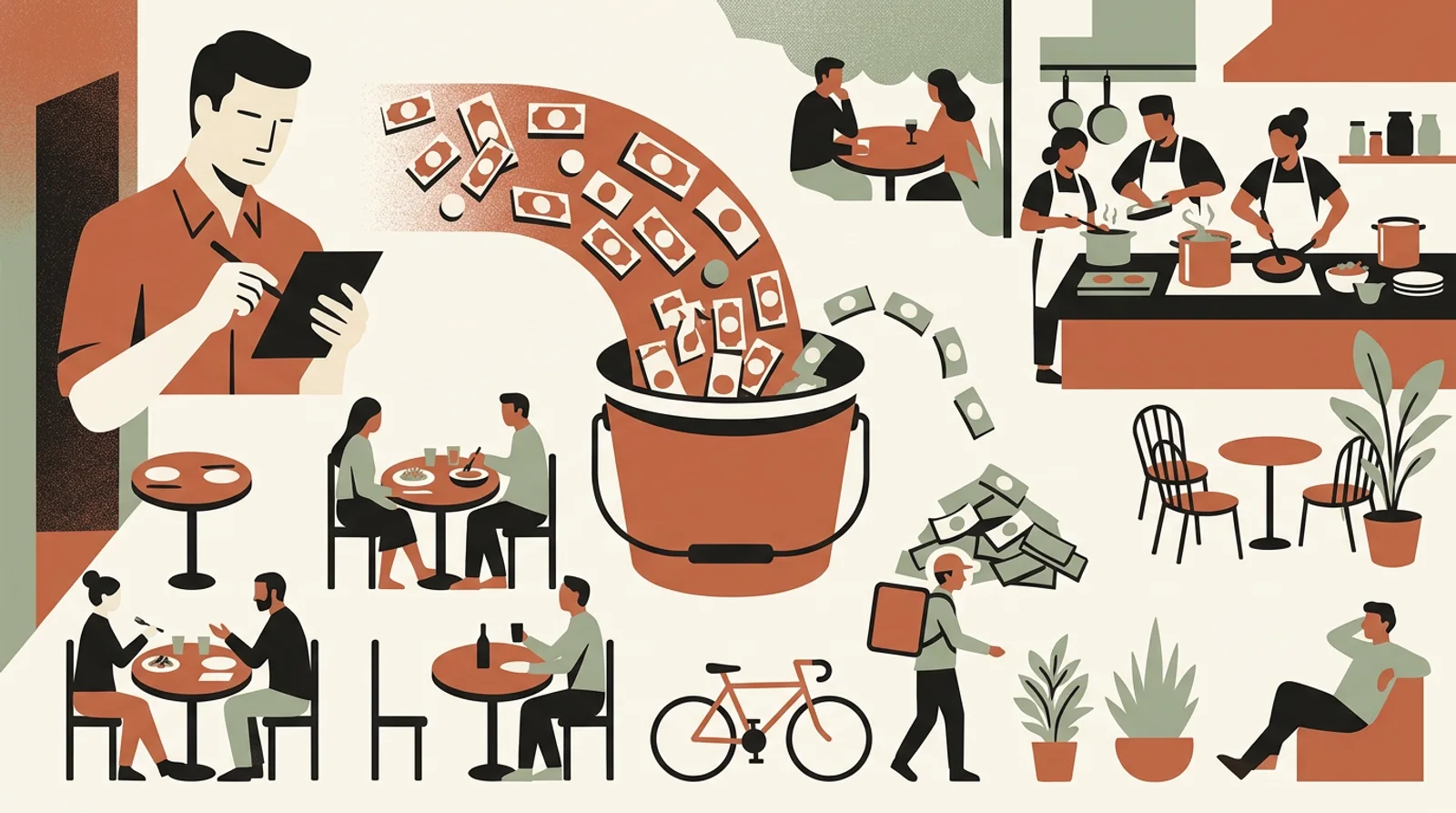
A Paris bistro makes 28% of its revenue through TheFork. The owner works out a platform cost of 2 euros per cover times 11,000 annual TheFork covers, so 22,000 euros in commission. At first glance the channel brings her 200,000 euros for 22,000 euros of commission, an acceptable ratio.

Action

She redoes the maths with every fee folded in: the annual TheFork Manager subscription, the '-30%' and 'Yums' promotions she accepts by default on quiet services, the online payment fees, and the TheFork covers whose average ticket is 19% below the walk-in ticket. She also matches the TheFork list against her base of regulars: 40% of the TheFork 'new' customers were in fact regulars she already had.

Outcome

The real effective commission lands at 24% of TheFork revenue, so 48,000 euros, more than double the initial figure. And 40% of the covers credited to TheFork were customers who would have come direct anyway. The platform stays useful for the quiet Monday-Tuesday services, but on Thursday-Saturday it is feeding off a direct channel that was already working. The conclusion is not to leave. It is to confine TheFork to the services where the need for acquisition is real.

Common pitfalls

Where it usually goes wrong.

  • Confusing platform covers with new customers.

    A variable share of TheFork covers are regulars who simply went through TheFork instead of phoning, because it is more convenient. The commission is then paid on a customer you already had. Without matching the platform list against your base, you pay twice for the same customer.

  • Assuming leaving = losing 100% of the covers.

    When you cut a platform, some customers come back direct out of habit, often 30 to 60% depending on your local reputation. The call is not 'platform or nothing' but 'platform, or a lighter platform plus a rebuilt direct channel'. And that rebuilt direct channel is paid first in staff hours: taking the bookings, chasing the regulars, keeping the Google listing up. If you already have a team under strain, the call changes in nature. It is no longer just a margin question.

  • Judging a platform on its average rather than its services.

    A platform can be an excellent channel on Monday-Tuesday (quiet services to fill, full price not reachable any other way) and a destructive one on Thursday-Saturday (covers that would have existed direct, paid for less). The average hides both. The right breakdown is service by service, not platform by platform.

Takeaway

Your checklist.

  • Share of revenue per platform (TheFork, UberEats, Deliveroo, Just Eat) over the last 30 days.
  • Effective commission recalculated with every fee included, per platform and per service.
  • Platform average ticket versus direct average ticket, lunch and dinner kept separate.
  • Six-month return rate of customers who arrived via a platform.
  • List of the levers the platform controls on your listing (photo, prices, promos, algorithm).
  • Comparison of monthly platform cost versus the cost of an equivalent direct channel (a well-kept Google listing, an email base, direct booking).
What's next?

Diagnosis made. Now act on it.

You've just identified where it's breaking. Addressing it will take your time, your focus, your energy. Meanwhile, your communication can't go dark — or turn into filler. Readytopost keeps it at a demanding level on the five social networks: posts written, images generated, calendar filled — calibrated on your work.

Start with ReadyToPost

Keep going on your own. The method for restaurants lays out the principles that turn a diagnosis into durable action — across every lever, not just communication. Concrete markers to help you decide on the fly, without imposed recipes or rigid calendars. At your pace, at your scale.

Continue to the method
Questions

Frequently asked.

  • What does TheFork really cost a restaurant?

    The headline TheFork commission sits around 2 euros per paid cover, plus a monthly TheFork Manager subscription (around 70 to 270 euros depending on the options). But the effective cost is broader: you have to add the '-30%' promotions and the Yums accepted by default on quiet services, the online payment fees, and the shortfall on TheFork covers whose average ticket is lower than the walk-in. The real effective commission often comes out between 7% and 15% of TheFork revenue. Each restaurant should run the maths on its own activity.

  • Should you quit UberEats to protect your margins?

    Not wholesale. The useful question is dish by dish and service by service. On dishes where the net UberEats margin stays above the marginal cost of production (ingredients, energy, time), the channel is profitable even at 30% commission. On tight-margin dishes (pizzas, simple pasta, high-volume plates) the commission eats most of the margin. The right move is to pull or reprice the unprofitable dishes before cutting the whole channel.

  • What is the average delivery commission in food service?

    On UberEats, Deliveroo and Just Eat, the service commission runs between 25% and 30% before tax of the order amount, excluding delivery fees charged to the customer. On top of that come optional marketing fees (a further 15 to 25% if you switch on premium placements), payment fees, and the occasional discounts imposed by the platform's commercial campaigns. The real effective commission most often sits between 28% and 35% of delivery revenue.

  • Do customers who arrived via a platform come back direct?

    That gets measured, not guessed. By matching the TheFork booking list against your base of regulars over 6 to 12 months, you can see the share of platform customers who came back, by phone, as walk-ins, or via the platform again. The observed figures vary widely depending on local reputation, the type of venue and how often promotions are accepted. A rate under 20% points to a weak acquisition channel. Above 40%, the platform fills a genuine acquisition role.

  • How do I know whether my TheFork listing helps or hurts me?

    Three readings are enough. One, the share of TheFork revenue over the last twelve months: stable, rising, falling. Two, the TheFork average ticket compared with the walk-in ticket: if the gap exceeds 15-20%, the platform is mainly bringing deal-hunting covers. Three, what your Google reviews say: if customers mention TheFork more than your cooking or your welcome, your public face is being captured by the middleman. None of these readings settles it on its own. Cross-referenced, they do.

restaurant

Other guides for restaurants

Working your Google reviews

Working Google reviews: the loop that lifts

Google reviews don't just arrive — they're worked. Five concrete moves to place this week that turn a passive listing into a system of asking, answering and adjusting.

Running a short campaign

Running a short campaign without breaking margin

A tasting, a partnership with the wine shop next door, a one-off dish on a Thursday night: a short campaign can restart momentum — or devalue the rest of the menu and chip away at the margin without leaving anything behind. Five concrete moves to design it, frame it financially, and track it from Monday to Sunday.

Winning back a regular

Win back a regular: 5 concrete moves

A regular who used to come every week and now shows up every two months won't be won back by a marketing email or a discount. Five moves to place this week — named, written, measurable — to crack the door open without forcing it.

Rescue a slow service

Rescue a slow service: 5 concrete moves

A specific service that's dragging — Tuesday night, Sunday lunch — doesn't need a full overhaul. Five moves placed this week are enough to shift the line the following week, without touching the menu or the prices.

Further reading

Related blog articles

  • content-creation

    How long should a caption be?

    Length is the wrong question. A feed folds your caption at a fixed line, and only what sits above it gets read. Here is where that line falls — and what belongs above it.

  • social-media-strategy

    Organic vs Paid Social for a Small Business

    Paid social rents reach; only organic can turn it into an audience you keep. For a small business the order matters more than the split — and a dead profile sinks both.

  • content-creation

    Best time to post: does it matter?

    The best-time-to-post charts were built on millions of huge accounts. For an independent with a few hundred followers, the clock is a rounding error. Here is what moves reach instead.

  • case-studies

    Should a small business try to go viral?

    Everyone wants the post that explodes. For a local independent, a viral spike is the wrong target. It inflates reach, not the audience that books you. Here is what to aim for instead.

Social networks

Network by network

LinkedIn Post Generator

AI LinkedIn Post Generator & Scheduling

Generate professional LinkedIn posts, mention real people and companies right in the text, then publish to your profile or your company page.

Facebook post generator

AI Facebook Post Generator and Scheduling

Generate conversational Facebook posts, set your emoji and hashtag level, and schedule them straight to your Facebook Page. Text and visual built for the feed.

Instagram Post Generator

AI Instagram Post Generator

Generate on-brand Instagram posts where the 4:5 feed visual and the caption are built together — a scroll-stopping hook, breathable paragraphs, and full-word hashtags grouped at the end, scheduled and ready to publish.

Resources

Guides by profession

Makers

Your hands shape the object; the image is what sparks the wanting. People reach for it because they first fell for the way it looked.

12 resources

coach

No product to shoot, no storefront: just your expertise to make visible — enough for a prospect to book a call.

12 resources

hotel

Twenty keys don't run like a chain. Occupancy, RevPAR, traveller, front desk: the calls no one will make for you.

12 resources