Social media management for a small business
Social media management for a small business is a six-step weekly loop. Here is each step in order, where your two hours should go, and when hiring help pays.
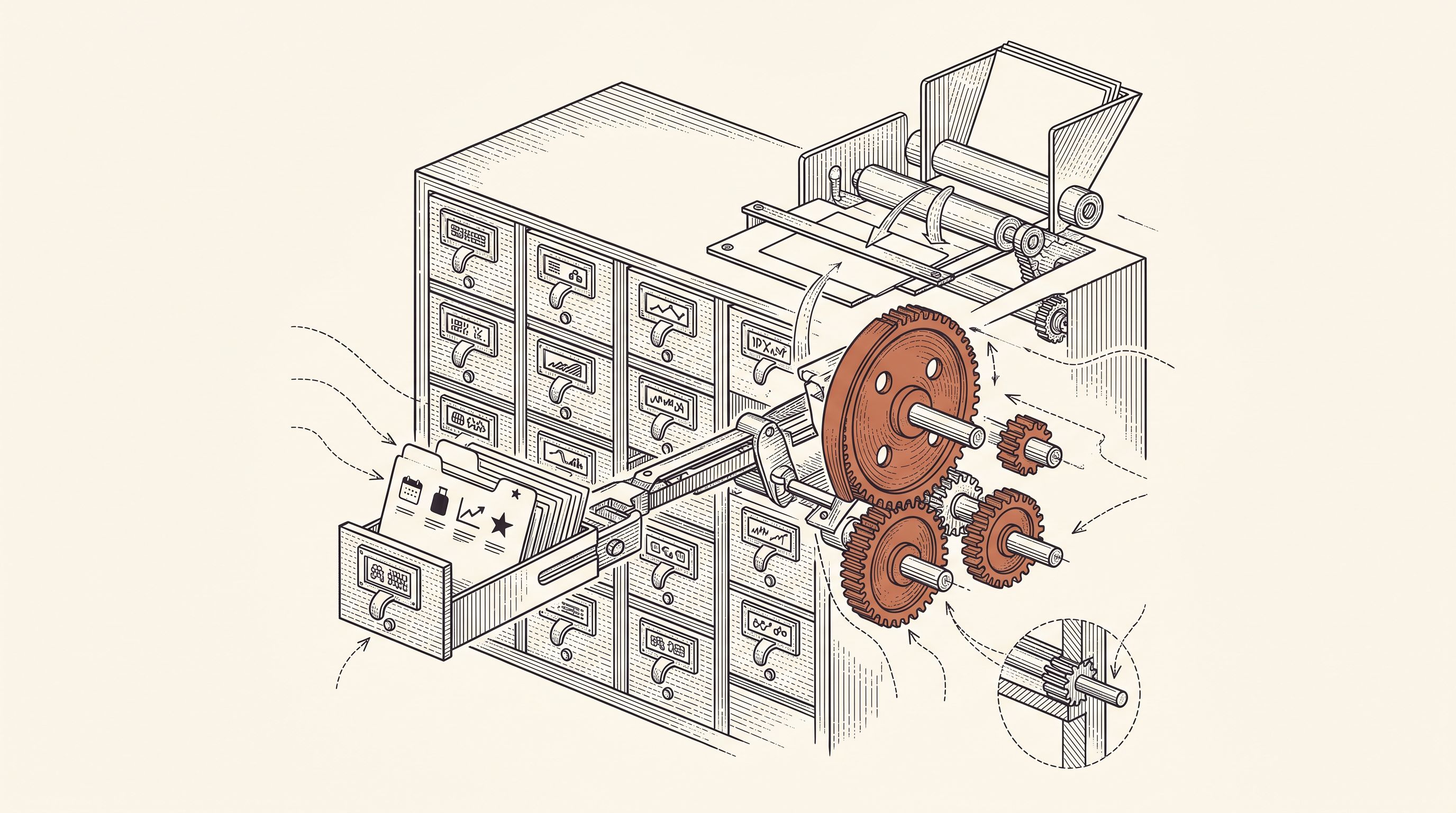
Social media management for a small business is a weekly loop of six steps: source, plan, produce, adapt, schedule, review. Run in that order, the loop fits in one to two hours a week. Started from a blank "what do I post today", it takes an evening and collapses by the third week.
Most guides hand you tips: set goals, know your audience, pick platforms, post consistently. None of it tells you what to do on Monday. This walkthrough does, for a business of one to five people, with the decision that matters at each step and the mistake that costs the most.

What social media management means when you run the business
For a marketing team, management means strategy, campaigns and reporting. For a small business, it means something narrower and harder: a steady presence on the networks your customers use, without it eating the hours that pay the bills.
The loop below has six steps. The ones in the middle, producing and adapting posts, scale with the number of posts and networks. Fifteen posts cost three times what five cost. The two ends, sourcing material and reviewing what goes out, barely move. Reviewing a week takes about twenty minutes whether it holds five posts or fifteen, because you check the same few things each time.
That asymmetry is the whole management decision. Your hours go to the two ends. The middle gets delegated to a system that reads your website and your brand DNA, or the loop does not hold.
Your hours belong at the two ends of the loop: what goes in and what goes out. The middle is the part to delegate.
The six steps, in order
1. Source: collect the raw material first
The key decision is what counts as material: a photo taken during the work with one line on what was happening, a question a customer asked this week, a change in your offer, price or hours, a review that came in. Ten minutes of collecting this beats an hour of brainstorming, because each item already carries a specific fact only your business has.
The ranking follows from that. A photo with a one-line note yields the most posts per minute of effort. A customer question comes second. A generic tip idea comes last: it produces one post, and that post sounds like every other business in your category.
The mistake is starting at the calendar. A blank slot asks "what do I say". A folder with four real items asks "which one goes first". The second question takes seconds.
2. Plan: fix the slots, then fill them
Decide once how many posts a week and on which networks, then stop deciding. Three to five posts a week is a realistic floor for a business of one. The number of networks matters less than it looks once adaptation is handled in step four: two networks when you do it by hand, all five when a system does the adapting. The slots repeat every week. Only the material changes.
The key decision is the repeating structure. A month prepared in one sitting, or a weekly template that repeats, removes the daily question of whether to post at all. The mistake is treating every week as a fresh plan. That version gets skipped the first busy week and never restarts.
3. Produce: delegate the writing and the images
This is the step most small businesses try to keep, and the one to hand off first. Writing a caption and making an image for each slot is the linear cost, and it is where the evening goes.
The key decision is what the system starts from. A blank prompt in a chat tool starts from the average of everything it has read and hands you the average back. A system that starts from your website, your photos and the material from step one hands you posts about your work. The difference is not the tool's quality. It is what it read before it wrote.
The mistake is rewriting everything it produces. If you are rewriting, the input was thin. Fix step one, not the output.
4. Adapt: one message, one version per network
A caption that works on Instagram does not work on LinkedIn. An Instagram post leads with the image and keeps the text short. A LinkedIn post leads with its first line and has to earn the rest of the read. A Pinterest pin is a search result with a title on it. Done by hand, each adaptation costs about thirty minutes per network.
The key decision is to treat adaptation as part of production, not a separate task for later. A system that writes each version for each of your networks in the same pass removes those thirty minutes entirely. The mistake is pasting the same text everywhere. The people who follow you on two of them notice first.
5. Schedule: queue the week in one sitting
Every network now lets you queue posts days or weeks ahead. Use it. The key decision is to schedule the whole week at once, right after review, so nothing depends on you remembering at the right time on Thursday.
The mistake is posting live, one at a time, when the moment feels right. It is the single most common reason a small business goes three weeks without a post. The moment never feels right while a customer is waiting.
6. Review: the twenty minutes you keep
This is the step that stays yours. One fixed slot a week, about twenty minutes, with the drafts in front of you. You check four things: the facts and prices are right, the tone is yours, each image matches its caption, and nothing promises what you cannot deliver this week. The weekly review is the new shape of the work. It replaces the typing rather than adding to it.
The key decision is to review before scheduling, never after publishing. The mistake is turning review into rewriting. Past a certain point, editing stops improving a post. If a draft needs more than a sentence changed, regenerate it instead of rewriting it, and move on.
How much time should social media management take a small business?
Between one and two hours a week, split unevenly. Ten to fifteen minutes of sourcing, spread across the week as things happen. Twenty minutes of review in one fixed slot. Ten minutes to approve and schedule. The second hour, when you need it, goes to a launch week or to the comments that need your reply.
If you are spending six hours, the middle steps are being done by hand. If you are spending zero, the loop broke at step two and the content calendar has been empty for a month. Both are fixed in the same place: the structure, not the effort.

Do you need a social media manager or an agency?
An agency quote for a small business runs around 1,500 euros a month. A freelancer will offer ten posts for a few hundred. Both take the middle of the loop off your hands. Neither can do step one for you. They produce from a brief, and a brief is the thinnest version of your business.
Whether to outsource, and which half, is a real question. The answer for most businesses under five people is the same: keep the two ends, delegate the middle to a system that reads your site, and put the agency budget back into the work itself.
FAQ
What does a social media manager do for a small business?
They run the middle of the loop: writing, image creation, adaptation and scheduling. Sourcing material and the final review still depend on the owner, because they depend on being inside the business.
How many posts a week should a small business publish?
Three to five a week, every week without a gap, on every network where your customers are. A steady cadence outperforms a burst followed by silence.
Which social networks should a small business be on?
The ones your customers already use. Instagram and Facebook for most local and product businesses, LinkedIn for services sold to other businesses, Pinterest for anything visual with a long buying cycle. Add X if your customers talk there.
Can a small business manage social media without hiring anyone?
Yes, when the writing, images and adaptation come from a system that starts from your website rather than a blank prompt. The owner feeds it real material and reviews the week.