Instagram content ideas for a food business
Instagram content ideas for a food business: appetizing photos alone don't fill orders. Post the sold-out signal, market days and the occasion.
Search “Instagram content ideas for a food business” and every list gives the same answer: photograph the food, make it look delicious, repeat. That advice is half-right, and the missing half is why so many food feeds fill with likes while the counter stays quiet. The content that actually brings orders answers two questions your customer is already asking: is this for me, and when can I get it?
Appetite gets the scroll to stop. It rarely gets anyone through the door.
Where the “just make it look delicious” idea comes from
Instagram grew up on food. The early feed was plated dishes, latte art, brunch shot from above. Food was a native genre before it was a marketing tactic. So the instinct is understandable. Food is visual, appetite is instant, a strong photo stops the scroll.
The advice repeats because the first half is true. A blurry, badly lit photo of good food does cost you sales. Appetite appeal is table stakes.
But table stakes is not a strategy. Everyone in your category clears the same bar. A gorgeous croissant looks like every other gorgeous croissant on the platform.
A great photo earns the pause; the caption earns the visit.
Why appetizing photos don't fill orders
Here is the part the listicles skip. Appetite is not a buying trigger for a local food business. A hungry stranger scrolling two hundred kilometres away can save your dish, like it, even share it. They will never walk in.
The beautiful shot optimizes for the widest possible audience. For a neighbourhood bakery or a market traiteur, the widest audience is mostly the wrong one.
There is a second cost. A feed of pure hero shots is the most interchangeable content on the platform. Swap the logo and it could be any bakery in any city. A plate on a clean background reads like a catalogue page; the same dish photographed in the moment it belongs to gets saved and remembered. Beauty alone never tells a customer that this one is theirs.
Watch enough food accounts and the pattern is consistent. The plated-dish shot collects saves, often from other food businesses and recipe collectors. The posts that generate messages and visits name something concrete: a time, a place, a shortage. “Last batch out by nine.” “At the market until one.” “Back on the board Thursday.” The gap between high saves and flat orders is the tell. When it shows up, the feed is feeding appetite instead of intent — the likes-but-no-orders gap most food feeds hit sooner or later.
Content ideas that answer what a customer actually asks
So keep the good photo. Then make it carry one of two jobs: is this for me, or when and where can I get it. These are the angles that do that.
- The sold-out signal. “Today's sourdough is gone by nine.” Scarcity proves demand and trains regulars to come early. It turns a photo into a deadline.
- Where to find you this week. Market stalls, a pop-up, a changed Sunday closing. A lot of local food buying dies on “I didn't know they were open.” A weekly location-and-hours post removes that.
- The regular's order. One named customer, their usual, why they get it. It answers “is this for me” through someone who looks like the reader.
- The occasion match. The loaf for Sunday lunch. The box that rescues a forgotten birthday. You are not selling a product, you are selling the moment it fits.
- The one-ingredient story. The farm behind the eggs, the mill behind the flour. One specific sourcing detail separates you from the chain two doors down.
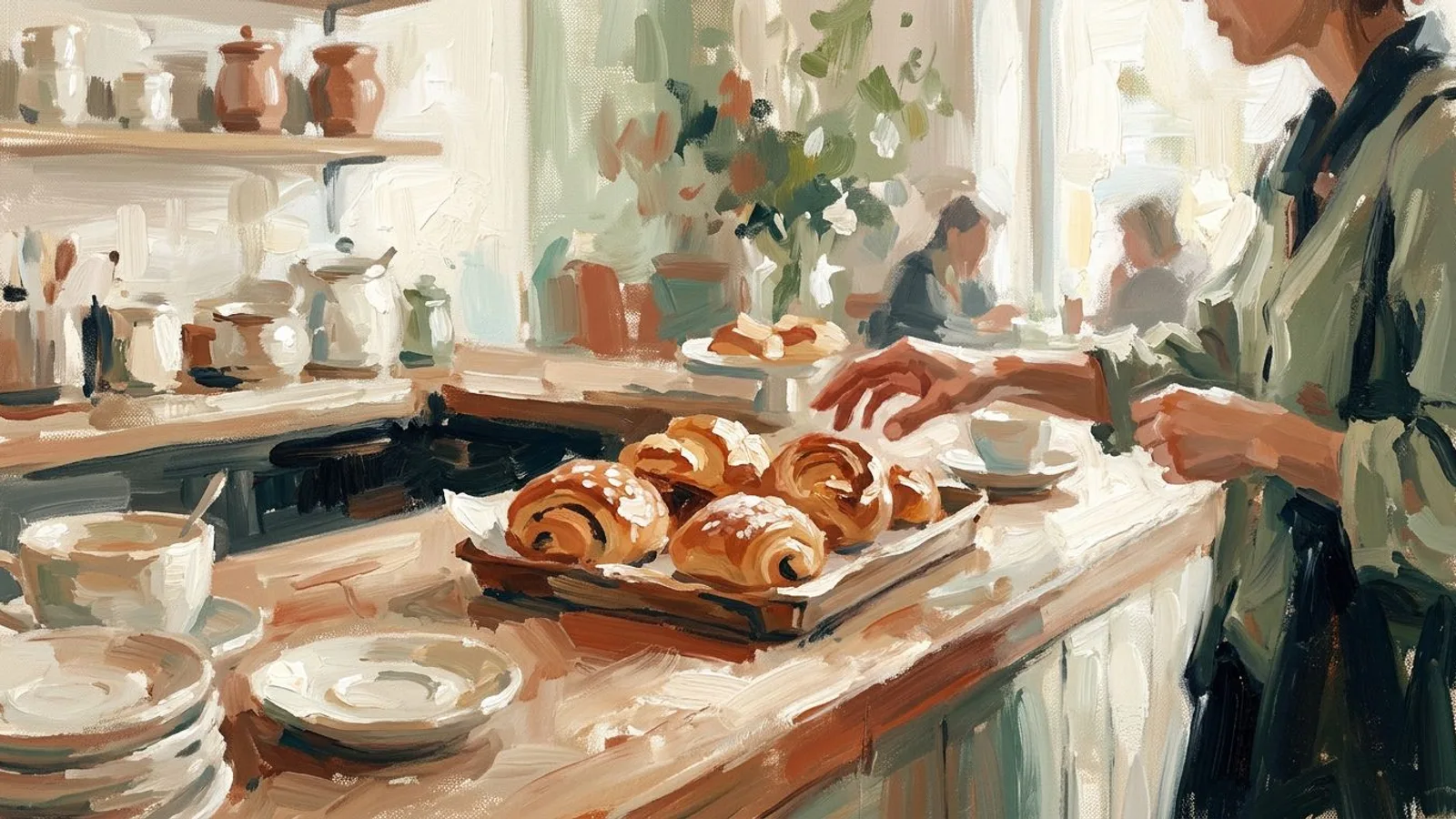
None of these needs a new dish or a photo shoot. They need a caption that does a job the picture cannot do alone. The same tray of pastries, captioned with the answer to “when can I get it”, becomes a post someone acts on.
Do beautiful food photos still matter?
Yes. This is not permission to post worse photos. The point is narrower. A great photo is necessary and not sufficient. It earns the pause; the caption earns the visit.
The food business that only polishes the image is perfecting table stakes while the order questions go unanswered. The one that pairs a good photo with a clear “for you, here, now” is the one people can actually act on.
That is the reframe hidden inside the search. The real question is rarely what to photograph. It is what this photo needs to say so a nearby customer comes in. Answer that, and you stop running out of ideas. Every batch, every market day, every regular is already one.
FAQ
How often should a food business post on Instagram?
A rhythm you can hold beats a daily sprint you abandon. Two or three posts a week that answer the order questions do more than seven hero shots nobody acts on. Pick a cadence that survives a busy service week.
What should a restaurant post besides food photos?
Opening changes, the dish that sells out, a regular's order, the sourcing behind one ingredient, and where to find you if you also do markets or events. Each one answers is this for me, or when can I come.
Do I need professional food photography?
No. A clean phone photo in good daylight clears the bar. Put the saved effort into captions that carry timing, scarcity and occasion — the parts a camera cannot supply.
How do I find content ideas when the menu never changes?
A fixed menu is an advantage. One bestseller carries dozens of posts: who orders it, when it sells out, what it pairs with, the single ingredient that makes it. The subject repeats; the angle does not.
What food content gets the most engagement?
For a local food business, scarcity and occasion posts pull the most action — not the most likes, the most messages and visits. Saves are easy. A hold-one-for-me reply is the metric that pays.