How to link your Etsy shop to Instagram
How to link your Etsy shop to Instagram: the bio link takes five minutes. The link that actually sells is making both look like one shop. Here's how.
Linking your Etsy shop to Instagram takes about five minutes. Put your shop URL in your Instagram bio, and use Etsy's built-in share tools to post a listing straight to your feed. Want product tags too? That needs a connected catalog and more setup, but the bio link is the part almost everyone actually uses.
That is the connection everyone means when they type the question. It is also the part that changes almost nothing about your orders.
Because "link" has two definitions here, and only one of them sells.

The definition most sellers use
For most Etsy sellers, linking means the technical bridge. A clickable URL in the bio. A listing shared from Etsy to the grid. Maybe a Shopping tag, if they pushed through the catalog setup. The accounts are connected, the box is checked, the how-to is closed.
That definition is not wrong. It is just small. It moves a visitor from one tab to another. What it does not do is decide whether that visitor buys once they arrive. And that second thing is where most shops quietly leak.
Why the click crosses and nothing happens
Here is the usual sequence. The bio link works. People tap it. Click-through from a tidy Instagram profile to an Etsy shop is often healthy. Then the order does not come.
The usual suspects get blamed: price, reviews, the algorithm. Sometimes fairly. But the more common break is quieter. The Instagram feed and the Etsy shop look like two different sellers.
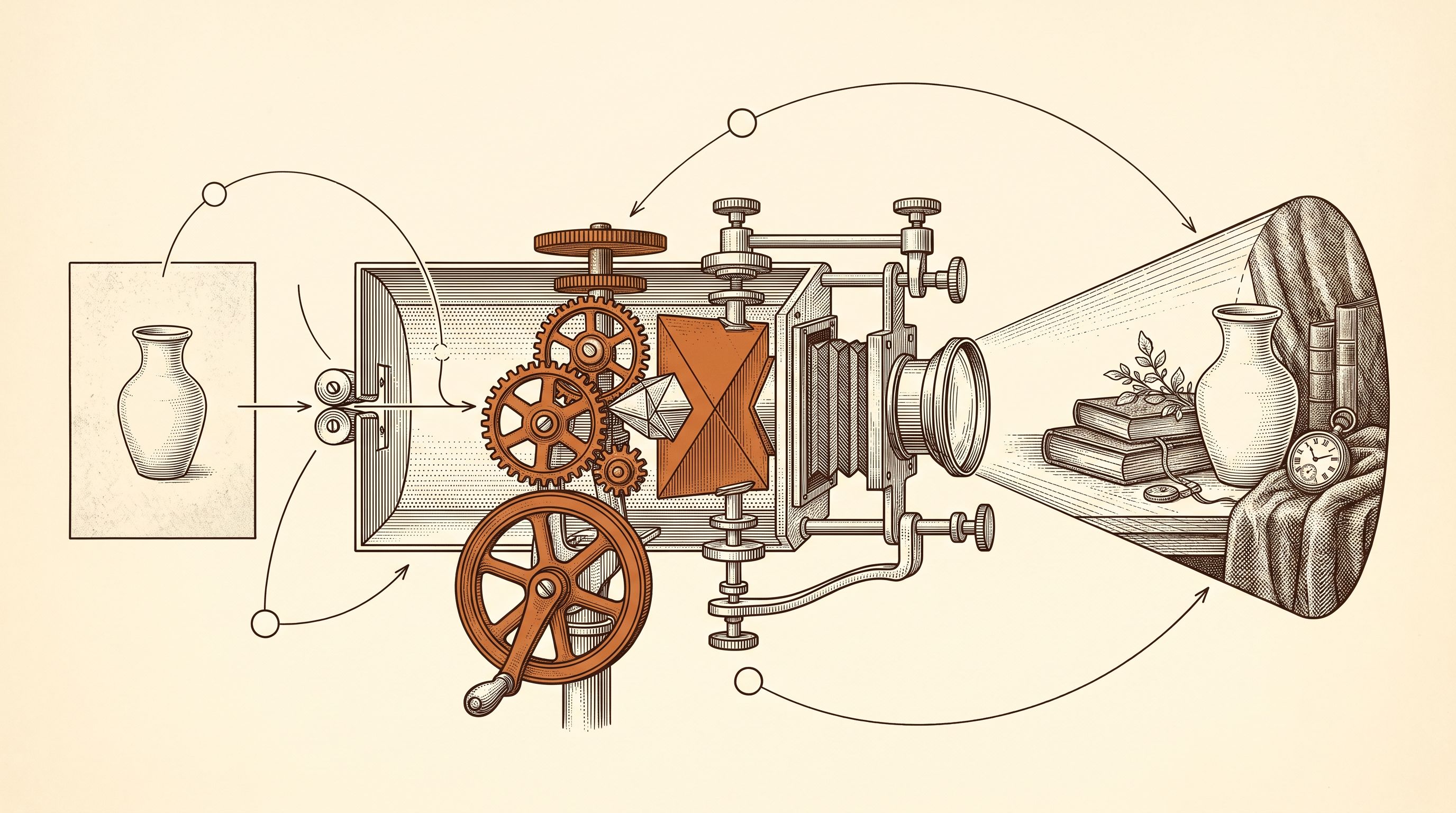
On Instagram, the maker posts warm, lived-in shots: the piece on a table, in daylight, mid-use. On Etsy, the same piece sits on a white background, catalog-style, because that is what the marketplace rewards. The buyer who fell for the warm feed lands on a cold grid of cut-outs. Nothing is technically broken. But the recognition snaps. The shop does not feel like the account that sent them, so the trust built over ten posts resets to zero at the worst possible moment: the checkout.
The URL is intact and the sale is gone, because the shop doesn't look like the feed that sent them.
What linking actually means
So here is the definition worth using. Linking your Etsy shop to Instagram is not connecting two accounts. It is making the two read as one brand, so the person who crosses recognizes the shop they already decided to like.
A link, in the sense that matters, is continuity. The same face in the profile photo and the shop banner. The same voice in the captions and the listing descriptions. The same visual signature, the light, the props, the palette, carried from the feed into at least the first photos a buyer sees on the listing. When those match, the crossing is invisible; the buyer never feels they left. When they clash, the URL is intact and the sale is gone.
This is the same reason a consistent visual signature outlasts any clever one-off post: people remember the look before the message, and they use it to know they are in the right place.
Aligning the two ends this week
You do not rebuild anything. You align four things, in order.
- Profile photo and shop icon: identical. Not similar, the same image. It is the smallest fix and the one most often skipped.
- Lead your best-seller's listing with a lifestyle photo. Etsy lets you order the images; put a feed-style shot first, then the plain catalog frames. Lead warm.
- Open your bio and your shop's "About" with the same sentence: what you make, and who it is for. One voice, two doors.
- Point the bio link at the storefront, not a buried listing, so the first thing a visitor sees is the shop that matches the feed.
Once those align, the feed has one job left: keep showing the work in a way that looks unmistakably yours. If drafting a steady stream of Instagram posts that carry your shop's own look is the part that keeps slipping, that is the piece to systematize, not the bio URL, which you set once and forget.
Sellers who get clicks but no orders almost always have this gap. It is the whole subject of a feed that reads as no one in particular: the identity break, not the traffic, is what costs the sale.

The link nobody searches for
The bio link is the five-minute part. It was never the hard part. The link that decides your orders is the one no one types into a search bar: whether a stranger who liked your feed still recognizes you three clicks later, on a marketplace built to make every shop look the same. Set the URL today. Then go make sure both ends of it look like one shop.
FAQ
Can I link my Etsy shop directly to Instagram?
Yes. Add your shop URL to your Instagram bio and use Etsy's share tools to post listings to your feed. Full product tags need a connected catalog, which is optional and more setup than most sellers need.
Do I need Instagram Shopping to sell from Etsy?
No. A bio link plus a feed that matches your shop does most of the work. Shopping tags help at volume, but they do not fix a feed and a shop that look like two different sellers.
Why do people click my link but not buy?
Usually the feed and the shop do not match. The visitor loved a warm, lived-in feed and landed on a plain catalog grid. Recognition breaks and trust resets. Align the look and the drop-off shrinks.
Where should my Instagram bio link point?
To your shop's front page, not a single listing. The storefront is what should echo the feed that sent the visitor.
How often should I share Etsy listings on Instagram?
Steadily, not in bursts. A consistent presence that looks like your work beats an occasional listing dump, and it is the part worth putting on a repeating plan.