Instagram Content Ideas for Clothing Brands
Instagram content ideas for clothing brands: turn one garment into distinct posts about fit, movement, styling, fabric, care, and real-life wear.
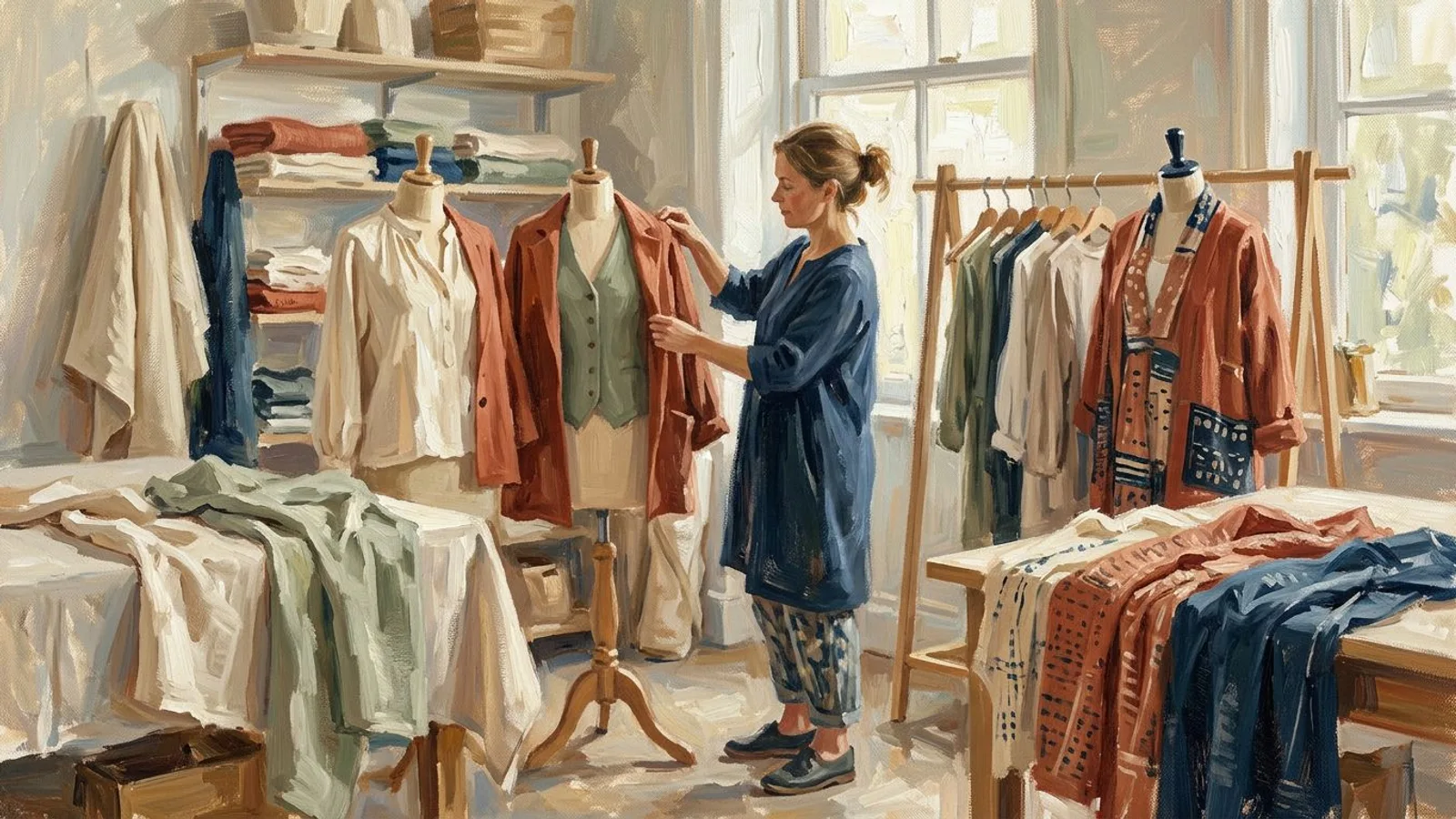
The best Instagram content ideas for a clothing brand reuse one garment across different wearing conditions: fit, movement, layers, light, detail, care, and repeat wear. A feed built on constant novelty makes every product work once, then disappear.
Clothing brands should organize Instagram around wearing conditions, not constant product reveals. The same garment earns another post when the body, movement, layer, light, or day changes.
Most idea lists reward novelty. Announce a launch. Share a quote. Introduce the founder. Photograph the packaging. Run a giveaway. The list may fill a calendar, but it does not help a customer understand the clothes. It also sends the owner back to a blank page after every post.
A stronger system starts with the garment already on the rail.
Why do clothing brands run out of Instagram ideas?
They photograph inventory instead of defining wearing conditions. One shirt becomes one product photo, one launch caption, and perhaps one discount. Once those are published, the shirt is considered used.
The customer still has unanswered questions. How does the fabric fall when someone walks? Where does the hem sit when seated? How does the color look in daylight? What fits underneath it? Which detail justifies the price? What happens after washing? The product page may contain some of those facts. Instagram can make them visible one at a time.
A garment creates new material whenever fit and drape change with the body, movement, layers, light, weather, or occasion. Those conditions provide useful visual differences without requiring a new collection.
In generated content batches, duplication often appears before the captions do. Several image briefs ask for the same front-facing product shot, so the words are forced to invent a difference. Assign one wearing condition to each image first. The captions then have separate jobs.
A repeated garment does not make a repetitive feed when each post proves something different about wearing it.
What should each clothing post prove?
Treat every post as evidence about wearing the garment. “Evidence” does not mean a laboratory test or a sales claim. It means one visible detail that helps someone picture the product in their own day.
Start with six inputs: the garment, the wearer, the action, the setting, the layer, and the question. Change one or two inputs per post. Keep the product facts stable. That is enough to create Instagram posts grounded in the clothing brand rather than generic fashion commentary.
The distinction is practical. “Five ways to feel confident this autumn” could advertise almost any label. “Why this overshirt has room for a wool layer without pulling at the shoulder” belongs to one garment. The second caption has a product fact, a wearing situation, and a reason for the image.
A repeated garment does not make a repetitive feed when each post proves something different about wearing it.
This approach also protects the brand voice. The writing does not need louder adjectives because the garment supplies the substance. Precise words such as brushed cotton, dropped shoulder, bound seam, or cool wash replace “timeless,” “elevated,” and “must-have.”
Ten Instagram content ideas from one garment
Use these as post assignments, not decorative themes. Each idea needs a specific photo and one useful caption.
-
The standing and seated fit. Show where the waist, hem, or trouser rise sits in both positions. Explain the fit choice without promising that one cut suits every body.
-
The movement frame. Photograph the wearer taking a step, reaching, or turning. Name what the cut allows and where the fabric holds its shape.
-
The layer test. Style the piece once over a light base and once under a heavier layer. Explain which combination the pattern was designed to accommodate.
-
The daylight color. Photograph the garment near a window or outdoors. Describe the color with a concrete reference and acknowledge when studio lighting changes it.
-
The construction close-up. Isolate a seam, fastening, lining, pocket, or finish. Connect that detail to comfort, durability, or the silhouette only when the construction genuinely supports the point.
-
The design decision. Explain why the pocket moved, the cuff widened, or the hem changed during development. If making decisions are the strongest part of the brand, show the work behind the finished piece instead of posting another vague studio portrait.
-
The same piece, two occasions. Keep the garment fixed and change the surrounding clothes. The caption should name the practical difference: footwear, outer layer, bag, temperature, or level of formality.
-
The first wash. Show the garment after following its real care instructions. State what the owner should do, what drying method is suitable, and which change is normal for that fabric.
-
The return-to-rail post. Bring back a piece shown several weeks earlier with a new use, season, or layer. Do not apologize for repeating it. Add information the earlier post did not carry.
-
The customer-worn version. With permission, use a real customer photo and focus on one observable styling choice. Avoid turning the customer into a testimonial unless their words are genuine and approved.
A clothing brand can run all ten assignments with static images. Use real product photos whenever a post claims exact fit, color, construction, wash results, or a customer's styling. Generated images can support mood and context, but they should not be presented as visual proof of those details.

How do you turn these ideas into a repeatable week?
Choose one garment with enough verified material: product description, fabric, cut, care, available photos, and one or two design decisions. Reject any angle that needs a fact you cannot confirm.
Then assign different jobs to the posts before writing captions. One explains fit. Another shows movement. A third answers a care question. Another places the garment in a real outfit. If two assignments would use the same image and make the same point, combine them or replace one.
Build the images and captions as a batch. Batch creation is not an excuse for generic output. It is how you catch duplication while the whole week is visible. You can compare openings, product facts, visual distance, and the job of each post before anything is scheduled.
The visual review matters. A catalog frame is useful when the question is shape or detail. A lived scene is useful when the question is layering or occasion. The point where a product photo needs more context depends on what the post must explain, not on a rule that every image should look candid.
Keep a small record beside the garment: questions already answered, approved facts, useful photos, and contexts still missing. The next batch starts from that record. It does not restart with “What should we post?”
Constant novelty is expensive for a small clothing business. Useful repetition is cheaper, clearer, and closer to how customers actually consider a garment: more than once, under more than one condition.
FAQ
How often can a clothing brand repeat the same garment?
Repeat it whenever the new post adds a different wearing condition, product fact, styling decision, or care answer. Change the job of the post, not merely the crop.
What should a clothing brand post when there is no new collection?
Use current garments to answer questions about fit, movement, layering, construction, color, care, and real-life use. Existing products contain more specific material than a generic trend calendar.
Do clothing posts need professional photography?
Not every post does. Clear real photos can explain fit, detail, and use. Use professional images when the launch or brand standard requires them, and keep casual images intentional and accurate.
Should every Instagram post sell a product?
Every post can help someone understand a product without making a direct offer. Alternate explanation, proof, styling, care, and availability. Configure the path to the product separately, such as the link in your profile, because URLs in ordinary Instagram feed captions are not normally clickable.
How can AI help without making a clothing brand sound generic?
Give it verified product facts, brand vocabulary, visual direction, and the specific job of each post. Review the batch for repeated claims and default fashion adjectives before scheduling it.