Social media ads for small business: one ad fails
Social media ads for small business fail on creative, not budget. Why one boosted post burns out in a week, and how to run ads in sets from your own posts.
Social media ads work for a small business when they run in sets: four to six versions of one dated offer, aimed at one action you can count, sent to a profile that is already alive. Most small businesses run one boosted post instead, and that single choice is why the budget disappears.
The position, in one line: social media ads for a small business are a content problem before they are a money problem, and every guide on the subject has the order backwards.
Why does every guide start with the budget?
Open any article on social media ads for small business and the table of contents is the same. Pick a platform. Set a daily budget. Define the audience. Choose an objective. Write the ad. The creative comes last, in one paragraph, as if it were the easy part.
That order was written for a company with a marketing team. The designer has already produced twenty versions, so the only open questions are the budget and the audience. For an independent business of one to five people it is the reverse. The budget is small and fixed. The audience is a radius around the shop, or the trade you serve. The one thing that actually varies between a wasted month and a booked one is what the ad shows and what its first line says. That is the step the guides skip, and it is the step where your work lives.
What does an ad auction do with one creative?
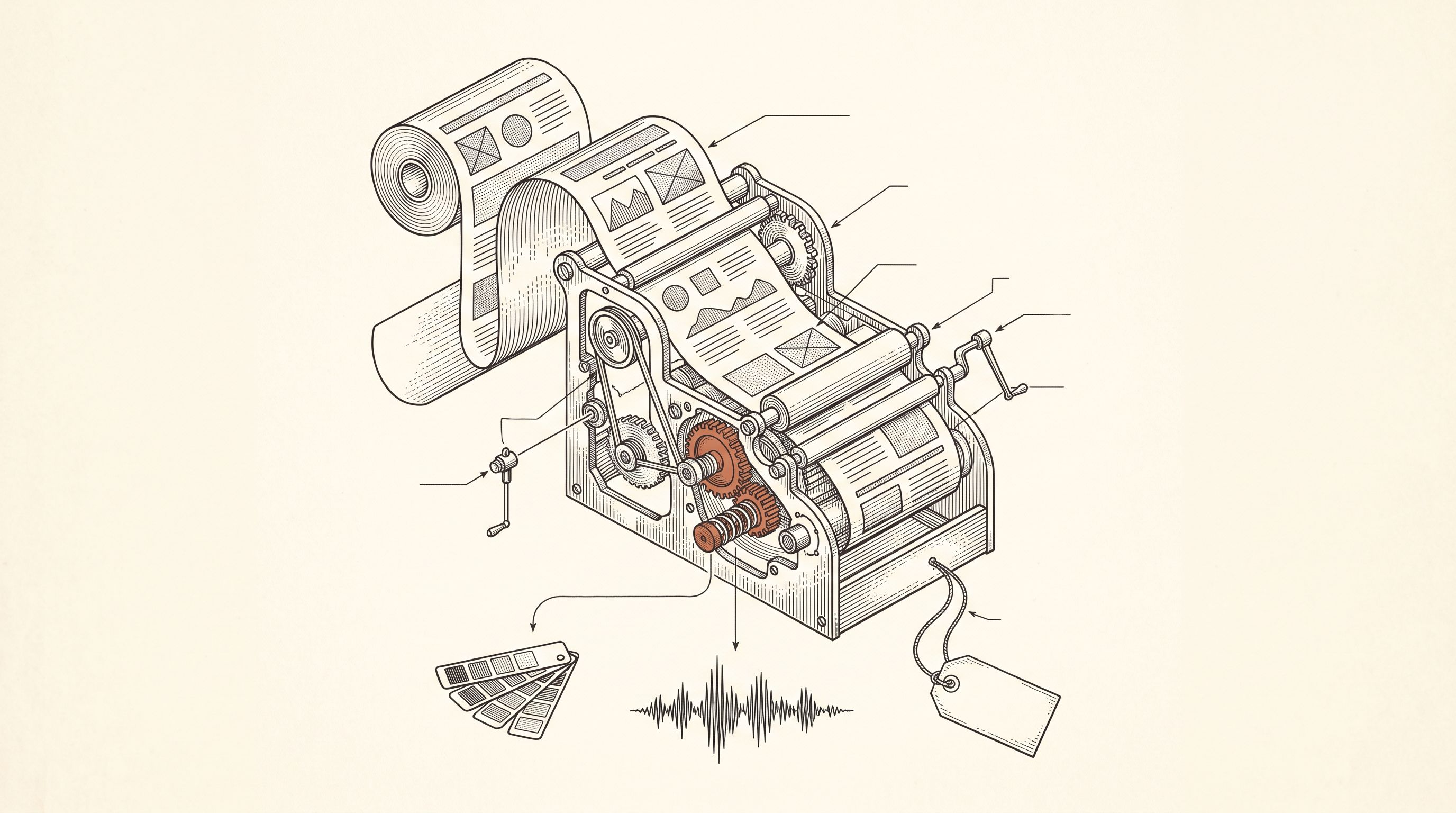
An ad auction is a selection machine. Each time a slot opens in someone's feed, the platform looks at the ads it could show, predicts which one this person is most likely to act on, and shows that one. A large advertiser hands it twenty creatives. Within a few days the machine has found the two that work, and the eighteen losers cost a few euros each to rule out. That is what a large budget buys: not reach, selection.
A boosted post hands the machine one creative. There is nothing to select. So it does the only thing left: it shows the same image with the same first line to the same people again, then again. Frequency climbs. Cost per result climbs with it. Ads Manager even has a name for the state, creative fatigue. After two weeks the owner reads the numbers, concludes that ads do not work for a business this size, and stops.
You can check this in thirty seconds. Open Ads Manager, add the Frequency column, and look at any boost you ran for more than a week. If it reads above two and the cost per result rose in the second week, the budget did not fail. Selection did.
The usual advice, to fund organic first and boost only what already works, is right but incomplete. One proven post is still one creative, and the machine wears it out the same way.
An ad auction is a selection machine. Hand it one creative and there is nothing left to select.
How many versions of an ad does a small business need?
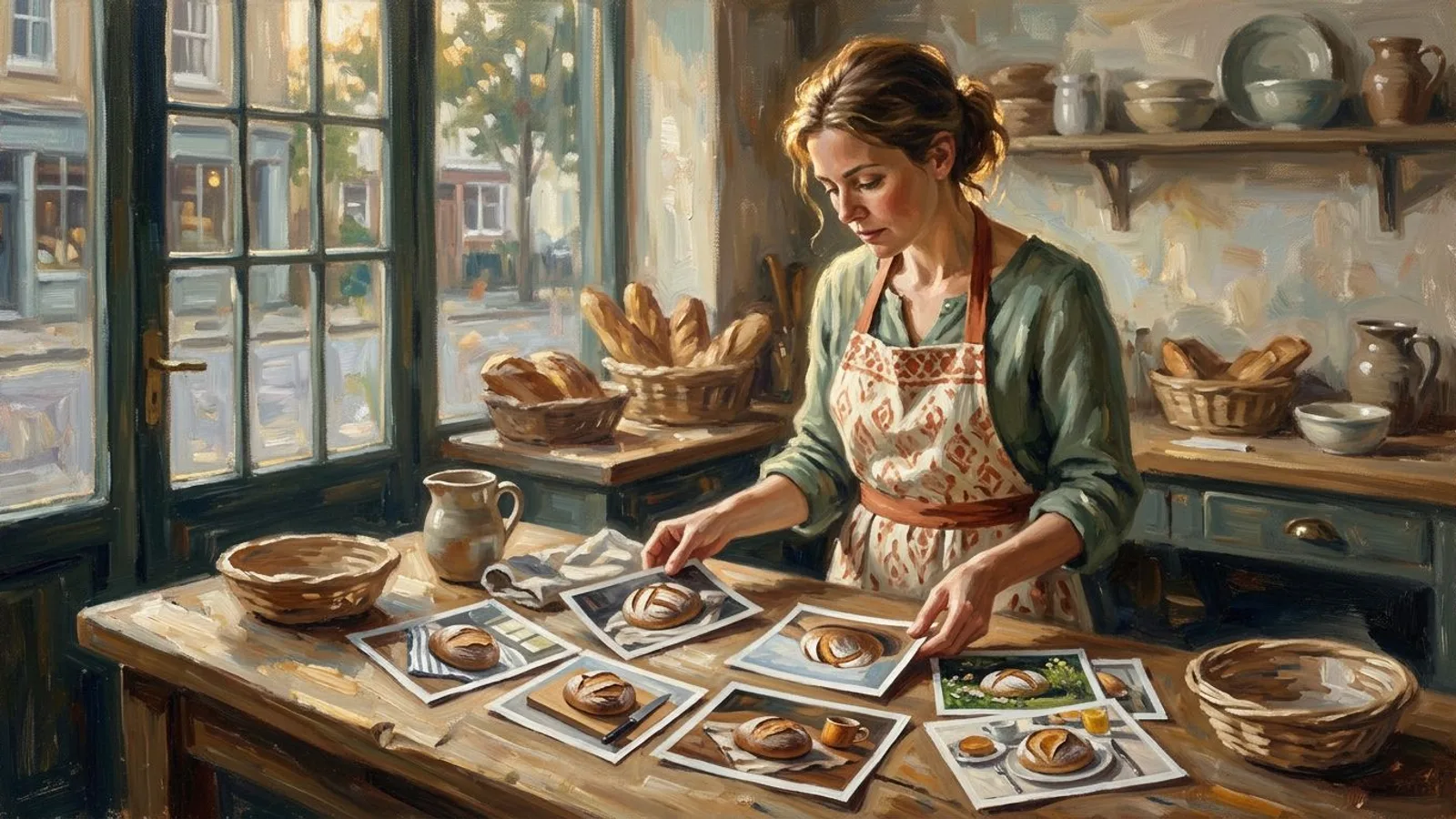
Four to six, of one offer. Not six offers. One thing with a date on it, the weekend menu, the autumn course, the new collection, and four to six ways of showing it. Restaurants have the easiest version, a dated offer every week, which is why our guides for restaurants keep returning to it.
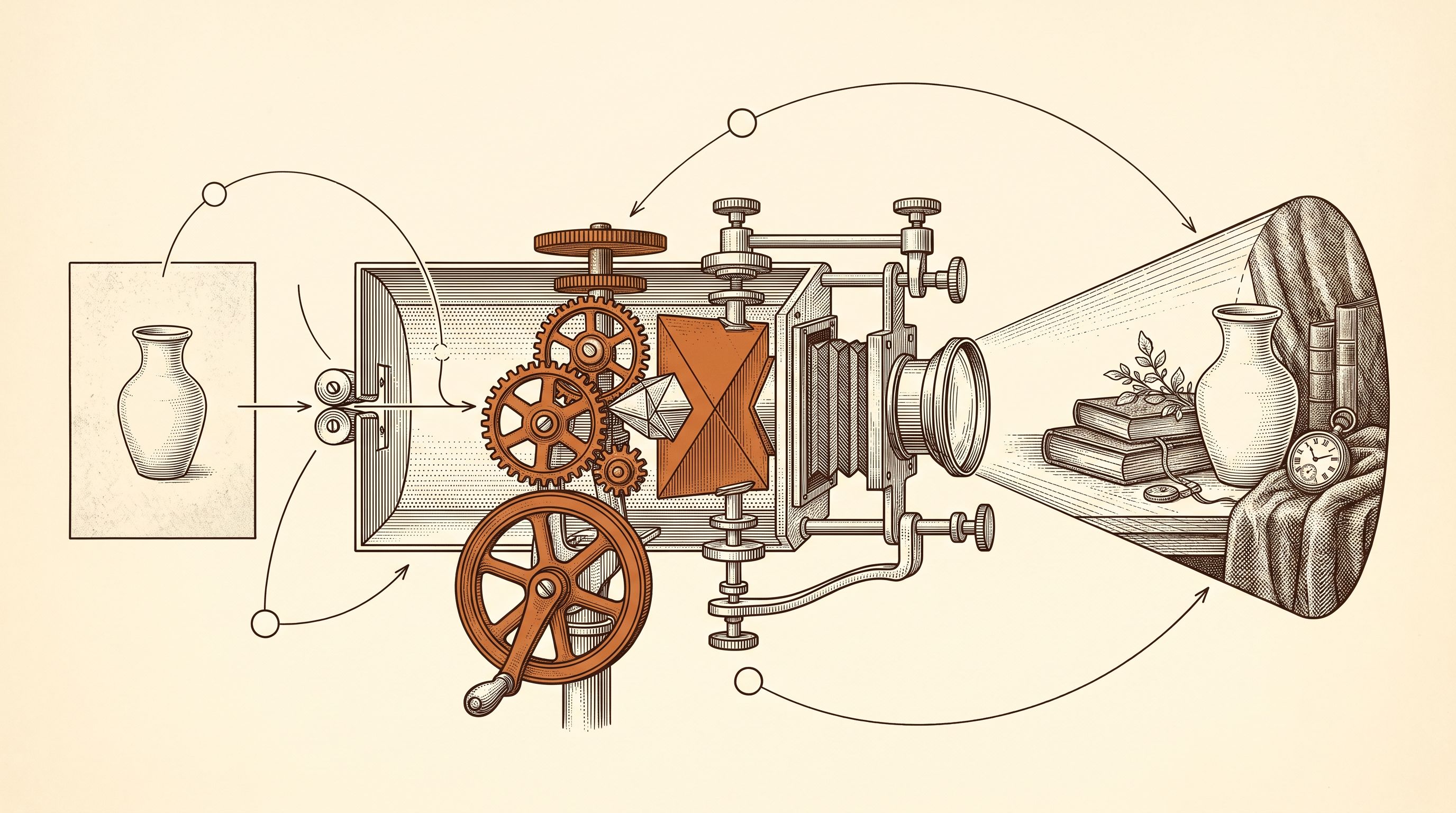
The versions have to differ on the axis the machine selects on: what the image shows, and what the first line says. What the image shows: the product alone, the product in use, the place, the person who makes it. What the first line says: the price, the date, the problem it solves, the proof. Two images by three first lines is already six. Keep the images inside your brand's look, generated in the same palette and framing as your feed, or the stranger who clicks lands on a profile that does not match the ad.
What does not count as a version: the same photo with a new adjective. "Fresh" becomes "artisan" becomes "handmade." Nobody in the feed reacts differently to those three, so the machine learns nothing from them. This is where a habit from AI tools costs real money. Ask any generator for "five versions of this ad" and watch what comes back: the same ad with five adjectives. A generator asked for versions defaults to synonym swaps. It produces real variants only when told the axis to vary, which image subject and which first line, or when it already holds enough of the brand (products, place, people, numbers) to have something different to say each time. That is the difference between a tool that has read your website and one that has read a prompt.
One caution. If every version carries the same sentence copied from the homepage, you have six versions of the wrong ad. The words come first; the set multiplies whatever you put into it.
What should a small business optimize its ads for?
The action you can count fifty times a week. Meta's help pages put the learning phase at about fifty results in seven days; below that, the delivery system is still guessing who to show your ad to. At five euros a day, a small business will not get fifty purchases in a week. It can get fifty profile visits. On a good offer, it can get fifty messages.
So the objective is not sales. It is the cheapest action one step from a sale: a message, a profile visit, a click to the booking page. Then count that action on your side of the counter every week: how many messages came in, how many booked. The dashboard's cost per result tells you what the machine paid. Only your own count tells you what it bought.
The same threshold rules some platforms out at this size. LinkedIn's floor is about ten dollars a day and a click costs several times what it costs on Meta, so fifty of anything in a week is out of reach for most one-person budgets there. Instagram and Facebook are where a small set on a small budget still gets counted.
Where does the ad set come from?
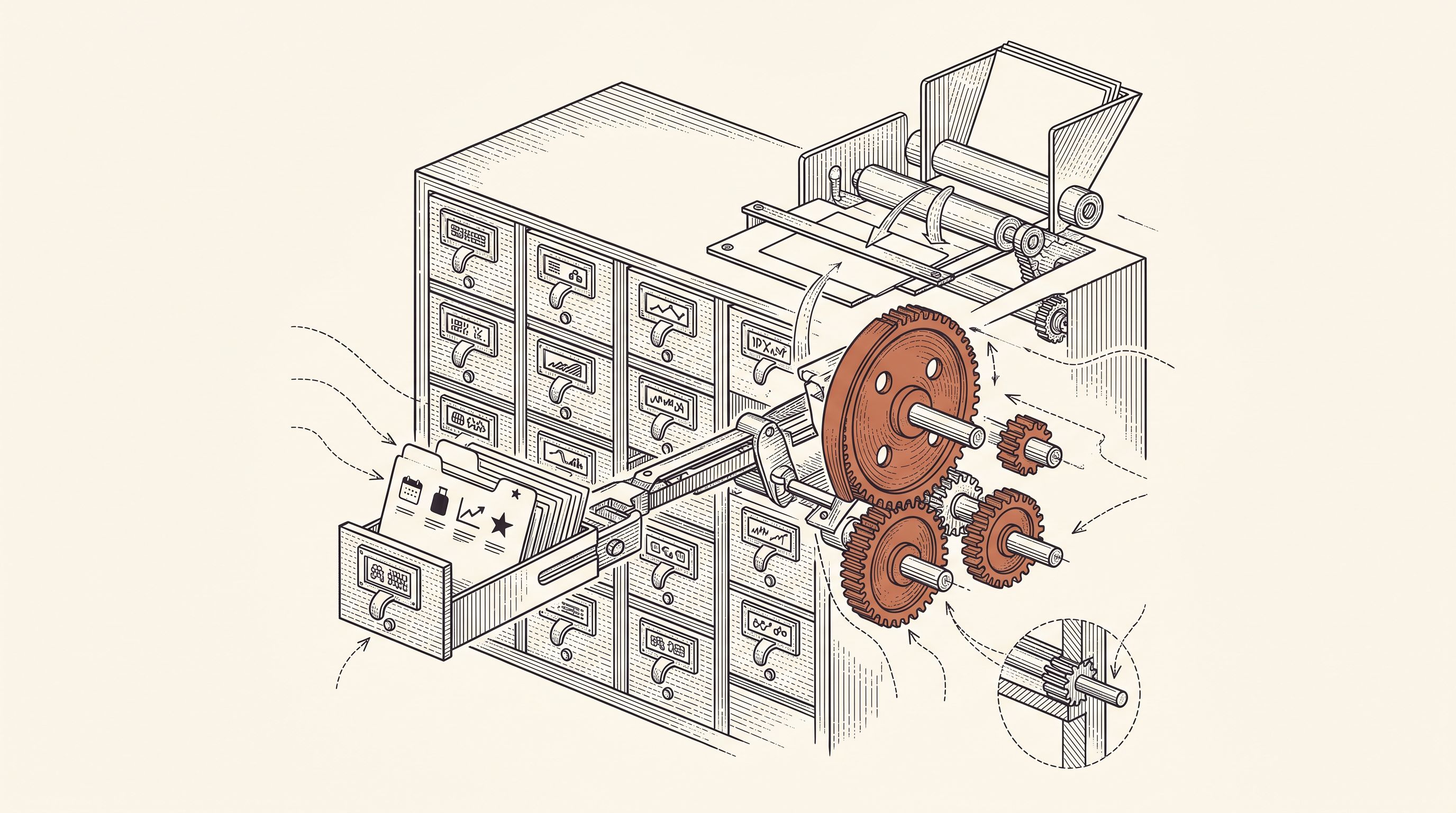
From the same place your posts do. This is the consequence that changes the math. A business that publishes a week of posts from its own material already produces variants: the product alone on Monday, the workshop on Wednesday, the maker on Friday, each with its own first line. An ad set is those posts with a date and an action added. Keep a week of posts that already differ by subject and by network running, and the set exists before you open Ads Manager.
The business without that system opens a separate project called "the ad," produces one creative from scratch, and watches it fatigue. Then it blames the budget.
Before you set a budget, count your creatives. If the answer is one, money is not what is missing, and more of it will not fix a machine with nothing to choose. Build the week first. The ad set falls out of it.
FAQ
Do social media ads work for a small business?
Yes, when they run as a set of versions behind one dated offer, aimed at an action you can count, on a profile that is up to date. One boosted post usually does not, and the failure is the creative, not the budget.
How much should a small business spend on social media ads?
Enough to reach about fifty of your chosen action in a week. For messages or profile visits in a local radius, that is often five to ten euros a day. If the action costs more than that, change the action, not the budget.
Is boosting a post the same as running an ad?
Technically a boost is an ad. In practice it is one creative with the settings pre-filled. The set, the objective and the counting are what a boost leaves out.
Which platform is best for small business ads?
The one where your action can be counted fifty times a week on your budget. For a local business that is usually Instagram or Facebook. LinkedIn's minimums and click prices push a one-person budget below the learning threshold.