Marketing strategies for small business that last
Marketing strategies for small business: the eight standard ones, the two tests that sort them, and why we built our product around the one that lasts.
Marketing strategies for a small business work when they run on something the business already produces every week and ask the owner for almost no new decisions. That rules out most of the standard list. We know because we build marketing software for companies of one to five people, and early on the product had to pick which strategy it would serve. We chose one and cut the rest. Here is the standard list, the two tests we used to sort it, and what the decision cost.

What marketing strategies work for a small business?
The standard list for a small business has eight entries: referrals, local partnerships, a Google Business Profile with reviews, search content on a blog, an email newsletter, paid ads, events or markets, and a presence on social networks. None of them is wrong. The useful question is which ones are still running in month four, when the launch energy is gone and the owner is back to the craft.
Two tests answer it. Does the strategy run on material the business already produces, or does it need material made specially for it? And how many decisions does it ask the owner to make in a normal week?
| Strategy | Runs on existing material? | Decisions per week |
|---|---|---|
| Referrals and reviews | Yes: finished jobs, satisfied customers | One: who to ask |
| Local partnerships | Partly: the relationship exists, the offer does not | Two or three at the start, then none |
| Search content (blog) | No: each query needs 800 words written for it | Several per article |
| Email newsletter | Partly: needs a list and a reason to write | Four per send |
| Paid ads | No: budget, audience, creative, landing page | Four or five, every week |
| Events and markets | Partly: the product exists, the stand does not | A dozen per event |
| Social presence, by hand | Yes: jobs, products, news, photos | Twenty or more |
| Social presence, generated | Yes: the same material | One: approve the week |
Two lines pass both tests: referrals with reviews, and a social presence that a system turns into posts. Referrals need a habit, not a product. Social presence needed a product. That is where we went.
Why did we build around one strategy instead of a marketing suite?
The trigger was the person we were building ReadyToPost for. A florist, a physiotherapist, an independent consultant, a hotel with twenty-four rooms: revenue between €50,000 and €300,000 a year, no marketing team, a budget of €30 to €100 a month, and evenings they would like to keep. People who do the work rather than talk about it.
Every marketing suite for small business tries to cover all eight strategies. The all-in-one dashboard is a strategy in itself, and it is the wrong one for this person: it multiplies the weekly decisions instead of removing them.
So we ran the list through the two tests and kept the one where the material already existed and the decision count could be brought down to one. The blog and the newsletter fail the first test for a one-person business: nobody has the written hours. Paid ads fail the second: paid reach is a budget decision made again every week, and a person who also does the work will not make it well every week. Social presence, by hand, fails the second test too. Twenty decisions a week is how a business ends up with a profile last updated in spring. But social was the only strategy where the failure was mechanical rather than structural. The material was already there. The decisions could be taken away.
A strategy that asks twenty decisions a week from the person who also does the work is not a strategy. It is a second job.
How does a marketing strategy get down to one decision a week?
Count the decisions in a hand-made week of posts. Which topic. Which photo. Which words, then which words again for each network, because a LinkedIn post and a Pinterest pin are not the same sentence. Which day, which time. Repeat for four or five posts. That is twenty decisions at minimum, each small, each made in the evening, each one more reason to skip the week. A strategy that asks twenty decisions a week from the person who also does the work is not a strategy. It is a second job.
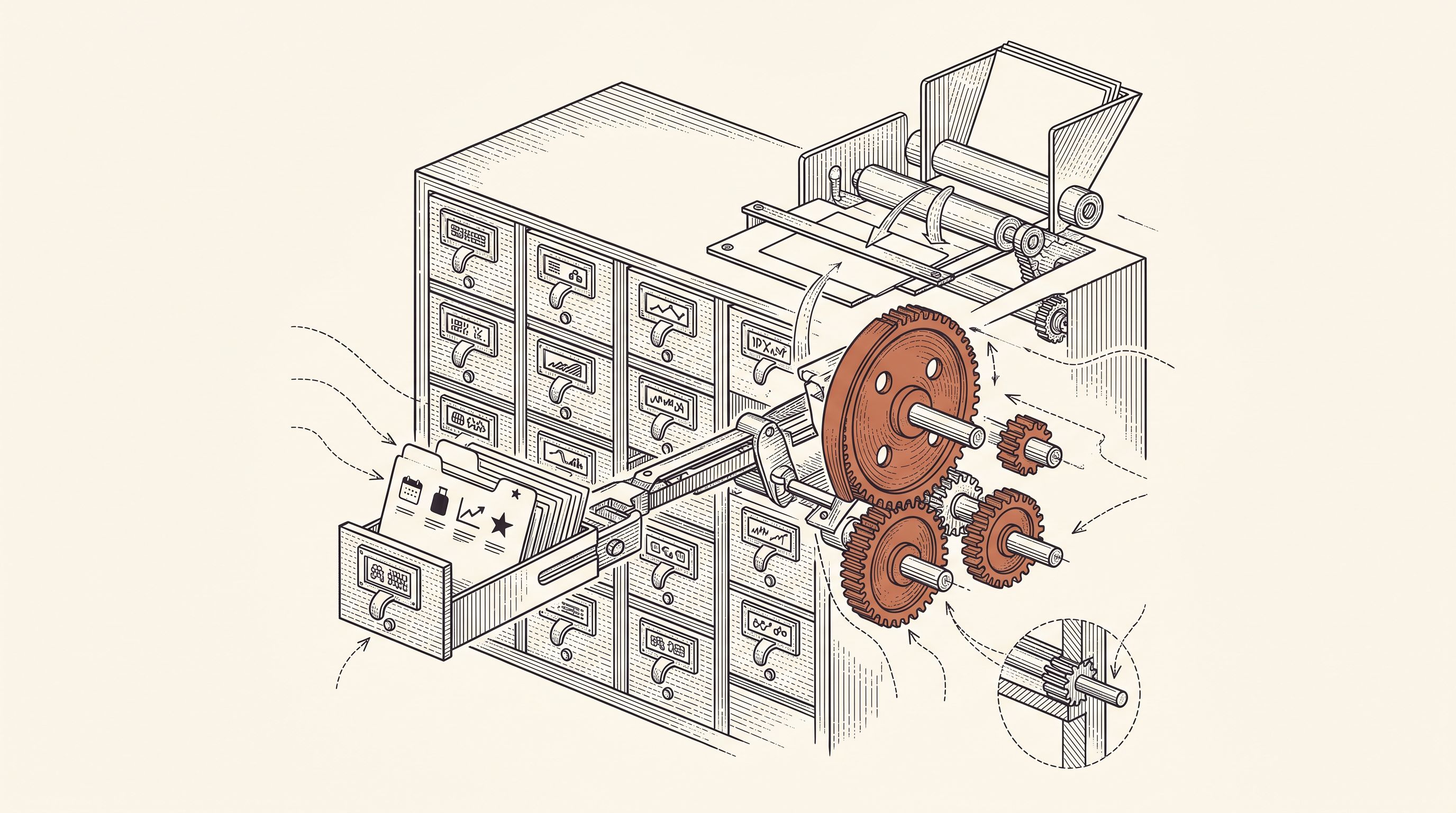
We built the product to remove all but the last decision. It reads the business's website and keeps what it finds as a standing brief: what you sell, to whom, in which words, with which kind of image. That brand DNA does not have to be re-explained. Each week the system proposes posts built from the business's real material, the products, the events, the news, the photos, and writes one version per network for the five networks a small business is judged on. The content calendar arrives filled. What reaches the owner is a week to review, not a blank page. One decision: approve, or change a line.
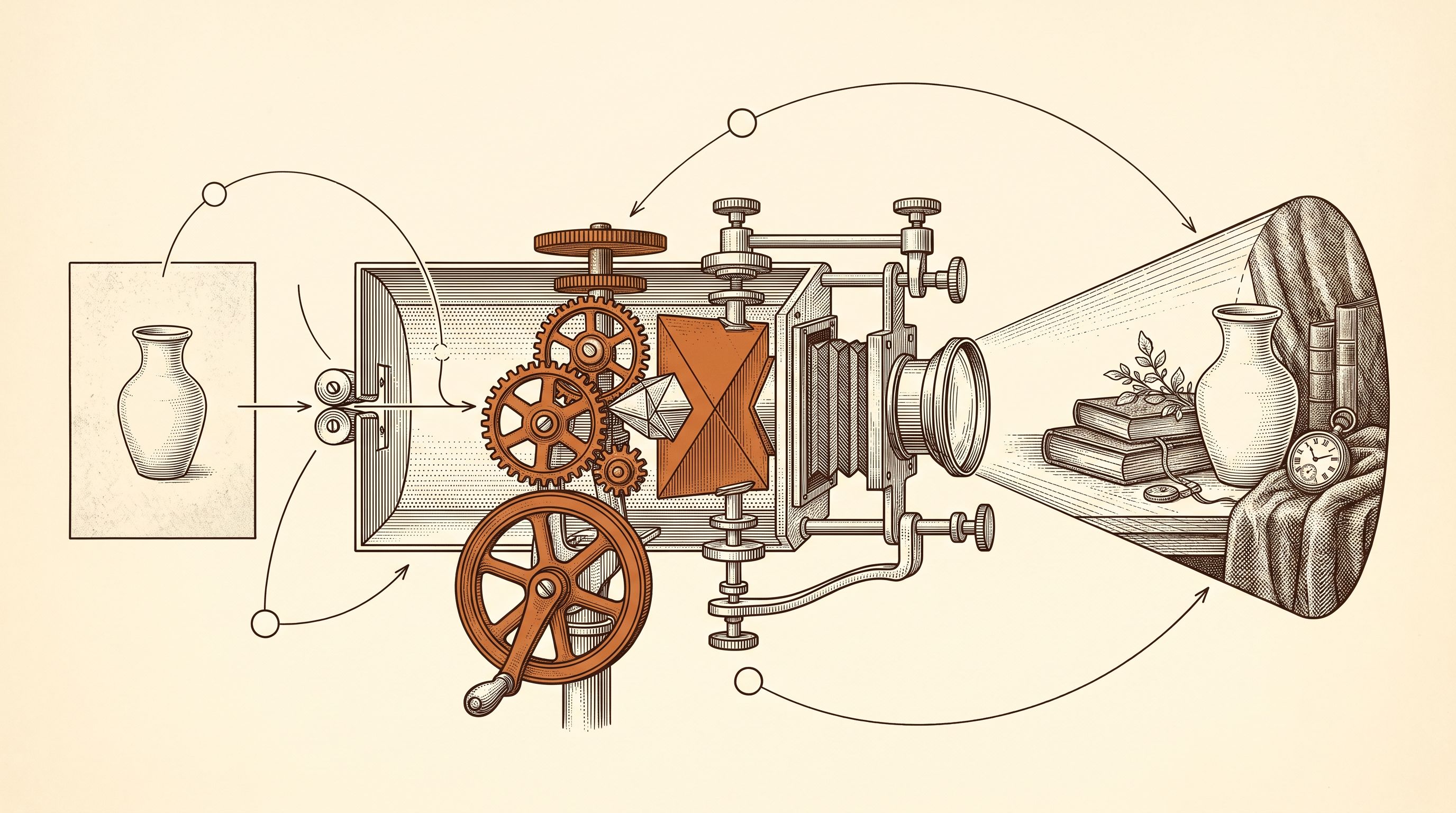
One mechanism from the onboarding shows how literally we took the first test. Before anything is generated, the system decides whether the business's own photos are essential or whether generated visuals will do. For a restaurant, a hotel or a florist, the real photo is the proof, and generation works around it. For a consultant or a coach, a generated visual carries the message and the owner's photos are optional. Your marketing strategy is already inside that question. If your work produces images by itself, your strategy should run on them. If it does not, the strategy has to make its own, and you should not be the one making them.
We also made the week draft itself. If the owner does not log in, next week's posts are still proposed. The steady presence no longer depends on an evening being free.
What did we cut, and what did it cost?
We prototyped a paid layer on top of the posts and shelved it. Every boost is a budget decision, and we had just spent a year removing decisions. Adding one back, with money attached, undid the point.
We did not build an email tool or a search content tool. Both are good strategies for a business with a writer on staff. Ours has a florist at the counter.
We are not a template editor either: a library of layouts hands the owner a design decision per post, the decision we were removing. And we do not sell scheduling alone: a queue does nothing for posts that have not been written.
The cost is structural. A business that wants all eight strategies in one dashboard is not our customer, and we accept losing it. How we priced the one thing we do against an agency retainer is a separate account. The strategic decision is simpler to state: one strategy run every week beats eight strategies run in a good month.

What should a small business do with this on Monday?
Write the eight strategies down. Next to each, note what material it needs and whether your business already makes that material as a by-product of the work. Then count the decisions each one asks of you in a normal week, not a launch week.
Keep the two that pass. For most businesses of one to five people, that is referrals with reviews, which need a habit of asking, and a steady social presence, which needs a system rather than your evenings. The six-step weekly loop that keeps a small business posting is the operating manual for the second. Feed it the material you already produce and refuse any version of it that hands you more than one decision a week.
The other six are not bad strategies. They are strategies for a business that has hired someone to run them. When you have, add them back. Until then, the strategy that works for your business is the one still running in month four.
FAQ
What is the most effective marketing strategy for a small business?
The one that runs on material you already produce and asks for one decision a week: referrals with reviews, plus a steady social presence produced by a system rather than by hand.
How much should a small business spend on marketing?
At €50,000 to €300,000 in revenue, €30 to €100 a month for tools is absorbed without strain. An agency retainer around €1,500 a month only makes sense with a launch or a paid campaign behind it.
Do small businesses need social media marketing?
A potential customer checks your profile before calling. An empty or stale profile answers for you. The question is not whether to have a presence but how to keep it steady without giving it your evenings.
Can a small business do its marketing without an agency?
Yes, if it picks strategies that run on its own material and cuts the weekly decision count to almost nothing. An agency is worth paying for the parts that need a person: a hostile comment thread, a real paid campaign, a launch.