Instagram bio for a food business, from Levain
Instagram bio for a food business: what Levain Bakery's bio teaches about naming one signature item and a name people can say, with a before-and-after.
An Instagram bio for a food business has one job your menu can't do: give a stranger something to repeat. That means the one item you're known for, and a name they can say out loud. Levain Bakery's bio does both in a single line, and it's worth taking apart before you write yours.
Levain opened in 1995 as a small bread shop on West 74th Street in Manhattan. By its thirtieth anniversary in 2025, it ran nineteen bakeries across the country. On Instagram, as the bio shows in search results in September 2026, it still describes itself like this: "A neighborhood bakery since 1995 baking BIG beloved cookies and more." Two food emoji follow, then a last note in lowercase: oh btw it's "luh-ven".
There's no address, no opening hours and no call to action. The whole thing sits well under the 150-character limit, and each clause answers a different question a hungry stranger has.
What does Levain's Instagram bio actually say?
"A neighborhood bakery" tells you what kind of visit this is. You walk in, you queue, you leave with a paper bag. Levain keeps the word at that scale because it describes the experience at the counter, not the size of the company.
"Since 1995" is proof in two words. A date is the cheapest evidence a food business owns. It tells a first-time visitor the basics have held up for thirty years.
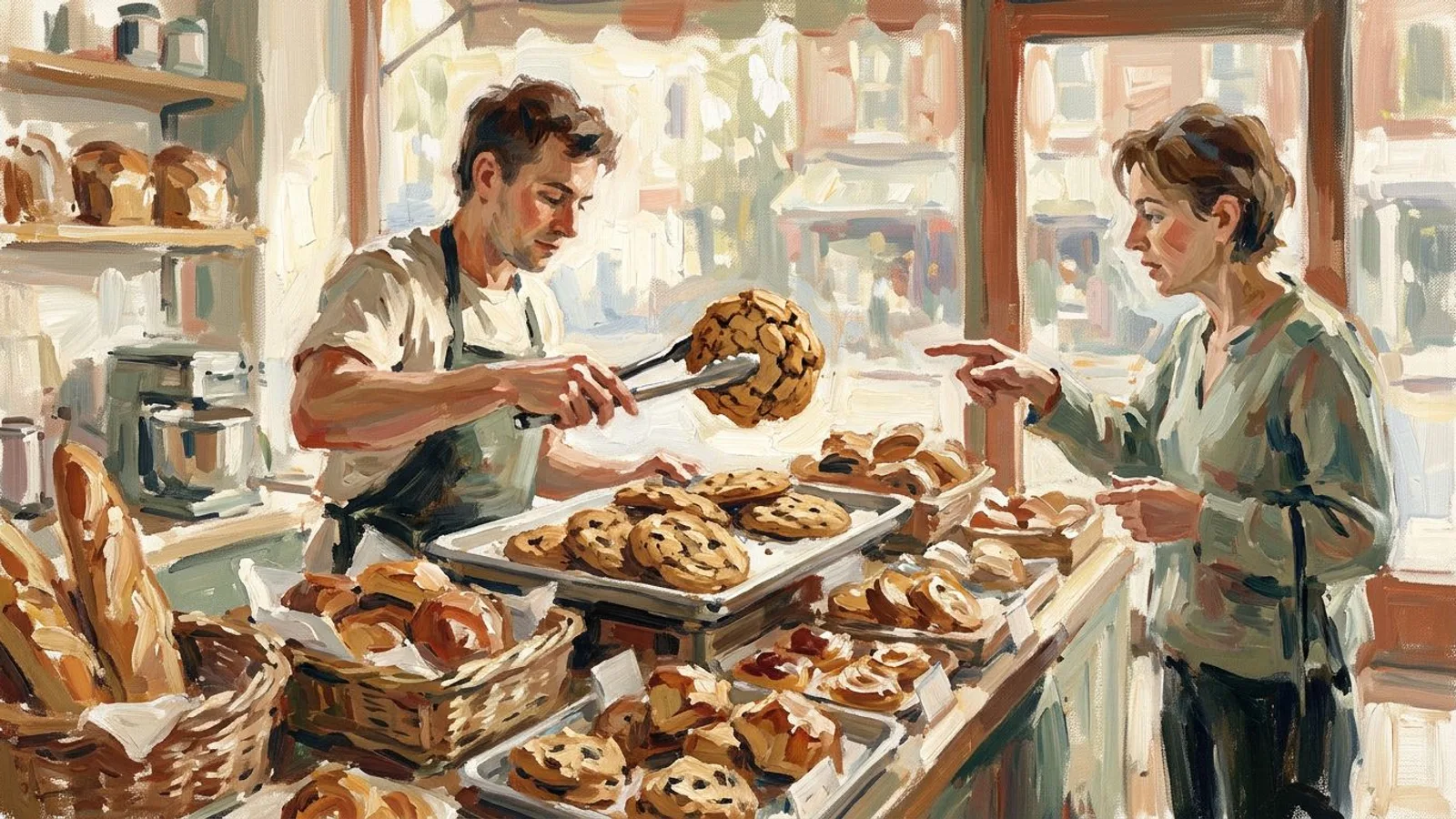
"BIG beloved cookies" names one product, and the capital letters point at the trait that sets it apart. Levain's cookies weigh six ounces. The bio doesn't mention chocolate chip walnut, doesn't list flavors, and doesn't name the bread the shop was founded on. "And more" covers the rest of the counter in two words.
"Oh btw it's 'luh-ven'" is the clause almost no food business would think to write. It spends the end of the bio teaching the sound of the name.
The bio has changed over the years, and what changed is telling. A 2022 capture on a bio-tracking site shows a longer version that also listed "breads, pastries, new friends, and TikToks." That list was later cut down to "and more." The pronunciation note survived the cut.
A bio that lists your categories gives the reader nothing to repeat. A bio that names the item hands them the sentence.
Why name one item instead of your menu?
Food gets passed on as a single noun phrase. Nobody tells a friend "they do bread, pastries and specialty coffee." They say "get the cookie at Levain." A bio that lists your categories gives the reader nothing to repeat. A bio that names the item hands them the sentence.
There's a mechanical reason the flat list is so common, and you can check it in thirty seconds. Paste your full menu into any AI assistant and ask for an Instagram bio. You'll most likely get your categories back: "fresh bread, pastries and specialty coffee." The model is doing what the input allows. A menu prints forty items in the same font at the same size, so nothing in it says which one people cross town for. With no hierarchy to work from, the generator summarizes.
The same flatness spreads past the bio. A generator writing a week of posts from that menu has no reason to favor one item, so the week spreads evenly across the counter and nothing becomes the thing you're known for. Put the signature item in plain words on your homepage and in your bio, and a tool that builds your posts from your website has a center to write around. That one sentence then works twice: as your bio, and as the brief behind every caption.
To find your item, watch the counter for a week. The signature is what people ask for before they've read the board. If two or three items compete, pick the one with a trait you could put in capitals: the size, the crust, the filling, the hour it comes out of the oven.
Why does a bakery spell out how to say its name?
A recommendation happens out loud, and people avoid saying words they aren't sure how to pronounce. "Levain" is the French word for a sourdough starter. An English speaker reading it cold might try "le-VANE" or "LEE-vain," and a guess feels risky across a dinner table. So the name doesn't get said, and the bakery gets described instead of named.
The instinct has research behind it. Psychologists call it processing fluency: in a 2012 study, Simon Laham, Peter Koval and Adam Alter found that people judged easy-to-pronounce names more favorably than hard ones. A name that's hard to say carries a small cost every time someone considers saying it.
This only applies when your name holds a real doubt: a word from another language, an invented spelling, a family name with silent letters. A plain English name doesn't need the note. When it does, Levain's casual phrasing at the end of the bio costs about twenty characters.

What should a small food business copy from Levain?
What transfers is the order of decisions in the line, not its wording.
Levain can leave out an address because no bio can hold one for every bakery, and its link does that work. A single shop has a different problem. The stranger needs to know where you are and whether they can get the item today. So keep Levain's structure and spend the characters it saves on your own place and next step.
One word doesn't transfer on its own. "Beloved" is a claim that thirty years and a queue down the block back up. On a two-year-old account, a self-applied adjective reads as filler. Replace it with a fact the reader can check, like a weight, a quantity or a time.
Take a composite example: a one-shop sourdough bakery whose bio reads "Artisan bakery. Fresh bread, pastries, coffee and cakes. Made with love. Order below." Run it through Levain's moves. The kind of visit becomes "corner bakery." The date stays if you have one. The signature becomes an item with its trait. The next step names the moment.
Corner bakery in Hebden Bridge since 2019. Known for the one-kilo country loaf, out at 7am. Saturday loaves sell out: pre-order below.
Every clause now answers a question, and a customer can repeat the middle one word for word.
If you make and ship food rather than serve it at a counter, the same structure holds, with shipping in place of the address. The guides for makers cover the rest of that path, from product pages to captions.
A bio that names one item needs a grid that keeps showing it. The posts under it do different work: the food posts that bring orders tell people when they can get the item, while the bio tells them what it is. For the name field and the link, what every small business bio has to carry still applies. What keeps the signature visible week after week is a steady presence, which is where Instagram posts written from your own brand material earn their place.
Before you touch your bio, ask the next three customers at the counter how they heard about you. Write down the exact noun in their answer. If it isn't in your bio yet, that's the first edit.
FAQ
What should a bakery put in its Instagram bio?
The kind of shop, the item people come for with the trait that sets it apart, your place, and one next step. Add how to say the name if it isn't obvious.
Should a food business put opening hours in its Instagram bio?
Only the hours that change a decision, like a bake that sells out by noon or a market stall that runs on Saturdays. Full weekly hours go stale fast; keep them on your website and your Google listing.
What should a food truck put in its Instagram bio?
The dish you're known for and the area you work in. This week's spots change too often for a bio, so point to the post or link that carries them.
Should a food business use emojis in its Instagram bio?
Levain uses two food emoji after its product clause. They add color, not information. One or two are fine; a row of them standing in for words costs characters and tells the reader nothing.