


Working Google reviews: the loop that lifts
Google reviews don't just arrive — they're worked. Five concrete moves to place this week that turn a passive listing into a system of asking, answering and adjusting.
A restaurant that wants to please everyone draws no one — that's the definition of an empty Sunday.
_The method isn''t a yearly plan — it''s the step back, around the quarter, that lets the calls hold up past Sunday._ And of all the calls, picking an audience is the one that structures the others. Until it''s set, the menu arbitrates in the dark, the price doesn''t quite justify itself, the service hesitates between two registers. Naming it means stopping to pay the silent cost of the blur.
An audience isn''t a demographic. A 45-year-old can come in for a rushed Tuesday lunch and celebrate a family birthday on Saturday. Two audiences, same skin. The real unit of choice is the moment: 75-minute business lunch, Thursday dinner with friends, Sunday family brunch, weekend table where people settle in. Each moment carries its own constraints — length, room sound, menu format, type of service. Once the moment is set, everything follows.
If you''re unsure, look at your week: which service fills naturally, with nothing forced? That''s often where the moment you serve best is hiding, as [Read the room](/en/ressources/restaurant/diagnosis/read-the-room) shows.
The audience that looks great on paper is often a mirage. The real audience is the one that returns — and it''s rarely the one you imagined. Pull up the faces from last week, the names that show up two or three times in the month on the bookings, the regulars who push the door without checking the menu. That group is your effective audience, whether or not it matches your imagined target. The method''s starting point is to accept that, not to start from a theoretical bullseye.
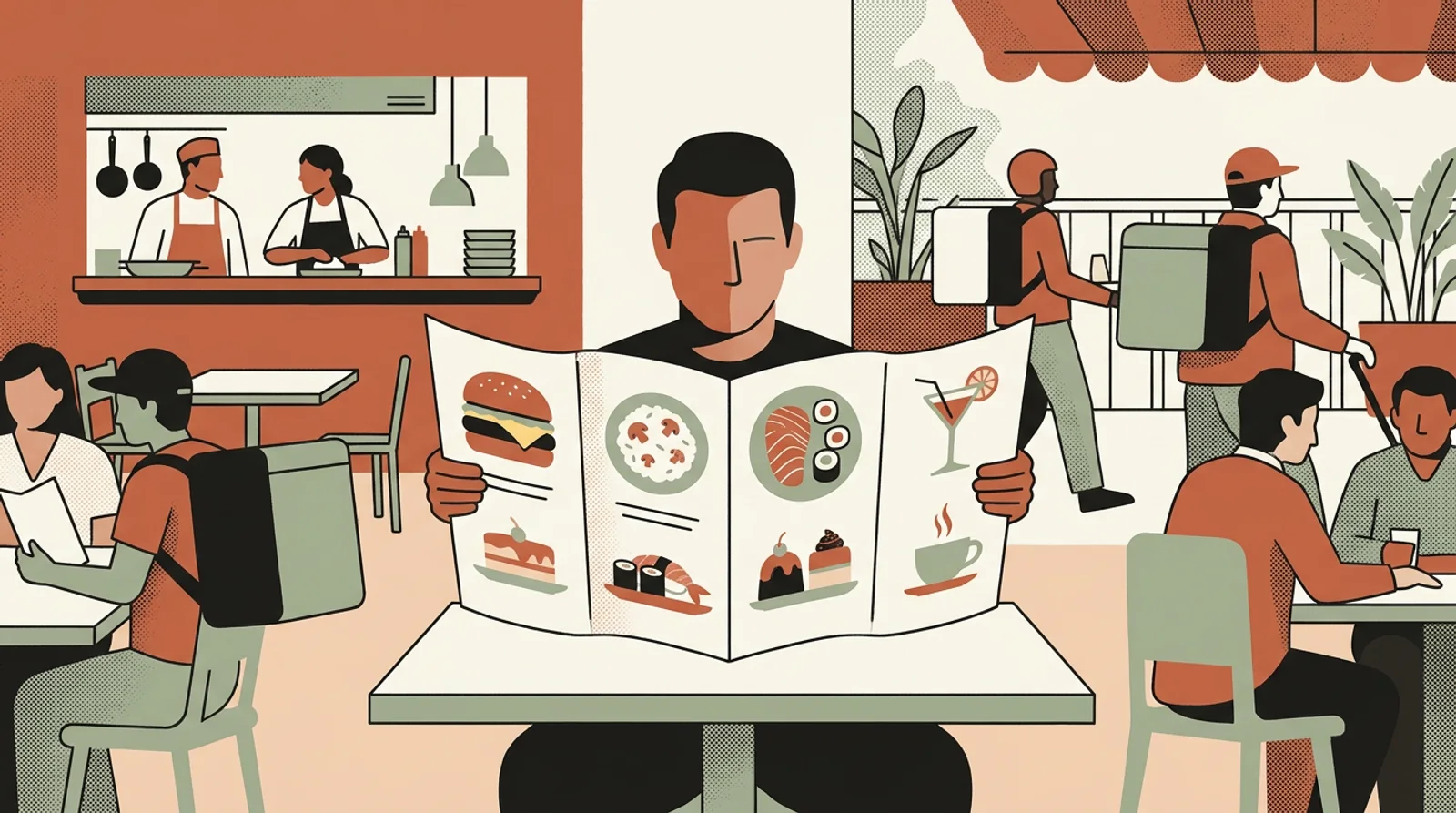
Picking an audience without the menu reflecting it means you haven''t picked. If you''re aiming for business lunch, the menu has to say so: a short format, fast service, readable in two minutes, dishes you can eat in a shirt. If you''re aiming for the Thursday dinner crowd, it''s the opposite — share, linger, pick. The menu speaks louder than the marketing: a guest opening it reads your choice before they''ve heard a word. The tighter the menu, the more marketing becomes a shortcut, not a rescue.
Choosing means rejecting. As long as no customer says ''this isn''t for me'', you haven''t really chosen. A restaurant serving business lunch isn''t the right place for a kids'' birthday party, and that''s fine. The fear of losing the 15% off-target often makes you abandon the 60% you could win on the bullseye. It''s the inverse arithmetic of intuition — and the one that actually fills rooms.
That sorting logic ties back to the [Make them return](/en/ressources/restaurant/method/make-them-return) method: a customer who isn''t in your audience won''t come back ten times, even well served. Better to know up front.
A choice that never turns into a refusal isn''t a choice. Over a quarter, ask the concrete question: what did you stop accepting, what did you pull, which kind of request did you turn away with a ''we''re not really that''? If the answer is ''nothing'', the audience isn''t picked yet — it''s just described. The quarter is the right unit: long enough to feel an effect, short enough to correct without drama.
Do
Don't
Situation
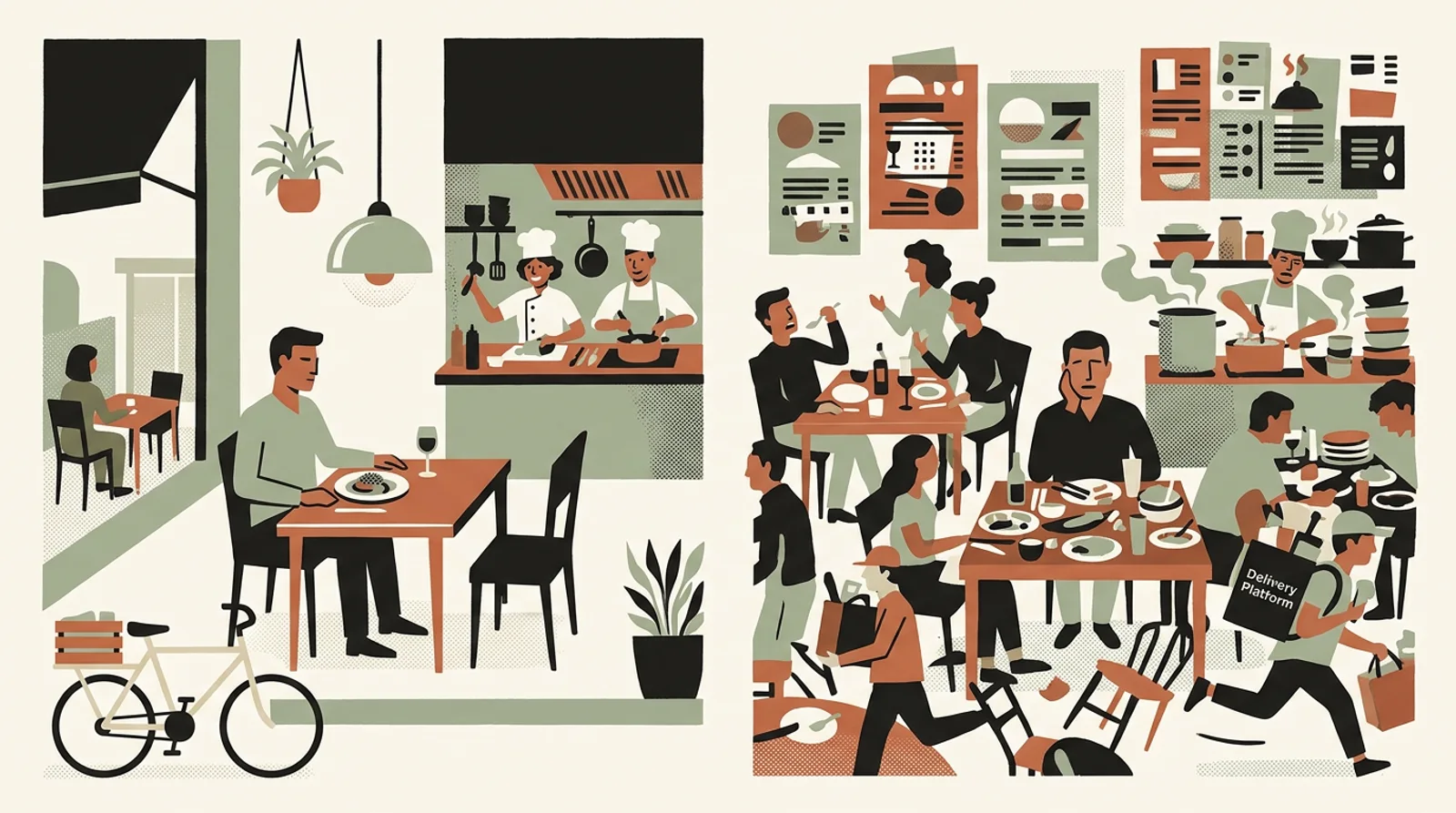
Two bistros in the same neighbourhood, same range. The first — call it A — serves a short lunch menu (starter-main-coffee at 22 euros, single plate by 12:30pm out in 8 minutes) and a slower dinner. The second, B, runs the same menu lunch and dinner, with 18 dishes and a uniform service.
Action
A has decided: at lunch, it serves the local offices that have an hour to eat and leave. By 1pm, 80% of tables have turned at the one-hour mark. At night, it serves couples looking for a quiet spot — different audience, different format. B refuses to choose: it tries to serve the offices at lunch with a classic bistro menu, and the result is average service for everyone. The business lunch goes to A, and so does the quiet date when the couple wants peace.
Outcome
It''s not the plate that separates them, it''s the call on audience — and everything that cascades from it: menu format, service rhythm, team training, tone on socials. A actively discourages Sunday family lunches (the service doesn''t fit, there''s no kids'' menu) and that''s exactly what makes it readable. B welcomes everyone and is the go-to of no one. Twelve months in, A fills its target services to 85%, B floats around 55% without ever settling into a clear slot.
A persona is a descriptive sheet — age, job, income, interests. Useful to steer a campaign, useless to call a menu. In a restaurant kitchen, an audience is a moment plus a need: ''the rushed lunch for the local worker who wants to eat well in 45 minutes''. The persona sheet says nothing about service length, acceptable noise, expected format. The moment says it all — and the moment is what structures the restaurant, not the sheet.
The argument sounds obvious — why turn down a customer? But it forgets that serving several audiences well demands different kitchens, different menus, different rhythms, so different restaurants. No chain holds five concepts in one room, and an independent has even fewer resources. The soft ''everyone'' kills more restaurants than competitors — it fragments the effort across ten axes and lands none of them. The empty Sunday night is almost always the cost of that indecision.
''We''re not a fast food'' isn''t a position, it''s a wall. For an audience call to bear fruit, it has to be stated positively: which moment you actually exist for, for whom, at what service level. Exclusion alone produces restaurants defined by what they aren''t — and that end up being nothing precise. Choosing means saying yes to a moment, not just no to a few.
A method is set — still, you need time to put it to work. Readytopost frees that time by taking one front off your plate: your presence on the five social networks. Everything written, illustrated, scheduled — calibrated on your restaurant, week after week. So your energy stays on the trade.
Start with ReadyToPostSee how these principles play out day to day. Practice for restaurants gives you concrete, illustrated, adaptable levers — directly applicable the following week. No quarterly plans, no annual roadmaps: weekly gestures that touch something right away.
See it in practiceGoogle reviews don't just arrive — they're worked. Five concrete moves to place this week that turn a passive listing into a system of asking, answering and adjusting.
A tasting, a partnership with the wine shop next door, a one-off dish on a Thursday night: a short campaign can restart momentum — or devalue the rest of the menu and chip away at the margin without leaving anything behind. Five concrete moves to design it, frame it financially, and track it from Monday to Sunday.
A regular who used to come every week and now shows up every two months won't be won back by a marketing email or a discount. Five moves to place this week — named, written, measurable — to crack the door open without forcing it.
A specific service that's dragging — Tuesday night, Sunday lunch — doesn't need a full overhaul. Five moves placed this week are enough to shift the line the following week, without touching the menu or the prices.
platform-guides
Five platforms publish changelogs that document what each algorithm rewards. Almost nobody reads them. Here's what two years of release notes reveal.
platform-guides
Asphalte invites its audience to co-create the next collection — in public, on the same feed where it posts launches. The mechanism is documented and transposable. Here is how.
case-studies
Better work, fewer clients. Here is the case of an interior designer who solved the wrong problem first — and what she did differently the second time.
social-media-strategy
The jargon circulates. Here is what it means when you are the only person running your brand online.
The right audience isn''t the one that pays the most, it''s the one you want to serve ten times a week. Start with the services that fill naturally and the faces that come back — that''s your effective audience. Then check you can serve it coherently: menu aligned, service rhythm fitted, team comfortable in that register. If yes, you have your call. If not, two options: adjust the restaurant to the observed audience, or reconfigure the restaurant to aim at a more accurate one.
The persona is a marketing tool, not a restaurant decision. It helps pick a tone for a post, not arbitrate the menu or the service. The right unit is the moment you serve — business lunch, dinner with friends, family brunch. The moment dictates length, format, tone, price. The same person changes moments in the same week, so defining yourself by the person instead of the moment makes you miss the real call.
Yes, on the condition they don''t cross in the same service. A bistro can serve business lunch at noon and a couple''s dinner at night — two audiences, two moments, two possible menus. Past three distinct moments in the week, coherence collapses: the kitchen juggles too many codes, the team can''t place itself, the menu becomes a permanent compromise. Three audiences max, ideally two, and always tied to precise moments.
Three readings. First, does it come back? An audience that doesn''t settle into loyalty isn''t yours, even if it''s big. Second, does it match what you want to serve every day? A profitable but exhausting audience isn''t tenable over five years. Third, does it match your best services? If the services that work best fill you with an audience you hadn''t picked, that''s the right one — your instinct ran faster than your theory.
Four signals that compound. Reviews talk about very different moments (rushed lunch, romantic dinner, family outing) with no one dominating. The menu tries to cover every case — light starter AND warm starter, veggie main AND meat main, short format AND long format. Front of house hesitates on tone table by table. And when someone asks who you serve, you answer with a list of options. The more these signs add up, the blurrier the audience — and the more the blur costs in services that never settle.