The designer whose work deserved an audience
An interior designer watched a less skilled competitor grow her client base through regular posting. Here is what changed when the AI read her actual work.
The wrong gap
Noa runs an interior design practice. Three staff at peak, usually one or two. Projects in the 40,000 to 120,000 euro range. Clients who care deeply about craft and are willing to wait for the right person.
Her site is clean, precise, confident. Her references talk about her the way good clients talk about someone they trust entirely.
Then she checked her competitor's Instagram.
Same city. Similar positioning. Similar price point. But three posts a week, every week, for two years. Captions that explain the thinking behind a material choice. Posts that show how a project goes from brief to installation. Engagement from people who are clearly prospective clients, not just other designers.
Noa had twelve posts total. Three were photos from a trade fair. One was a quote she had reshared from someone else.
She was not losing on quality. She was losing on visibility. And she knew it. The problem was not finding the time — it was that every attempt to post had produced something she would not want a client to read.

The test she kept failing
The first attempt was Canva and an afternoon. She built three posts. They looked like interior design posts. Professional, composed, correctly formatted. And completely indistinguishable from the content of every other independent designer with a subscription to a stock image service.
She deleted them without posting.
The second attempt was a prompt she typed into a general AI tool: write me an Instagram caption for an interior design project in a minimalist style. What came back was technically correct. It mentioned natural light. It used the word "bespoke." It had a call to action that said "link in bio."
She deleted that too.
This is the pattern that appears consistently when operators in visual, craft-based industries try to generate content without feeding the AI their actual material. The AI fills the gap with sector defaults. It knows what interior design content looks like in aggregate — the vocabulary, the conventions, the cadence. But it does not know what makes Noa's practice Noa's. It produces content that fits the category, not the brand.
The result is posts that could have been written by anyone in the field. Which, for someone whose entire business proposition is that she is not anyone in the field, is worse than not posting at all.
Posts anyone in the field could have written are worse than posting nothing.
What changed when the AI read her actual work
Noa's site has a process page. It describes, in her words, how she approaches a brief: what questions she asks before touching a material palette, how she thinks about light across seasons, why she refuses to specify anything she has not seen in context. There is a section where she explains the difference between what a client thinks they want and what they actually need.
None of that was in her Canva templates. None of it was in her generic AI prompt.
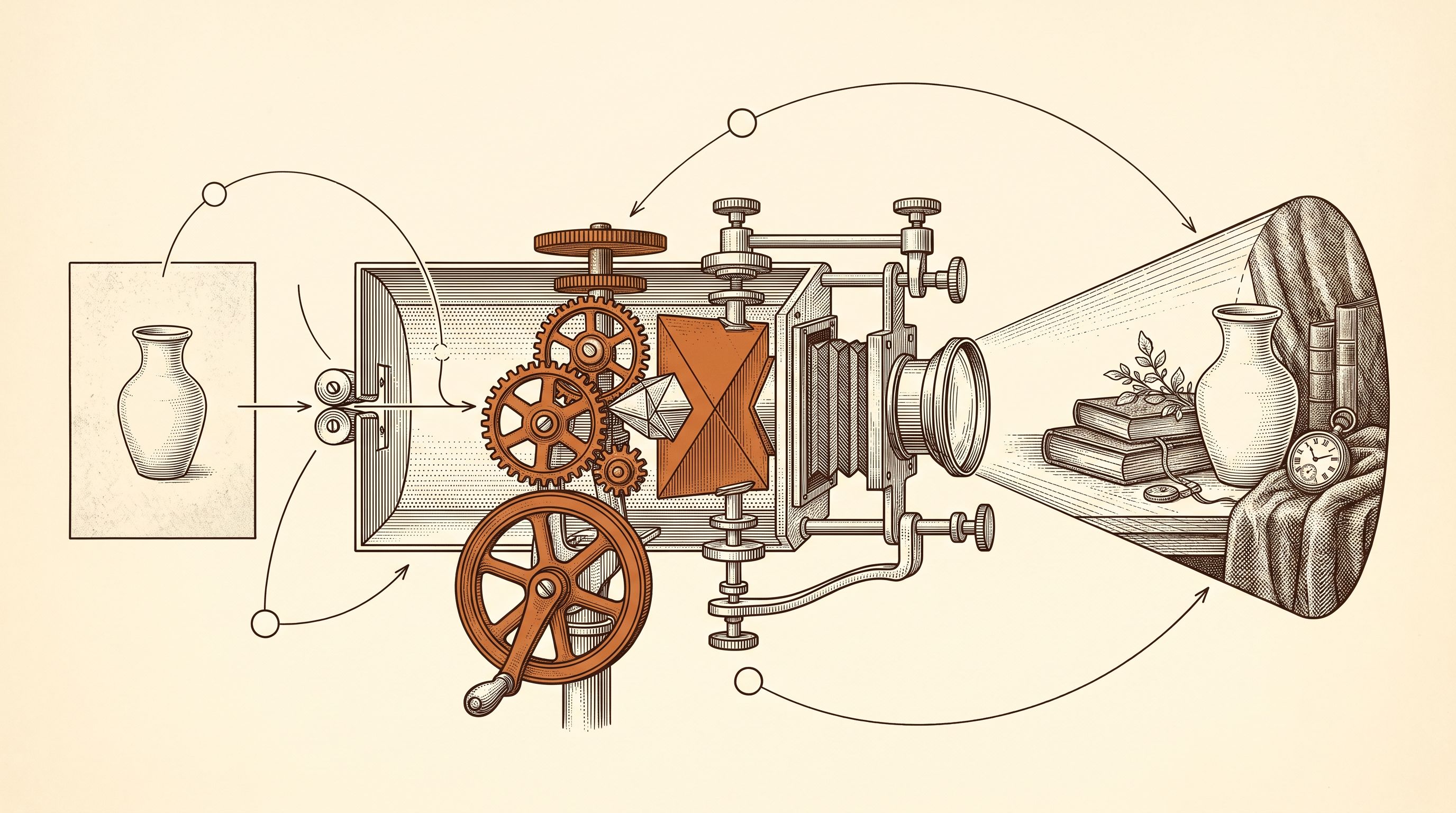
When a tool reads that page — not to extract keywords but to extract the logic, the posture, the vocabulary, the specific way she thinks about her work — the output shifts. The captions stop mentioning "natural light" generically and start referencing the thing she actually said about light. The tone stops being aspirational-lifestyle and starts being precise and slightly demanding, which is exactly how she talks to clients.
This is the mechanism that separates sector content from brand content. The input is not a prompt about interior design. The input is Noa's actual words, her actual positioning, her actual way of framing problems. The AI's job is to reproduce that logic in post format — not to invent a personality for her.
The first draft she did not delete was the third post generated from her site. It opened with a question she recognized as something she had actually said to a client. She approved it in under two minutes.
What the first week looked like
She ran the onboarding in one sitting. The tool read her site, pulled the positioning, flagged her tone as precise and direct with a slight pedagogical edge — which she confirmed was accurate. She added three project photos and a PDF of a completed specification sheet.
The first week of suggestions came back as five posts across three platforms. LinkedIn got the longer-form reflections: the kind of thinking-out-loud content that resonates with architects, developers, and the category of client who reads before they book. Instagram got the visual material — project photography with captions that named the specific choice being shown, not just the aesthetic effect. Pinterest got clean, keyword-anchored descriptions attached to her best project images.
She reviewed the batch in about fifteen minutes. One caption on LinkedIn used a phrase she would never say — too corporate, a word she associates with agency marketing decks. She rewrote that sentence. The rest went out as generated.
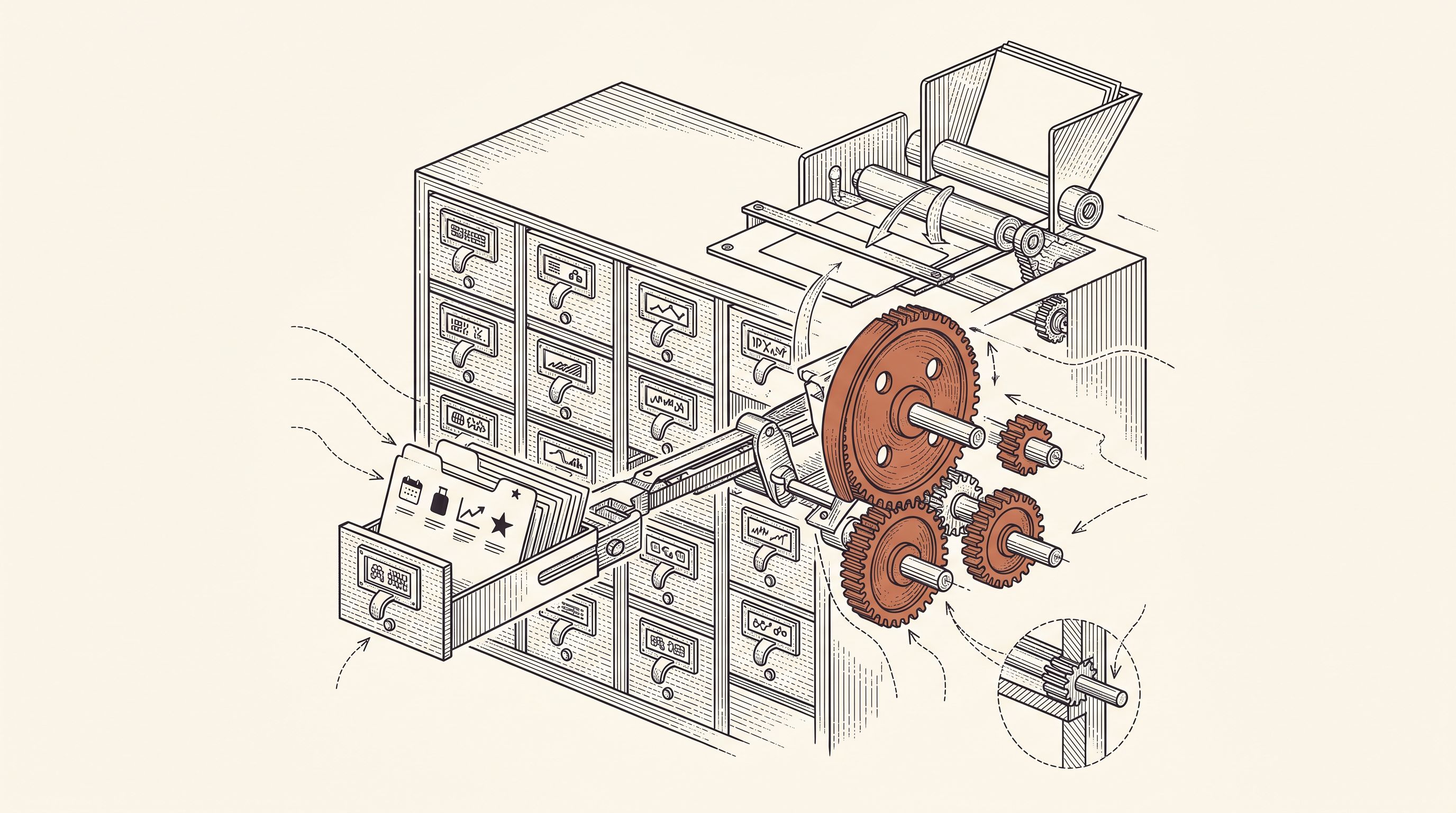
This is where the time saving actually lands. The generation itself plays a part, but the bulk of it is in the elimination of the cold-start problem. She is not staring at a blank field wondering what to say about a completed bathroom project. There is a draft. The draft sounds like her. Her job is to confirm or adjust, not to create from nothing.

Where she is now
Three months in. Twelve posts published. Two inbound inquiries from LinkedIn — one became a consultation, one became a project. One existing client mentioned seeing her posts and said it changed how they were thinking about their next project scope.
The cadence gap has closed: Noa now posts at the same rate as her competitor. But Noa's content does something her competitor's does not: it reads like a specific person with a specific point of view, not like an interior design feed optimized for reach.
She added her standard client contract template to the knowledge base last week. The next set of suggestions came back with different vocabulary around project phases — closer to how she actually describes deliverables to clients. That is the compounding effect in practice: each piece of real material she adds sharpens the output.
She has not started thinking of herself as someone who does marketing. She is still the person who designs the space. But her work now has an audience consistent enough that it functions as part of how clients find her — which is what it should have been doing all along.