Will AI flatten your brand voice?
Seven objections an independent raises before trusting AI with their brand voice — and the precise, mechanical answer to each one.
"AI flattens brand voices, doesn't it?"
Only when the brief is empty.
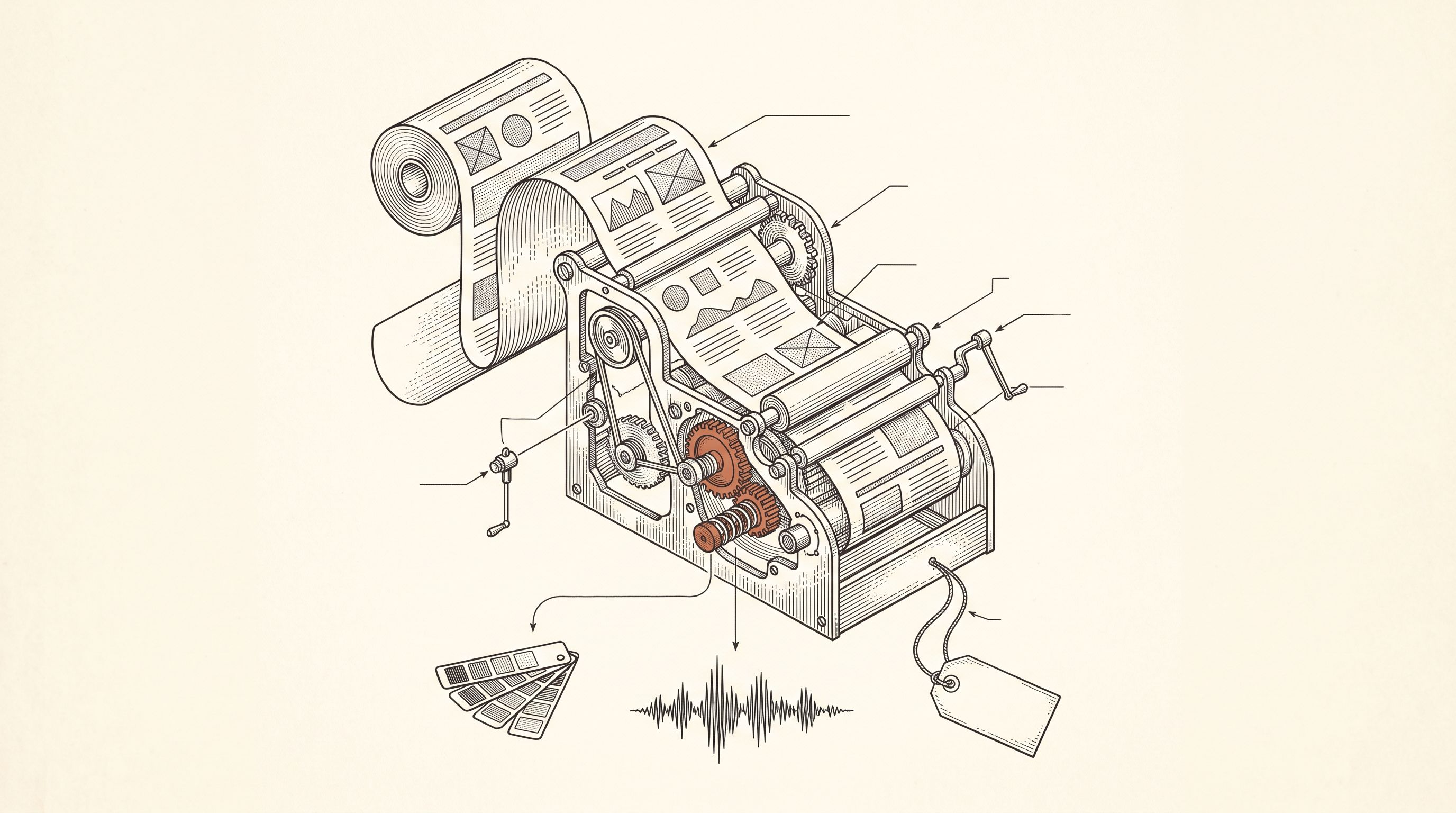
When an AI receives no context — just a job title and a city — it falls back on three observable patterns: a rhetorical opening question, a vague adjective (passionate, dedicated, expert), and a generic call to action bolted at the end. Those three markers appear in almost every zero-context caption across every vertical. They are not a model problem. They are a brief problem.
When the AI reads your site, your photos, your positioning, and the vocabulary you actually use with clients, those three markers disappear. A fourth appears instead: the specific words of your trade. A physiotherapist who talks about "load management" and "movement quality" produces captions that sound like no florist, no consultant, no restaurateur. The vocabulary is the voice. The brief holds the vocabulary.
The pattern is consistent enough to test in 30 seconds: take any AI-generated caption from a zero-context account, remove the business name, and it becomes impossible to assign to a specific trade. The words are interchangeable because the brief was. The reverse is also true: a caption built from a real product page, a real client testimonial, and a specific seasonal moment cannot be swapped into another brand's feed without it showing immediately.
This is what shifts when you stop feeding AI a blank prompt and give it your actual material.

"You can't really capture what makes my work specific."
That is a fair challenge. It is also the exact reason the starting point matters.
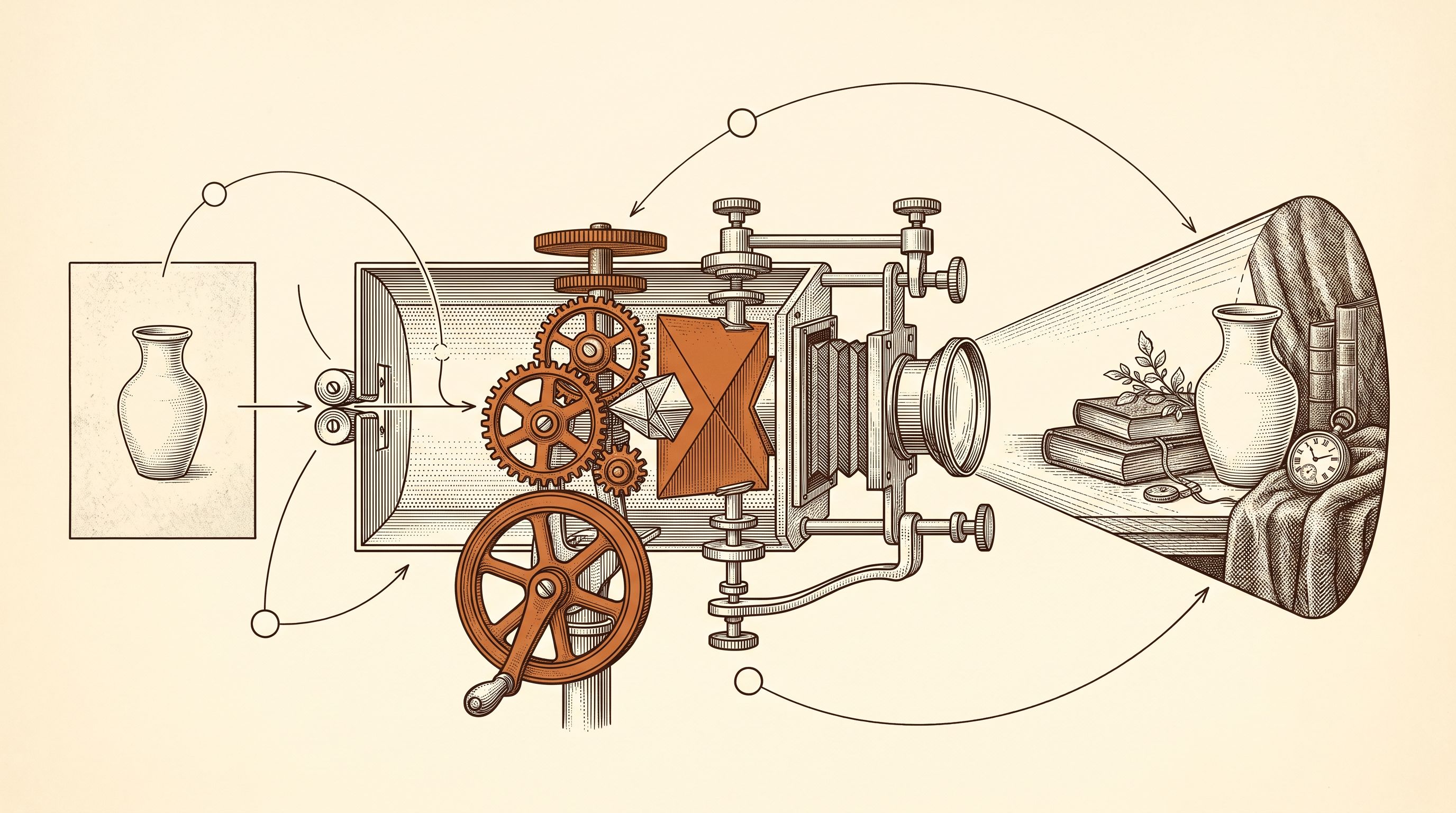
A vague description — "I'm a cabinetmaker who cares about quality" — produces vague output. Every cabinetmaker cares about quality. The signal that makes your work specific is not in a sentence you write about yourself. It is in the photos you take of your joinery, in the words your returning clients use when they come back, in the product page where you explain why you use a specific wood finish.
That material already exists. It sits on your site, in your image bank, in a paragraph you wrote once and forgot. When the AI reads it rather than a blank field, it stops guessing. It extracts. The output reflects your actual positioning, not a statistical average of your category.
"I'll rewrite every post anyway. That kills the time gain."
This is the objection that deserves the most honest answer.
If the brief is weak, yes — every post will need significant rework. That is not a time gain, it is a time trade.
But the variable is the brief, not the model. When the brand context is specific — your tone, your vocabulary, your audience's language, the problems you actually solve — the generated post is closer to what you would have written. Not identical. Close enough that the review takes minutes, not hours.
In practice, operators who have calibrated their brand context report spending 15 to 20 minutes reviewing a full week of posts. That is not zero. But it is not three hours of writing either. The work left is editorial judgment: one caption sounds slightly off, one image would work better for a different slot. That judgment takes 90 seconds per post at most.
The vocabulary is the voice. The brief holds the vocabulary.
"My clients will see it's AI immediately."
Some will. The question is what signals they are reading.
The markers that read as AI to a trained eye are the ones described above: the rhetorical opener, the empty adjective, the detached call to action. Those markers come from a thin brief, not from the technology. A post that uses the words your clients recognize from your consultations, that references the season your business is actually in, that shows the product they have already seen in your shop — that post reads as yours. Whether a model generated it or you typed it is not the question they are asking. The question they are asking is: does this look like them?
The answer to that question lives in the brief.
"A one-off freelancer for 10 posts at €200 is simpler."
For 10 posts, once, it might be.
The arithmetic changes at week seven. A freelancer who worked with you once does not know that you no longer stock the product in the third post they wrote, that the tone in two of them is slightly too formal for how you actually talk to customers, or that your busiest season just started. Catching up to those details takes a new brief each time. The cost is not the invoice — it is the briefing time, the back-and-forth, the output that still sounds slightly like someone else.
The 156-hour figure that comes up in comparisons between AI-assisted content and freelance or agency work is not a single task saved. It is the accumulated cost of that briefing loop, week after week — the handoff time, the correction round, the version that needed one more pass. At €200 for 10 posts, the invoice looks low. At week 30, the real cost is higher than the number on the receipt.
Steady presence is not a one-time output. It is a compounding one. Week after week, on a brand context that keeps getting more precise, the output drifts less. That is a different value proposition than a single sprint.

"So what do I actually have to do?"
Connect your site. Review the week.
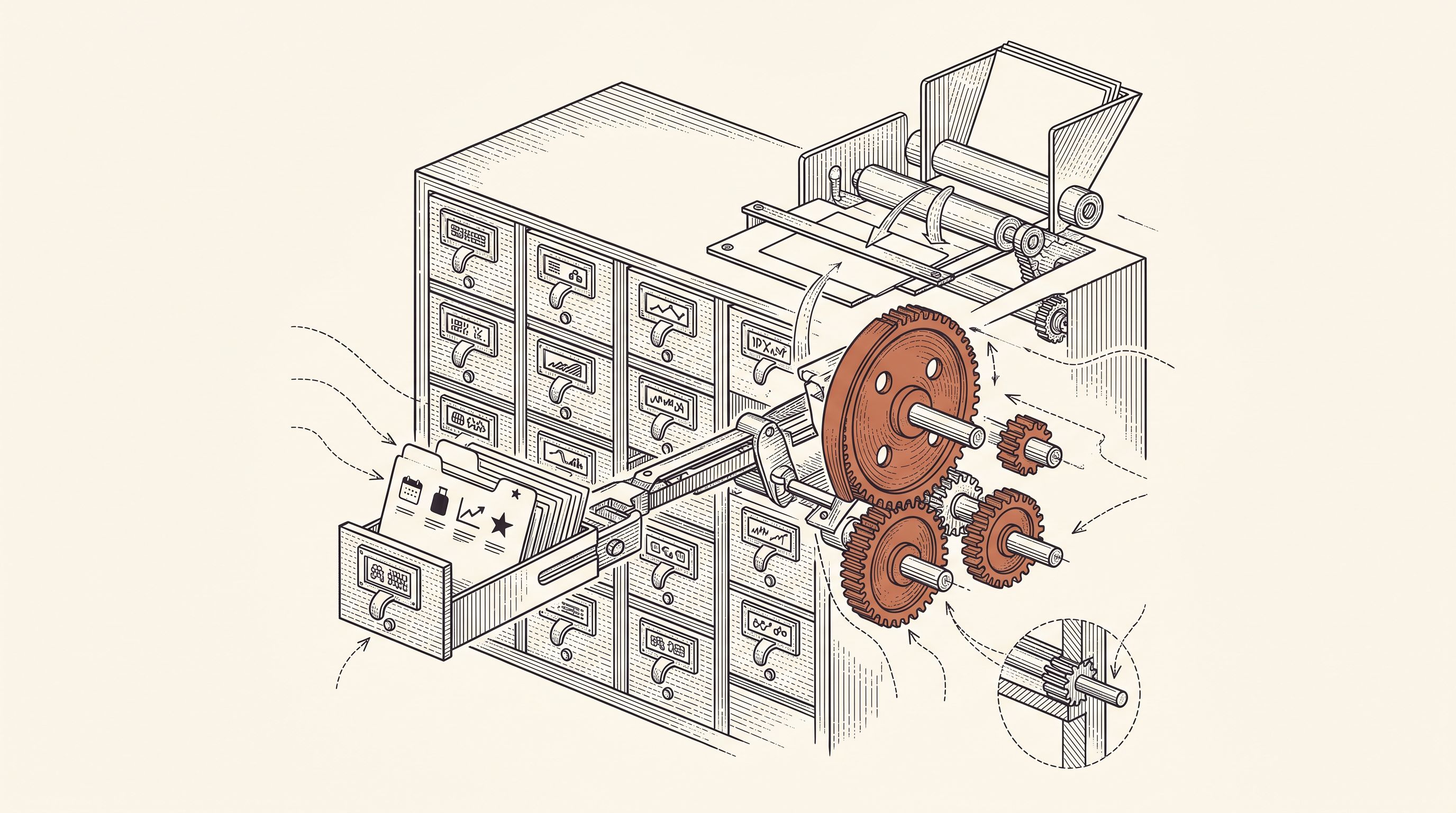
The setup reads your existing material and builds a brand context from it. The suggestions come every week, built on that context, adapted to each network's format. Your job is the 20-minute review: approve what works, adjust what does not, add the sentence that only you could write.
The typing left. The judgment stayed. That split is the point.