Instagram works when you show up
Instagram doesn't reward the perfect post. It rewards the independent who shows up weekly — real work, a consistent voice, content that looks like them.
The myth of the viral post
Three years ago, a ceramicist spent two evenings staging the perfect shot. Clean linen, morning light, a bowl centered just so. She posted it on a Tuesday. Four hundred likes — her best post ever. Then she posted nothing for six weeks.
Her follower count went sideways. Sales didn't move.
Instagram didn't build her business. The gap did.
That's the trap. Most independents think Instagram is a game won by the best content. It isn't. It's a game won by the most consistent presence. Not one perfect post a month. Not a burst of activity before a launch, then six weeks of silence. A steady stream of real work, every week, built from what you actually do.
The platform's algorithm isn't looking for brilliance. It's looking for reliability. And for an independent — a florist, a consultant, a craftsman, a physiotherapist, a wine merchant — reliability is actually the harder problem to solve. Not because producing good content is easy, but because finding the time to produce it regularly, without it eating into the actual work, is the thing that breaks every good intention.
Understanding that distinction changes how you approach Instagram entirely.

What the algorithm actually rewards
Instagram's feed is not chronological. What gets shown depends on three things: how often you post, how relevant your content is to a specific audience, and how consistently that audience engages with it.
For a small business, this creates a specific dynamic. A strong month followed by silence doesn't average out — it resets. If you posted consistently in March and disappeared in April, your reach in May starts from near zero. The algorithm reads gaps as signals that you've gone quiet, and it redistributes your audience's attention toward accounts that haven't.
The compounding effect works in reverse too. Accounts that post steadily accumulate a kind of algorithmic credit. Their posts get shown to more people because past behavior predicts future reliability. A florist who has posted three times a week for eighteen months reaches more of her followers on any given Wednesday than a competitor who posts sporadically, even if the competitor's individual posts are technically stronger.
The exact number is less important than the rhythm you can sustain. For many small businesses, three to five posts a week is the point where presence starts to compound. What doesn't work is the burst-and-gap cycle that most independents fall into: ten posts in January, two in February, nothing in March, a flurry before the summer collection, silence again.
The algorithm doesn't reward ambition. It rewards showing up.
Your work is already the content
Here's what most independents miss: you don't need to invent content for Instagram. Your work is the content.
A physiotherapist explaining why a standing desk solves one problem and creates another. A wine merchant walking through why a Burgundy from an off year still has something to say. A florist showing the distance between what a bride describes and what the bouquet looks like when it's done. A consultant laying out the three questions they ask every new client before touching anything. A hotel owner describing why they chose their linen supplier.
None of that requires a ring light or a strategy session. It requires showing up with a phone photo and a few words that actually sound like you — not like a press release, not like a brand template, not like every other independent in your category.
The harder question — and the honest one — is whether those words, repeated across Instagram, LinkedIn, Facebook, Pinterest, and X, still sound like you on each network. Because the same story told the same way doesn't land the same way everywhere. Adapting one message to five different voices is work in itself. The tone that performs on Instagram — personal, direct, slightly behind-the-scenes — reads as overly casual on LinkedIn. What works as a Pinterest image description fails as an X post. Skipping this adaptation is why most multi-platform strategies feel thin even when the original content is strong.
The raw material — your work, your knowledge, your process — is genuinely there. The question is what you do with it across the networks where your audience actually lives.
Consistent content doesn't have to be perfect content. It has to be recognizable.
Five minutes a day beats five hours on Sunday
Most independents don't have a content problem. They have a scheduling problem.
The Sunday session is a well-documented failure mode. You sit down, try to remember what happened this week, draft a caption, hate it, try another angle, get interrupted, tell yourself you'll finish tomorrow. Tomorrow becomes Wednesday. Wednesday becomes next week. Next week becomes a three-week gap you feel guilty about every time you open the app.
The alternative isn't a more disciplined Sunday session. It's removing that session from the equation entirely.
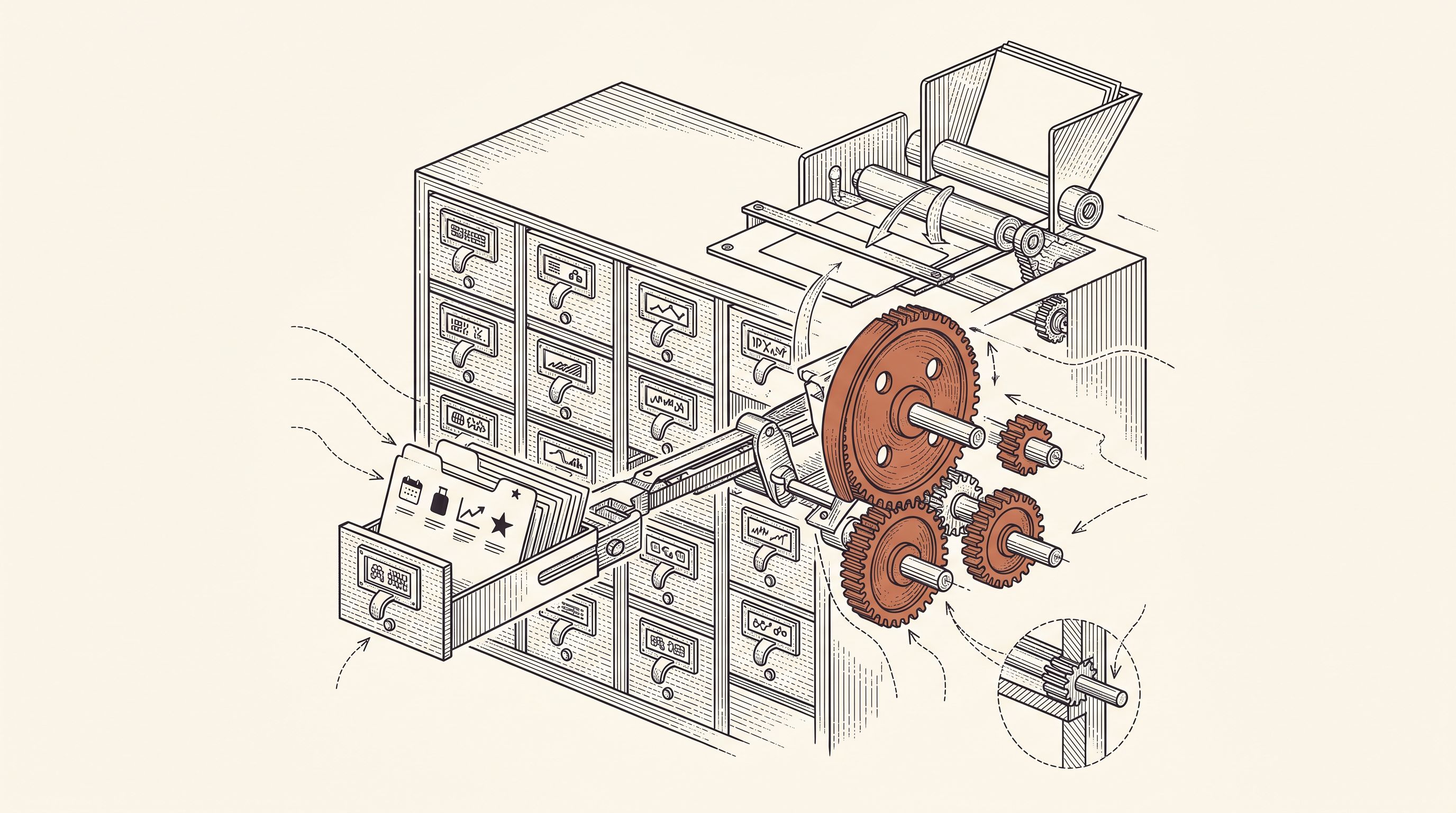
Planning content a month at a time sounds counterintuitive when your week is unpredictable. But the planning isn't about freezing thirty days in advance. It's about setting a few recurring slots, themes, and formats so that when something does happen, you don't start from a blank page. A new product becomes the product slot. A seasonal shift updates the seasonal angle. A client result gives substance to the proof post that was already planned. The calendar doesn't replace the week as it happens; it gives that week somewhere to land. You focus on the moment, not on the logistics of turning it into a post.
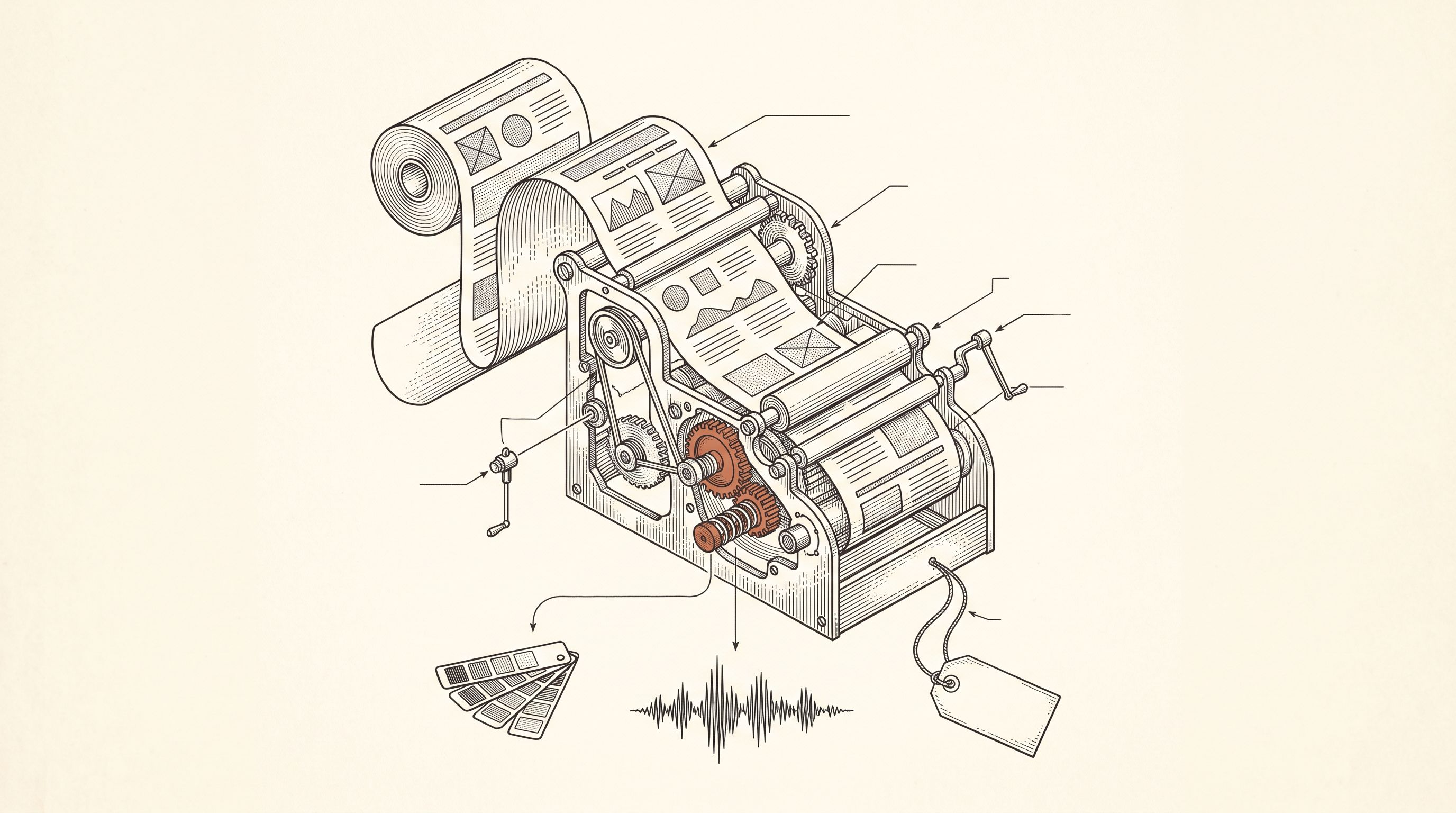
The math is worth running. If it takes 30 minutes per platform to adapt a single post — and it does, when you're doing it ad hoc, network by network, each with its own caption length, its own tone, its own image ratio — then posting three times a week across five networks costs 450 minutes a week. Seven and a half hours. For a solo operator running a real business, that number doesn't add up. It either doesn't happen, or it happens at the cost of the actual work.
The time problem is solvable. What it requires is removing the per-post decision overhead — and doing that systematically, not through heroic willpower on Sunday evenings.
What consistency looks like in practice
Imagine a boutique hotel with 24 rooms in the Loire Valley. One owner, one receptionist, no marketing budget. They post on Instagram four times a week — not because they've cracked some content strategy, but because they found a rhythm that doesn't break their week.
Not all four posts are dramatic. One is a close-up of the breakfast setup. One is a short caption about why they work with only three local wine producers. One is a guest photo reposted with permission. One announces the weekend availability. None of it is remarkable in isolation. Together, it builds a picture of a place — its character, its rhythm, its values. Guests book because they feel they already know the hotel before they arrive.
A competitor two villages over posts once a month, always beautifully styled. Their Instagram is technically better. Their occupancy rate isn't.
Consistent content doesn't have to be perfect content. It has to be recognizable. It has to sound like the same person, in the same voice, week after week. That coherence is what makes an audience trust that you'll still be there when they're ready to buy — not just when you happened to post something spectacular.
The 24-room hotel and the ceramicist and the physiotherapist all face the same equation: the work is real, the audience is real, and the gap between them is mostly a logistics problem. Content that looks and sounds like you, produced at a pace that doesn't cost you your evenings, is not a luxury. It's the floor.

The voice problem — and why it matters most on Instagram
Instagram is the most personal of the five networks. LinkedIn tolerates the professional distance. Facebook carries the community context. Pinterest is search-driven and relatively impersonal. X rewards speed over tone. But Instagram is where your audience expects to see the actual person or business behind the account — not a polished version of it, but the real thing.
That's why generic content fails hardest here. A caption that sounds like it was written by a committee — vague, safe, slightly over-enthusiastic — is noticed immediately. Not because your audience can detect the process. Because it doesn't sound like you. And on Instagram, not sounding like yourself is the single fastest way to stop building an audience.
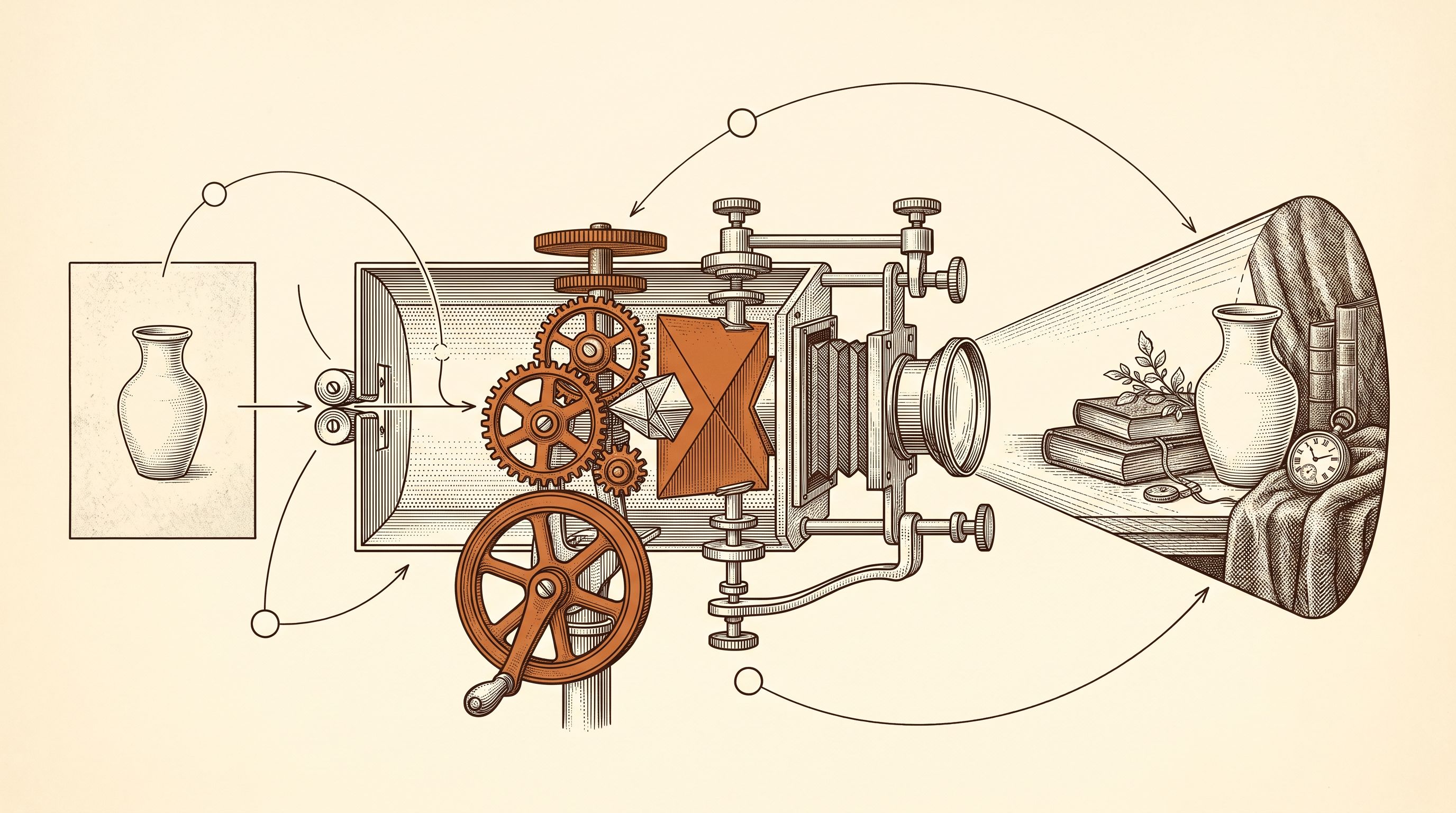
The fix isn't to avoid AI-assisted content. It's to use AI that actually knows your brand before generating anything. Working with AI without losing your voice comes down to what the AI has access to. If it reads your website, your positioning, your past content, and your visual identity before writing a single word, the output sounds like you. If it starts from a blank prompt with no brand context, it sounds like everyone else.
Your work deserves an audience. Not in occasional bursts when you find the energy. Week after week, on a network that rewards exactly that kind of steady presence — and penalizes the alternative.