How the brief became a prompt
In 2018, the content brief was an agency document. Today it's a prompt. What changed, why it matters, and what the old brief got right.
How the Brief Became a Prompt
Today, a solo consultant, a florist, a coach -- anyone with a website can generate a week of posts in minutes. That's the new baseline. What most people miss is how radically the process of defining what to say got compressed, and what was lost in that compression.
In 2018, if you wanted content that sounded like your brand, you had two options. You briefed a freelance copywriter with a document that took time to build: your positioning, your audience, your tone, three examples of copy you liked, a list of words you'd never use. Or you spent an evening writing it yourself, which meant not doing something else. There was no third option that was fast and good at the same time.
That constraint shaped the market. Content stayed irregular for most small businesses -- not because independents didn't want visibility, but because the cost of doing it right was prohibitive. A proper content brief wasn't a weekend job. Agencies charged for it separately, sometimes 800 to 1,200 euros before any copy was produced, because they knew that without it, every piece would need rewriting.

The Moment the Brief Got Compressed
GPT-3 opened to the public in June 2020. Almost nobody in the independent business world noticed. It was a developer tool.
ChatGPT launched in November 2022. That one landed differently. Within weeks, independents were using it to draft posts, respond to clients, write product descriptions. The friction was gone: no API key, no code, no setup. You typed what you wanted and got text back.
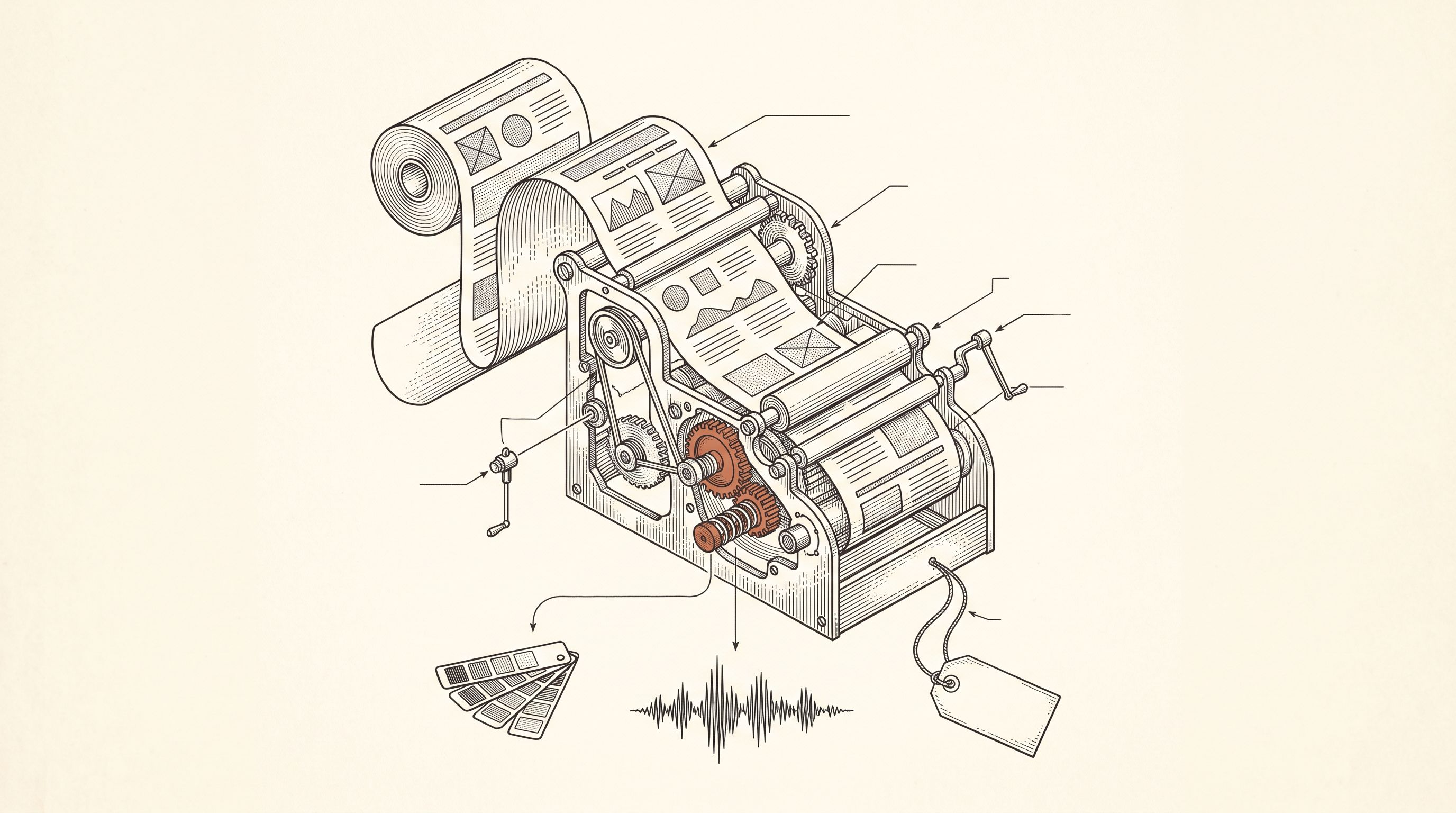
But something important happened in that moment of acceleration: the content brief -- that disciplined document that agencies had spent years refining -- got flattened into a sentence. Write me a LinkedIn post about my yoga studio. The prompt worked well enough to feel like progress. It worked badly enough that the output almost never sounded like the person asking.
Between 2022 and 2024, a pattern emerged that's now well-documented among anyone who watched small business social closely: independents tried AI for six to twelve weeks, got content that was technically correct and generic, and stopped. Not because AI couldn't help them -- because the brief behind the prompt carried none of their actual brand DNA.
What the Old Brief Actually Did
The frustration was structural. AI didn't fail. The brief failed.
A copywriting brief at a good agency in 2019 wasn't just a description of the business. It asked: What are the three things your best clients say about working with you that your competitors couldn't claim? What do you never say, because it sounds like everyone else? What is the one thing a new client needs to understand before their first appointment?
Those questions forced specificity. They extracted the vocabulary, the positioning, the proof points that made a brand recognizable. The resulting document wasn't long -- a good brief fit on two pages -- but it was dense. Every sentence had a job to do.
When AI tools arrived, that discipline evaporated for most users. The prompt replaced the brief, but inherited none of its rigor. The result was content that could describe any yoga studio, any florist, any independent consultant -- and therefore described none of them particularly.
The prompt replaced the brief, but inherited none of its rigor.
What Changed When the Brief Came Back
The shift that matters -- and that's happened more quietly over the past 18 months -- is that the most effective uses of AI-generated content for small businesses have all rebuilt something close to the old brief structure.
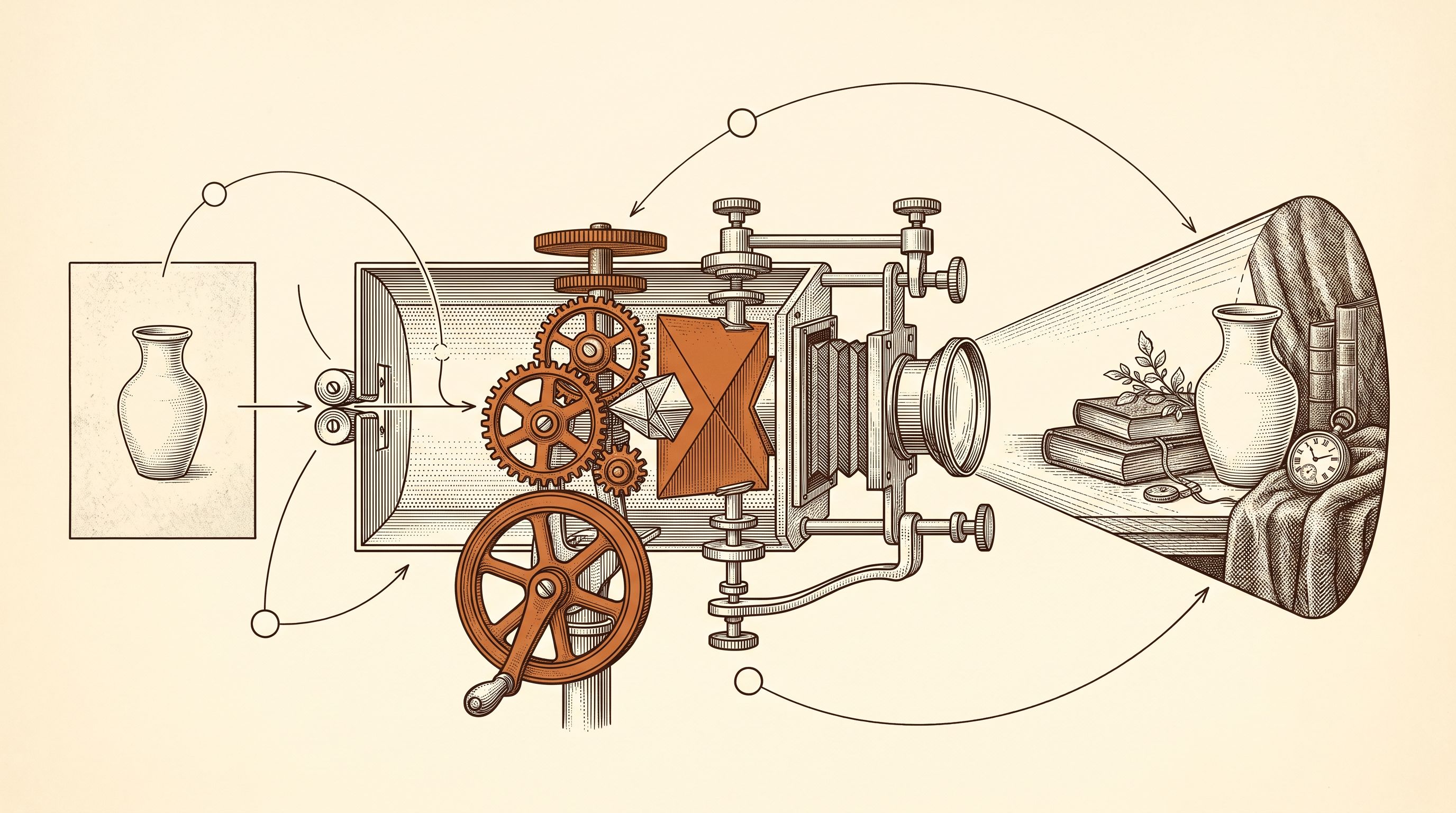
The mechanism is observable: when a brand profile used to prompt a content generator contains positioning language, a defined audience, and explicit vocabulary choices, the output holds the brand's voice. When the profile is a generic description, the output is generic.
This isn't a surprising finding. It's the same rule that applied to human copywriters in 2018. What's changed is the leverage. A brief that used to produce 10 posts when given to a freelance now generates 40 posts in the same week, adapted across Instagram, LinkedIn, Facebook, Pinterest, and X. The multiplier is real. But the multiplier only applies to what the brief contains.
The best-performing independent accounts share something consistent: a brand DNA document built with the same precision that used to go into a proper agency brief -- positional language, audience language, tone markers, validated examples. That's why what you put into the AI shapes the output at every level: the brief is the ceiling.
The Archaeology Lesson
Looking back from 2026, the content brief had two lives.
In its first life (roughly 2010-2022), it was a specialist tool -- expensive to produce, owned by agencies, inaccessible to most independent businesses. That cost kept most independents out of the game. Their content was irregular because the investment required to do it right didn't pencil out against their margins.
In its second life (2022-present), the brief became the prompt. Access democratized. But the rigor that agencies had built into the brief format didn't transfer automatically. It had to be rebuilt by independents willing to treat the prompt as a document rather than a request -- a container for brand truth, not just an instruction.
The businesses that made that distinction got something genuinely new: the precision of a well-briefed copywriter, at the cadence of an automated publishing system. A steady presence that sounded like their work.
The businesses that skipped that step got what any underbriefed copywriter would have produced: technically competent, instantly forgettable content.

What It Means Now
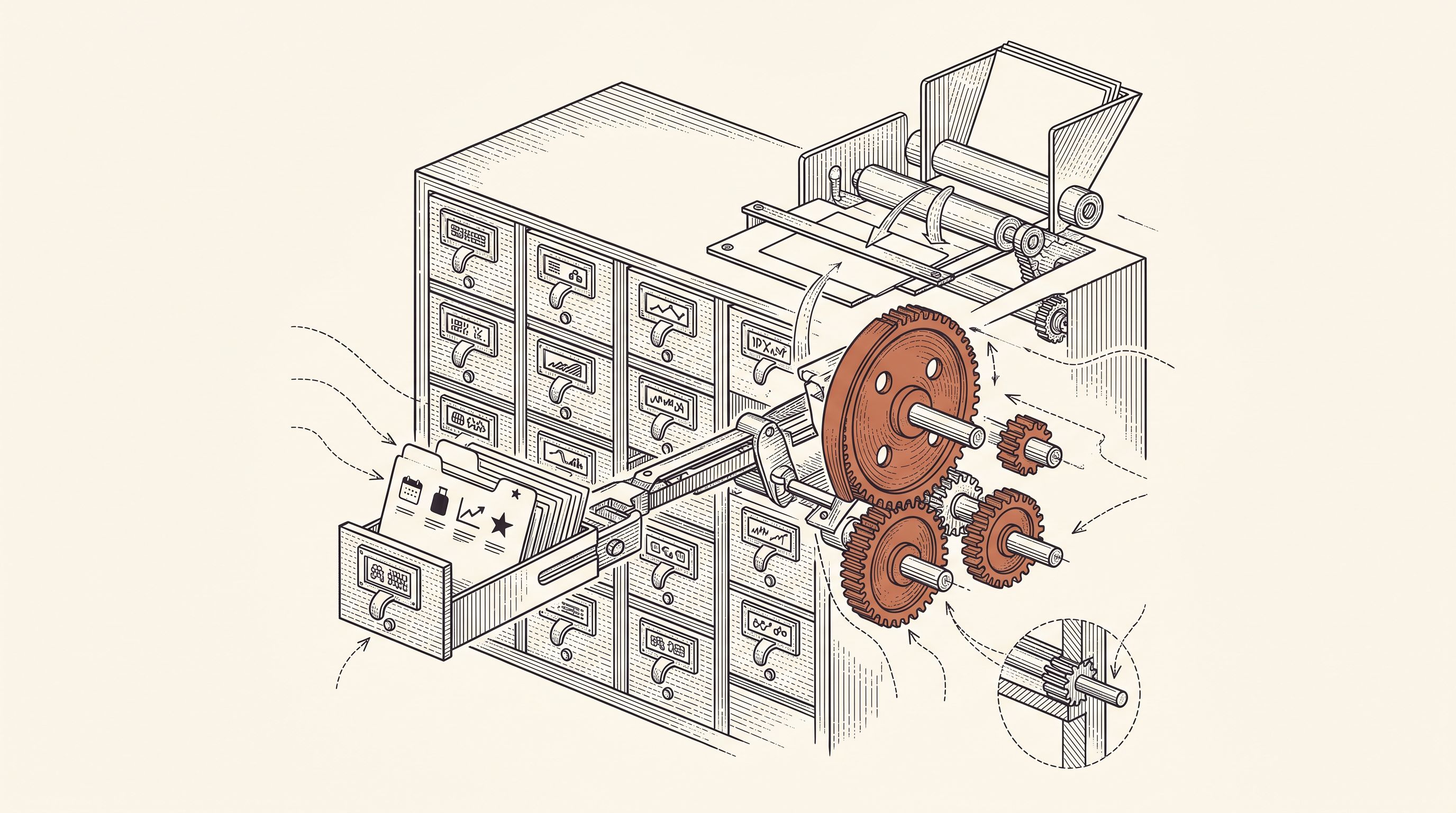
The brief hasn't disappeared. It's changed shape. Today it lives in a brand context document, a set of knowledge inputs, a structured profile that an AI system reads before generating anything. The agencies that charged 1,000 euros to build it aren't obsolete -- the practice they perfected is more valuable than ever. The overhead they added no longer is.
For any independent who tried AI content and stopped because it sounded generic: the failure point wasn't the AI. It was the brief. A content calendar still runs on the quality of what you've defined about your craft, your audience, and your voice. That part hasn't changed since 2018. The tool that reads it has.